Alina Alam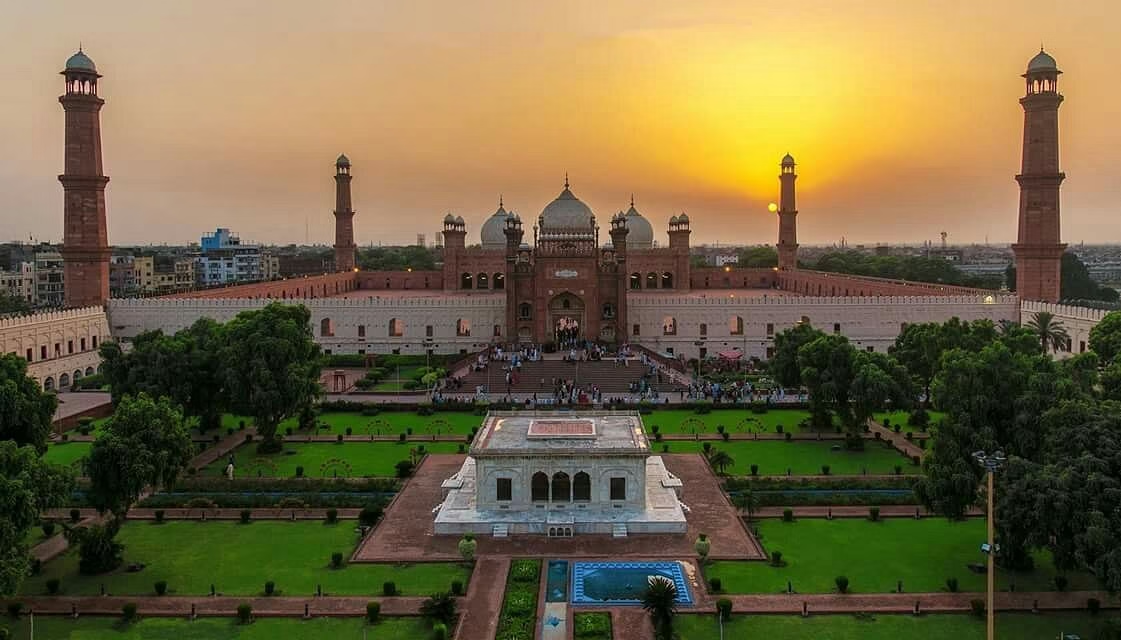
Why Lahore Will Change Your Mind About Pakistan
Most foreign travelers arrive in Pakistan expecting mountains. They fly to Islamabad, take a domestic flight to Gilgit, and head north to Hunza Valley, Skardu, Swat, or the Naran Kaghan valleys. Lahore, Pakistan’s second city and cultural capital, is often skipped entirely. This is a profound mistake.
Lahore is the city the Mughal Empire chose as its showcase. Shah Jahan, who built the Taj Mahal, spent years in Lahore and commissioned masterpieces here that rival anything in India. Jahangir, his father, loved Lahore so much that he asked to be buried here. The city contains two UNESCO World Heritage Sites, more Mughal-era monuments than any city in the Indian subcontinent, and a food culture that is considered by many Pakistani gastronomes to be the finest in the country.
Beyond the monuments, Lahore is a living, roaring, confident city of 14 million people. Its bazaars are a continuous spectacle of commerce, color, and humanity. Its universities have produced the poets and politicians who shaped modern Pakistan. Its cafe culture rivals Istanbul. And its hospitality, expressed through an almost aggressive friendliness to foreigners who venture into the old city, is disarming in the best possible way.
Two days minimum. Three is better. Five is when you begin to understand the place.
Lahore Fort: Two UNESCO Sites in One Walk
The Lahore Fort and Shalimar Gardens are jointly designated as a UNESCO World Heritage Site. The Fort, known as Shahi Qila, is a 400-year-old palace complex that contains 21 distinct monuments built across the reigns of Akbar, Jahangir, Shah Jahan, and Aurangzeb. It is not merely a fort. It is a layered record of four generations of the most powerful empire in Asia.
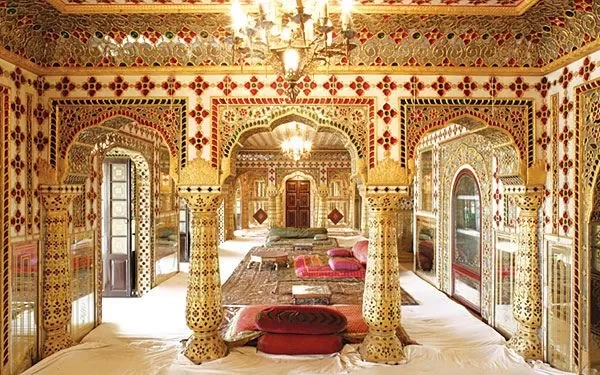
The Sheesh Mahal, or Palace of Mirrors, is the single most spectacular room in Pakistan. Shah Jahan commissioned this audience hall in 1631, and its ceiling and walls are encrusted with thousands of pieces of mirror and colored glass set in intricate floral patterns. When a flame is introduced into the darkened chamber, the entire interior blazes with reflected light in a way that stops conversation. Nothing prepares you for the actual sight of it.
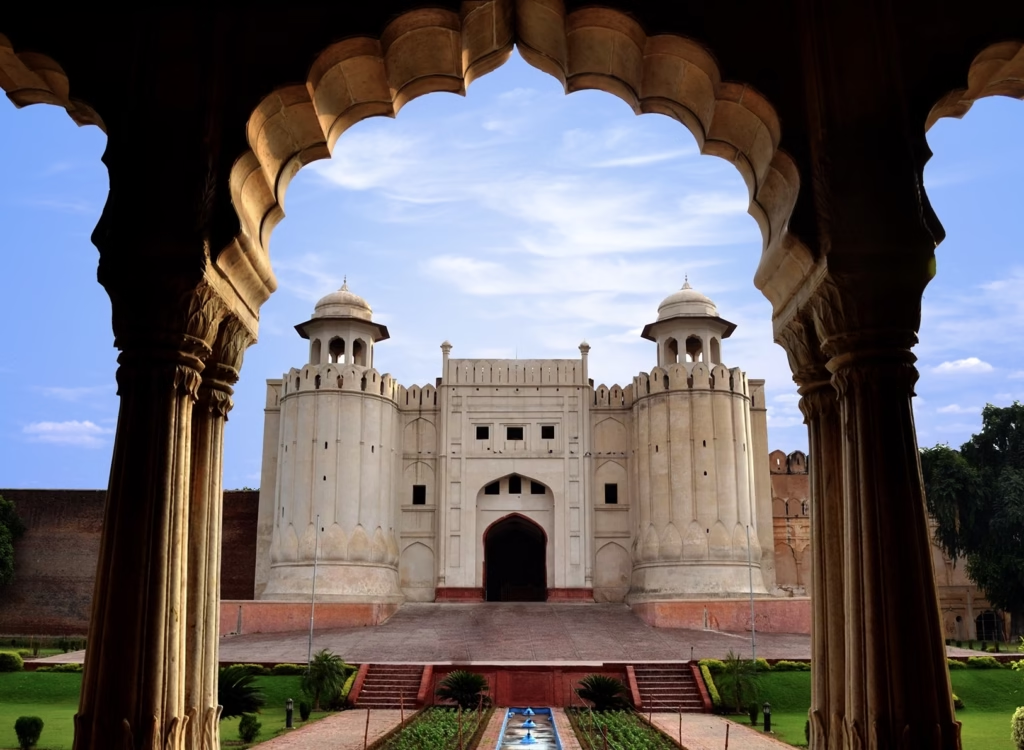
Beyond the Sheesh Mahal, the Fort contains the Diwan-e-Aam (Hall of Public Audience), the Naulakha Pavilion (a small marble structure that cost 900,000 rupees to build in the 17th century), the massive Alamgiri Gate commissioned by Aurangzeb, and the Picture Wall, an 80-meter facade of Mughal tilework that is one of the largest examples of decorative brickwork in South Asia. A full tour of the Fort takes approximately 3 hours.
Badshahi Mosque: When Shah Jahan Built Something Bigger Than the Taj Mahal Complex
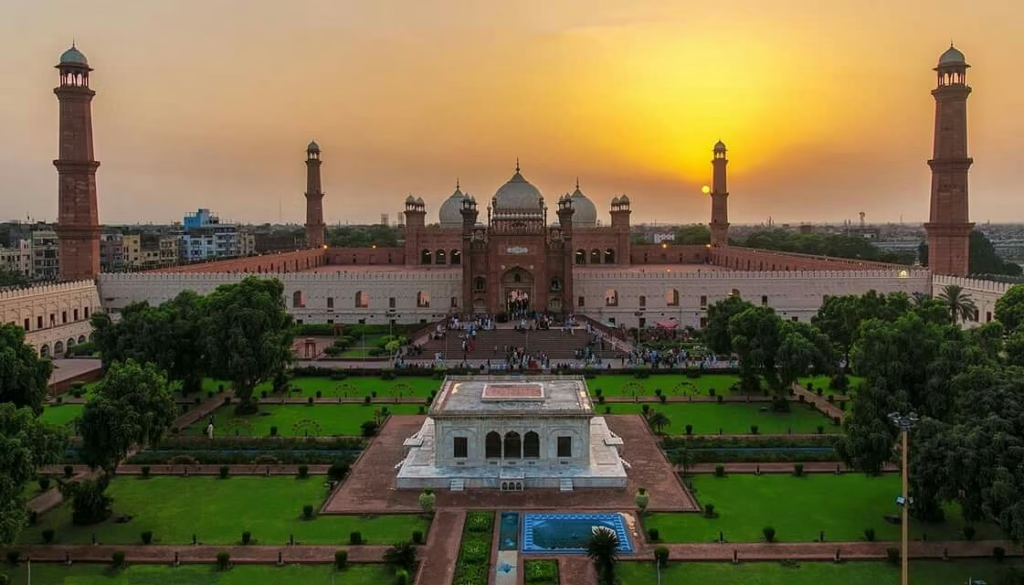
The Badshahi Mosque, completed in 1673 under Aurangzeb, has the largest mosque courtyard in the world. The central courtyard measures 162 meters by 161 meters and can accommodate 100,000 worshippers standing. The prayer hall, flanked by four minarets that reach 54 meters, is constructed in red sandstone trimmed with marble detail that echoes the color palette of the Taj Mahal.
For context: the Taj Mahal’s courtyard, which most Western visitors consider vast, would fit inside the Badshahi Mosque’s main courtyard with significant space to spare. The scale of Mughal ambition here is staggering. The mosque was, at the time of its completion, the largest in the world.
Visitors of all faiths and backgrounds are welcome outside prayer times. A respectful dress code is required. Shoes are removed at the entrance and stored or carried in a provided bag. The view from the mosque’s upper terrace across the courtyard to Lahore Fort is one of the finest urban panoramas in South Asia. Entry is free. Consider visiting in the early morning when light is best and crowds are smallest.
The Walled City of Lahore: 2,000 Years Walking Distance
Old Lahore, enclosed within the remnants of its ancient walls, is one of the most densely historical urban environments in Asia. The 13 ancient gates of the walled city, several of which still stand intact, once controlled entry to a metropolis that was, in the 17th century, larger than London. Today the narrow streets within those walls contain approximately one million people, an unbroken layering of centuries, and an architectural and sensory experience that cannot be replicated.
The recommended approach is the Walled City of Lahore Authority’s organized walking tour, which departs from Delhi Gate and covers the major monuments within the old city. The tour takes approximately 3 hours and is led by trained guides who speak excellent English. Alternatively, the Footprint travel guide to the walled city, available locally, is detailed enough to navigate independently.
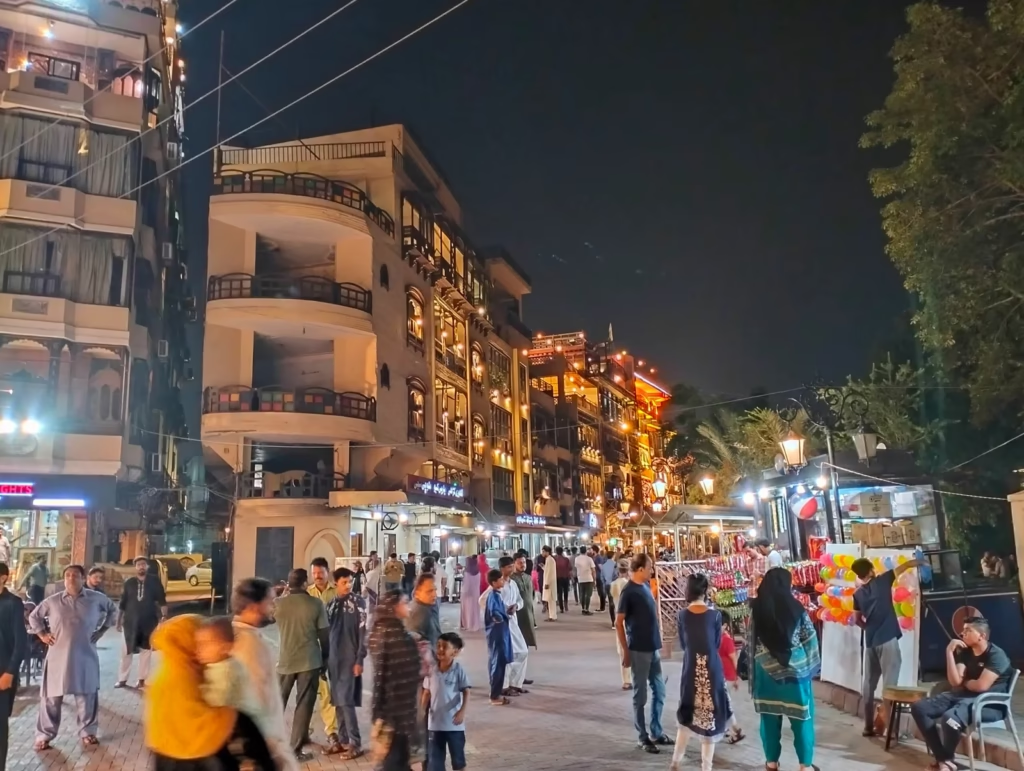
Food Street in Gawalmandi, just outside the walled city boundary, is the most celebrated dining destination in Lahore and possibly in all of Pakistan. The street is lined with restaurants serving Lahori specialties: Nihari (slow-cooked beef shank), Paye (trotters in spiced broth), Halwa Puri (the definitive Lahori breakfast of fried bread with sweet semolina pudding and chickpea curry), and an extraordinary variety of kebabs grilled over coal. The best time to visit Food Street is evening from 7 PM onward, when the street fills with families, the air thickens with charcoal smoke, and the noise becomes joyful.
Shalimar Gardens: The Mughal Garden That Rivals Versailles
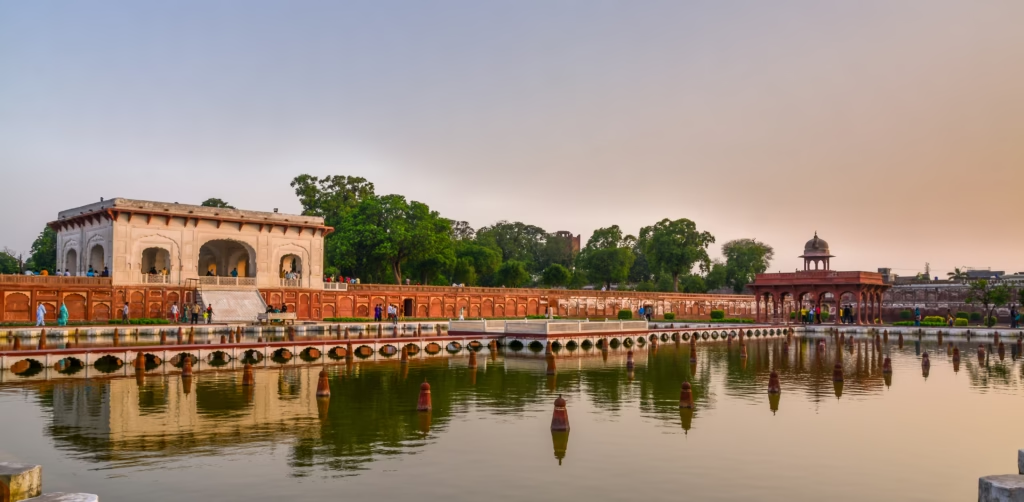
The Shalimar Gardens, completed in 1641 by Shah Jahan, are a three-tiered Persian-style garden stretching 658 meters from north to south. The garden descends through three terraces connected by water channels and a central cascade. At its peak under the Mughals, the garden contained 410 fountains, 158 cypress trees, and elaborate pavilions for royal entertainment.
Today the gardens are a UNESCO World Heritage Site (jointly with the Fort) and are in reasonable condition after recent restoration work. The central water channel and some fountains have been restored and operate periodically. The gardens are most beautiful in spring when flowers are in bloom and in the cooler morning hours before the grounds fill with visitors. The Shalimar Gardens are located approximately 10 km east of the Lahore Fort, requiring a short taxi or rickshaw ride.
Wagah Border Ceremony: The Daily Flag-Lowering on the India-Pakistan Frontier
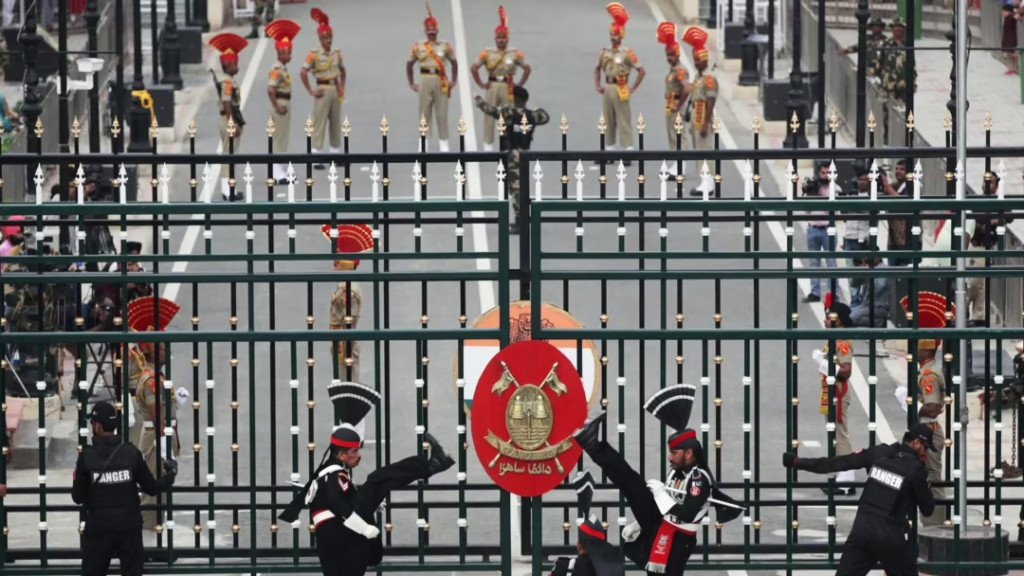
The Wagah Border ceremony, held at sunset every day on the India-Pakistan international border approximately 30 km west of Lahore, is one of the most extraordinary spectacles in South Asia. Pakistani and Indian border security forces, in elaborate uniforms, perform a highly choreographed and theatrical parade involving synchronized high-step marching, aggressive posturing, and the simultaneous lowering of the two national flags. Both sides of the border have large bleacher stands that fill with thousands of spectators who cheer their side’s soldiers with stadium-level enthusiasm.
For foreign visitors, the ceremony is genuinely astonishing. The combination of military ceremony, nationalist theater, and crowd energy produces an atmosphere unlike anything in Western experience. The ceremony is free to attend on the Pakistani side. Rickshaws from central Lahore to Wagah cost approximately PKR 500 to 1,000 one way. Taxis cost PKR 2,000 to 3,000 return. The ceremony begins approximately 30 minutes before sunset; arrive at least an hour early to get seated.
Lahore Museum: Kipling’s Wonder House
The Lahore Museum, housed in a red-brick Victorian building on Mall Road, is one of the finest museums in South Asia. Rudyard Kipling, whose father was its first curator, called it the ‘Wonder House’ in the opening chapter of his novel Kim. The museum’s Gandhara art collection is one of the most significant in the world, containing stone sculptures from the 1st to 7th century CE that show the extraordinary blending of Greek and Buddhist artistic traditions.
The museum also holds miniature paintings from the Mughal period, artifacts from the Sikh Empire under Ranjit Singh, a collection of jewelry and decorative arts, and the famous Zam Zama cannon that stands outside the entrance and features in the opening of Kim. The museum requires 2 to 3 hours for a thorough visit. Entry fees are minimal.
Lahore in 1, 2, and 3 Days: Practical Itineraries
| Duration | Suggested Itinerary |
| 1 Day (24 hours) | Morning: Lahore Fort including Sheesh Mahal and Alamgiri Gate (3 hours). Afternoon: Badshahi Mosque and walled city walk via Delhi Gate (2 to 3 hours). Evening: Food Street Gawalmandi for dinner (2 hours). |
| 2 Days | Day 1 as above. Day 2 morning: Shalimar Gardens. Day 2 afternoon: Lahore Museum and Mall Road. Day 2 evening: Wagah Border ceremony (requires 3 to 4 hours for transport and attendance). |
| 3 Days | Days 1 and 2 as above. Day 3: Day trip to either Rohtas Fort (3 hours from Lahore) or Harappa (5 hours from Lahore) for ancient history. Or a deeper walled city walk with guide through Haveli neighborhoods and traditional bazaars. |
Where to Stay in Lahore 2026
| Property | Area | Category | Price Range 2026 | Best For |
| Pearl Continental Lahore | Central, near Mall Road | Luxury | PKR 25,000 to 50,000 per night | Full international standard; business and leisure |
| Avari Hotel Lahore | Shahrah-e-Quaid-e-Azam | Luxury | PKR 20,000 to 40,000 per night | Excellent location; consistently high service |
| Faletti’s Hotel | Mall Road | Upscale Heritage | PKR 15,000 to 30,000 per night | Colonial-era building; Lahore’s most historic hotel |
| Best Western Plus Lahore | Gulberg | Mid-range | PKR 8,000 to 15,000 per night | Modern amenities; good location for restaurants |
| Yak & Yeti Guest House | Gulberg area | Budget-Mid | PKR 4,000 to 8,000 per night | Backpackers and budget travelers; reliable quality |
| Regale Internet Inn | Near airport and old city | Budget | PKR 2,500 to 5,000 per night | Solo travelers; basic but safe and clean |
Frequently Asked Questions
Two days covers the essential monuments: Lahore Fort, Badshahi Mosque, the walled city, and a Food Street dinner. Three days adds Shalimar Gardens, Lahore Museum, and the Wagah Border ceremony. Five days allows for deeper exploration of the old city neighborhoods, day trips to Rohtas Fort or Harappa, and genuine immersion in the cafe and art culture of Gulberg and Liberty Market.
Yes. Lahore has an excellent track record for foreign tourist safety. The major monuments are well-policed and visited by large numbers of domestic tourists. The walled city is vibrant and active, making it inherently safer than deserted urban areas. Standard precautions apply: be aware of your surroundings, use metered taxis or Careem app for transport, and keep valuables secured. The main issue for visitors is petty crime like pickpocketing in crowded bazaars, not violent crime.
October through March is the best time to visit Lahore. The city’s climate is pleasant with daytime temperatures between 15 and 25 degrees Celsius. April brings rising heat and May through September can be extremely hot (40 degrees Celsius and above) with significant humidity. The Lahore literary and cultural festival season also runs in winter. If visiting in summer, begin outdoor monument visits by 7 AM before the heat builds.
Technically yes by air (the flight is 55 minutes), but a day trip does not do Lahore justice. The distance by road is approximately 380 km (4 to 5 hours). A minimum overnight stay is strongly recommended. Lahore in one rushed day leaves visitors feeling they have seen the surface without understanding the city.