Alina Alam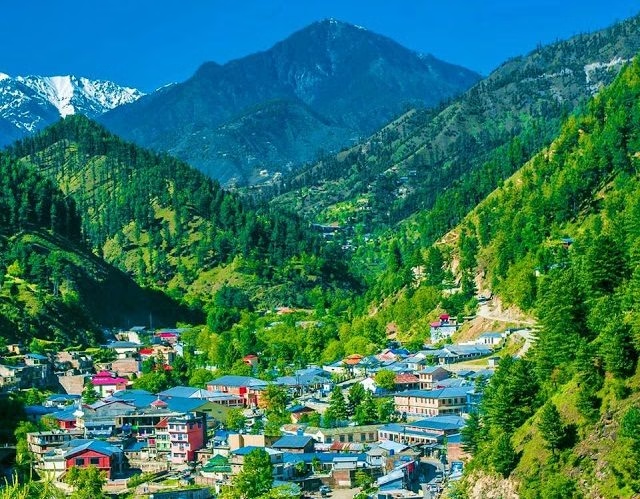
Why Foreign Travelers Are Calling Swat Pakistan’s Best Kept Secret
Swat Valley in Khyber Pakhtunkhwa has been called the Switzerland of Pakistan since the British colonial era. The British Raj established summer retreats here in the 19th century, and the comparison to the Swiss Alps was made by officers who had served across the Empire. The description still holds. Green mountain meadows stretch between forested slopes of pine and cedar. The Swat River runs turquoise and cold through the valley floor. Snow-capped peaks of the Hindu Kush rise above 6,000 meters on every horizon.
For decades, international travelers avoided Swat due to security concerns from the late 2000s. That era is firmly over. The Pakistani military cleared the region, tourism infrastructure was rebuilt, and Swat Valley today has one of the fastest-growing visitor numbers of any destination in Pakistan. The Swat Motorway now connects the valley to Peshawar in under two hours. Hotels that would not be out of place in Europe have opened in Mingora and Kalam. And the region retains something that Switzerland lost decades ago — genuine wildness, empty meadows, and a warmth of local hospitality that no luxury resort can manufacture.
This guide is written for foreign travelers who want the honest picture of Swat Valley in 2026: what to expect, where to go, what it costs, and how to do it well.
Swat Valley at a Glance
| Detail | Information |
| Province | Khyber Pakhtunkhwa (KPK) |
| Main City | Mingora (administrative center and transport hub) |
| Distance from Islamabad | Approximately 260 km via Swat Motorway (3.5 to 4 hours) |
| Distance from Peshawar | Approximately 160 km (2 hours via M-16 Swat Motorway) |
| Peak elevation (Kalam area) | Approximately 2,000 meters in Kalam; passes above 3,000 meters |
| Best season | May to October for valley travel; December to February for skiing at Malam Jabba |
| Language | Pashto is primary; Urdu widely understood; English in tourist establishments |
| Religion | Sunni Islam, conservative culture |
| Currency | Pakistani Rupee (PKR); carry cash as card acceptance is limited outside Mingora |
| Connectivity | 3G and 4G available in Mingora and Kalam; remote valleys have no signal |
Mingora: The Gateway City Worth One Day
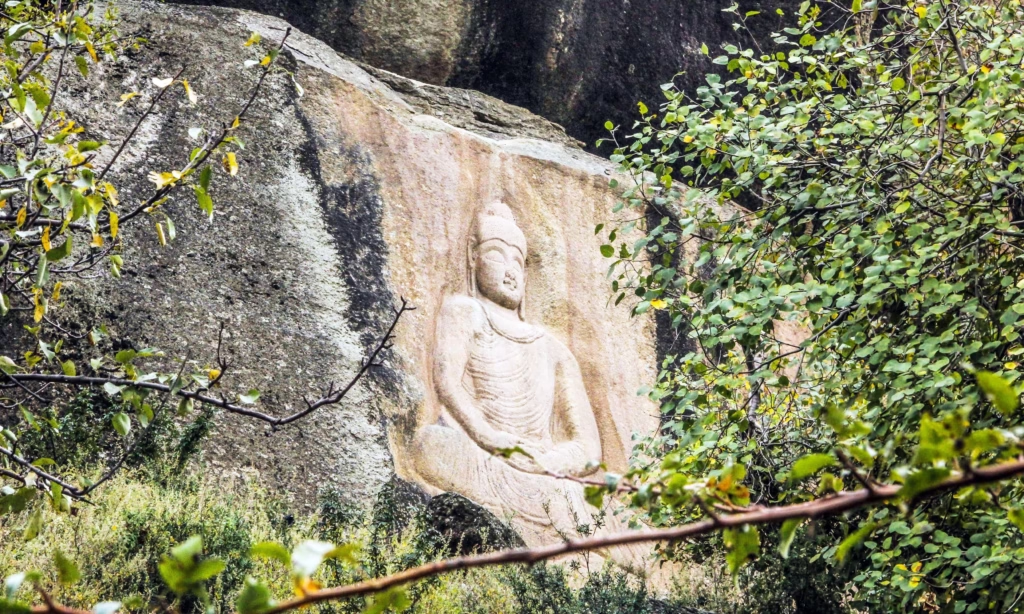
Most travelers pass through Mingora quickly on their way to Kalam, but the city rewards a half day of exploration. The Swat Museum houses one of Pakistan’s finest collections of Gandhara Buddhist art — stone sculptures from the 1st to 7th century CE that show the extraordinary fusion of Greek and Buddhist artistic traditions that defined this region. Admission is inexpensive and the collection is world-class, with pieces that would anchor major Western museum exhibitions.
The main bazaar of Mingora is a vivid introduction to Pakhtun market culture. Embroidered Swati shawls, hand-carved walnut woodwork, dried fruit, and local honey fill the stalls. Swat honey, produced from high-altitude wildflower meadows, is nationally recognized as among Pakistan’s finest. Buying a jar from a local market vendor here costs a fraction of what the same product costs in Lahore or Islamabad.
Kalam Valley: Where Swat Gets Wild and Extraordinary
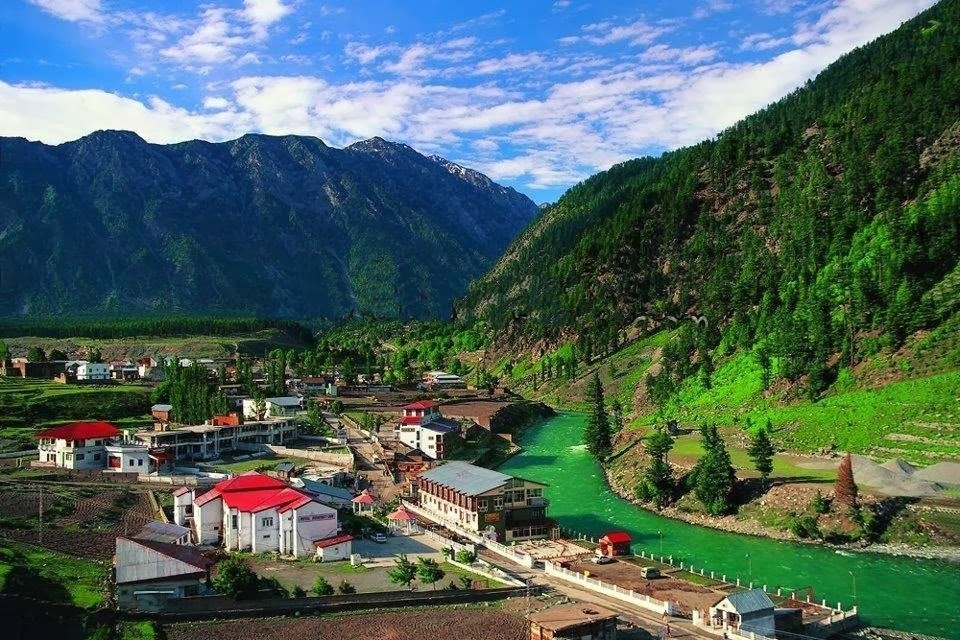
Kalam, approximately 100 km north of Mingora at an elevation of around 2,000 meters, is the destination that defines the Swat Valley experience for most serious travelers. The town sits at the confluence of the Swat and Ushu rivers, surrounded by mountains that rise steeply from the valley floor to snowlines. From Kalam, a network of jeep tracks and hiking trails penetrates the wilderness in every direction.
The drive from Mingora to Kalam is itself worth the trip. The road follows the Swat River northward, passing through orchards, waterfalls, and villages where houses with carved wooden balconies overhang the river gorge. Every bend in the road reveals a new composition of water, forest, and mountain that photographers will find difficult to leave behind.
Mahodand Lake: The Crown Jewel of Kalam
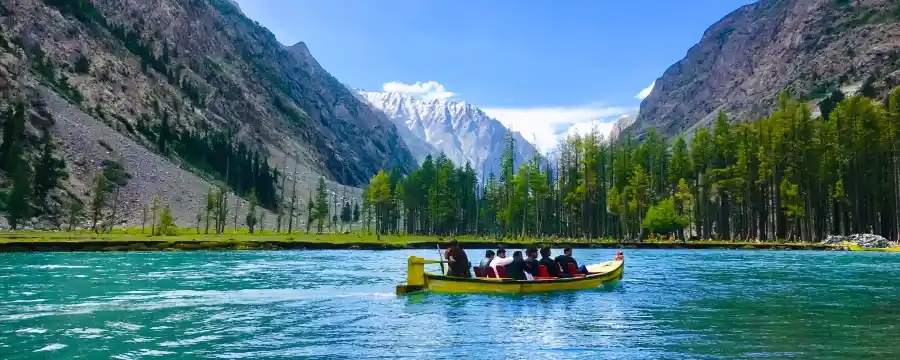
Mahodand Lake, approximately 35 km from Kalam by a rough jeep track through Ushu Forest, is the most beautiful destination in Swat Valley. The lake sits at approximately 2,900 meters, surrounded by high peaks on three sides. Its water is an extraordinary shade of blue-green produced by the glacial meltwater that feeds it. The meadows around the lake are carpeted with wildflowers in July and August. Trout move visibly in the clear shallows near the shore.
A jeep from Kalam to Mahodand costs approximately PKR 3,000 to 5,000 return and takes about 2 hours each way on a road that demands respect for what a jeep can do. The journey through Ushu Forest, one of Pakistan’s most intact temperate forests of deodar cedar and blue pine, is extraordinary in its own right. Accommodation at Mahodand is basic camping or a few very simple guesthouses. The lake is best visited as an overnight trip from Kalam rather than a rushed day trip.
Ushu Forest and the Valley of Eagles
Ushu Valley, branching east from Kalam, is a protected forest of deodar cedar that covers the valley slopes like a dark green blanket. The forest is home to the Himalayan brown bear, snow leopard, musk deer, and the Western tragopan pheasant, one of the most endangered and beautiful birds in Pakistan. The forest walk from Kalam through Ushu takes approximately two hours each way and is one of the finest forest hikes in northern Pakistan. No guide is required for the main trail, though local guides are recommended for anyone planning to go deeper into the forest.
Malam Jabba: Pakistan’s Premier Ski Resort
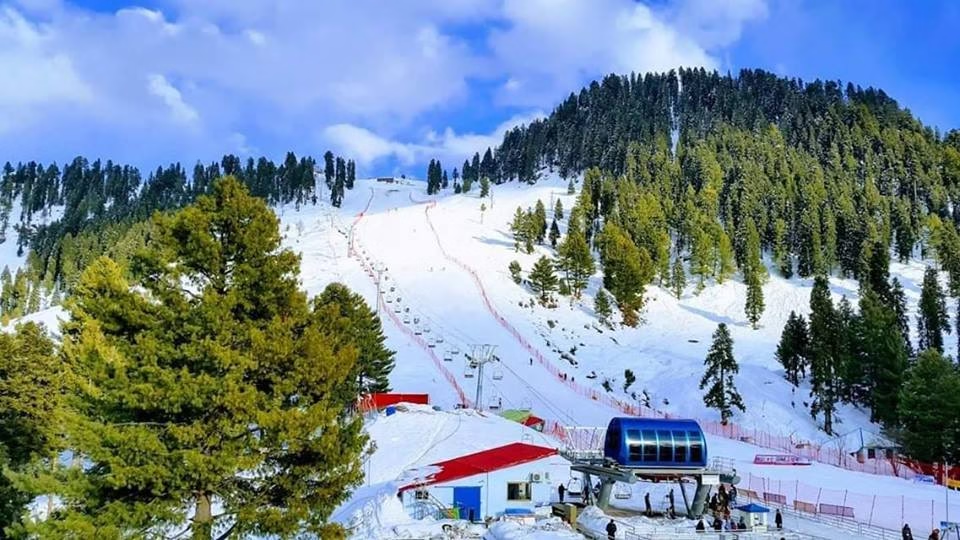
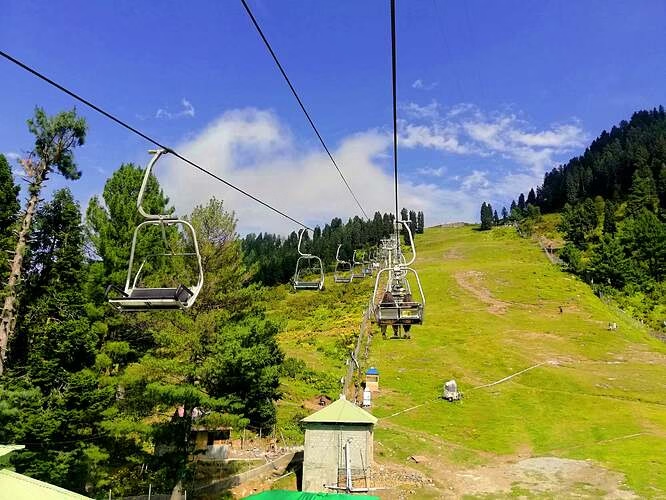
Malam Jabba, located at approximately 2,804 meters in the Kabal Valley west of Mingora, is Pakistan’s largest and most developed ski resort. The resort offers Pakistan’s only operational chairlift system, which operates in both summer and winter, giving visitors year-round access to mountain views and high-altitude meadows.
In winter, from December through February, Malam Jabba receives consistent snowfall that supports legitimate skiing and snowboarding. The runs are not the vertical drops of the Alps, but they are real ski runs with maintained slopes, ski rental, and instruction available. For the large number of South Asian visitors for whom this is their first encounter with snow and skiing, Malam Jabba delivers everything they need. For experienced European or North American skiers, it is a genuine novelty experience rather than a serious ski vacation.
| Detail | Malam Jabba Ski Resort |
| Altitude | Approximately 2,804 meters at resort base; slopes to 3,150 meters |
| Ski season | December to February (snowfall dependent) |
| Chairlift | Yes, operational year-round; views of Hindu Kush peaks |
| Ski rental | Available on-site; helmets and boots included |
| Ski lessons | Available through resort instructors |
| Hotel | Malam Jabba Hotel; refurbished and operational; book in advance for winter weekends |
| Summer use | Chairlift rides, paragliding, hiking, mountain biking |
| Distance from Mingora | Approximately 50 km; 1.5 hours by road |
Buddhist Ruins of Swat: Walking Through Pakistan’s Lost Kingdom
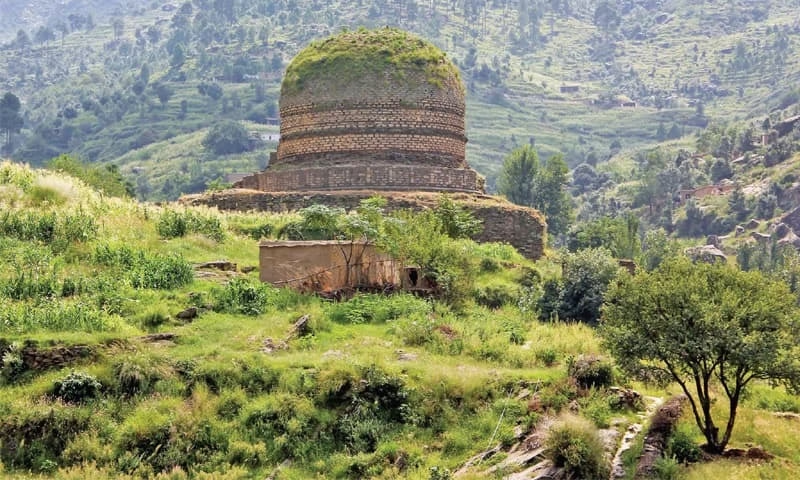
Before Islam arrived in the 10th and 11th centuries, Swat was a central territory of the Gandhara Buddhist civilization. The region was known in ancient texts as Udyana, meaning the Garden, and it was revered as a sacred Buddhist landscape. Chinese pilgrims including Fa Hian (399 CE) and Xuanzang (630 CE) traveled through Swat and described it as containing hundreds of Buddhist monasteries and thousands of monks.
Those monasteries are now ruins, but they are extraordinary ruins. The Butkara Stupa near Mingora was excavated by an Italian archaeological mission beginning in the 1950s and is one of the most scientifically important Buddhist sites in South Asia. The stupa was originally built in the 3rd century BCE and continuously enlarged over the following centuries. Surrounding it are the remains of votive stupas, monk cells, and sculpture workshops that together reveal the scale of Buddhist life in ancient Swat.
The Udegram archaeological site, a few kilometers from Mingora, preserves the ruins of a Hindu Shahi fortress that later became a Ghaznavid stronghold, layering multiple civilizations into a single hilltop. The White Palace at Marghazar, 12 km from Mingora, was the summer residence of the Wali (ruler) of Swat and represents the region’s most recent princely history, completed in 1941 and notable for its all-white marble construction.
Best Time to Visit Swat Valley Month by Month
| Month | Conditions | Best For | Crowds |
| March to April | Valley warming; some rain; orchards blooming | Photography, local culture, spring flowers | Low |
| May | Pleasant in valley; Kalam opening up; wildflowers beginning | Hiking, first access to upper valleys | Medium |
| June | Peak warmth in valley (25 to 30C); Mahodand accessible | All areas open; river levels high from snowmelt | Medium High |
| July to August | Monsoon influence possible; green and dramatic; occasional rain | Mahodand peak wildflower season; Ushu Forest | High (domestic peak) |
| September | Clear skies; cooling; excellent photography | Best overall balance of access and conditions | Medium |
| October | Autumn color; crisp air; emptying out | Autumn photography; quieter valleys | Low |
| November to February | Snow closes upper valleys; Malam Jabba for skiing | Skiing only; lower valley accessible year-round | Low except ski weekends |
Where to Stay in Swat Valley
| Property | Location | Category | Price Range 2026 | Best For |
| Serena Swat | Mingora area | Luxury | PKR 18,000 to 35,000 per night | International travelers wanting full service |
| Kalam Motel | Kalam town | Mid-range | PKR 4,000 to 8,000 per night | Good base for valley exploration |
| Rock City Resort Kalam | Kalam | Mid-range | PKR 5,000 to 10,000 per night | River views; reliable quality |
| Malam Jabba Hotel | Malam Jabba resort | Mid-range | PKR 6,000 to 12,000 per night | Ski season stays; mountain air |
| Local guesthouses (Mahodand, Ushu) | Upper valleys | Budget | PKR 1,500 to 3,000 per night | Adventure travelers; basic but authentic |
How to Get to Swat Valley
The Swat Motorway (M-16), completed as part of the CPEC infrastructure program, dramatically changed access to Swat Valley. From Islamabad, the journey now takes approximately 3.5 to 4 hours. From Peshawar, it is approximately 2 hours. The motorway is a genuine highway of international standard, and the journey is comfortable by Pakistani road standards.
From Islamabad: take the M-1 motorway to Peshawar, then the M-16 Swat Motorway to Mingora. From Peshawar: take the M-16 directly. No four-wheel drive vehicle is needed for the motorway section or for travel within Mingora and lower Swat. For Kalam and upper valleys, a standard vehicle suffices on the main road. For Mahodand, Ushu deep forest access, and side valleys, a four-wheel drive jeep is necessary and can be hired locally in Kalam.
Is Swat Valley Safe for Foreign Tourists in 2026?
The question of safety in Swat deserves a direct answer. In the late 2000s, Swat Valley experienced a Taliban insurgency that made it genuinely dangerous and resulted in mass displacement of local residents. That period ended with a military operation in 2009. Since then, the Pakistani army has maintained a significant presence in the region, security has been dramatically improved, and local communities have rebuilt their lives and their tourism industry.
As of 2026, Swat Valley including Mingora, Kalam, Malam Jabba, and the main tourist areas is considered safe for domestic and foreign tourists by Pakistani government advisories and by international travelers who visit regularly. The Foreign Office of the United Kingdom and the US State Department continue to advise awareness of the region’s history, but tourist incidents are extremely rare. The practical experience of travelers who visit is overwhelmingly positive.
Travelers should check their government’s current advisory before visiting, exercise standard awareness in public spaces, avoid remote areas near the Afghan border without local guidance, and follow any security instructions from hotels and tour operators. With those precautions, Swat Valley is a rewarding and largely safe destination for prepared international travelers.
Frequently Asked Questions: Swat Valley
May through September is the best overall period for visiting Swat Valley. June and July are peak wildflower season in Kalam and Mahodand. September offers the clearest skies and best photography conditions with fewer visitors than July and August. December through February is the ski season at Malam Jabba, which operates independently of upper valley conditions.
Yes. The main road from Mingora to Kalam is surfaced and navigable in a standard vehicle in good weather. The road beyond Kalam to Mahodand Lake requires a four-wheel drive jeep. These are readily available for hire in Kalam for approximately PKR 3,000 to 5,000 per day including driver.
Pashto is the primary language of Swat Valley. Urdu is widely understood and spoken in tourist areas, markets, and hotels. English is available in better hotels and tour operator offices. A few words of Pashto greetings, such as Stargey (hello) and Manana (thank you), are warmly received.
A minimum of three days allows you to see Mingora, drive to Kalam, and take a day trip to Mahodand. Five to seven days is ideal for exploring multiple valleys, visiting Malam Jabba, spending a night at Mahodand, and hiking in Ushu Forest. Travelers who come only for skiing at Malam Jabba typically stay two to three days.
Yes. Swat Valley is one of the more family-friendly mountain destinations in Pakistan. The lower valley around Mingora is easily navigable. Kalam has family-oriented guesthouses with gardens and river access. Malam Jabba in summer offers the chairlift and gentle hiking that children enjoy. The main road is good enough for standard vehicles, so families do not need expedition equipment.