Farhan Faqir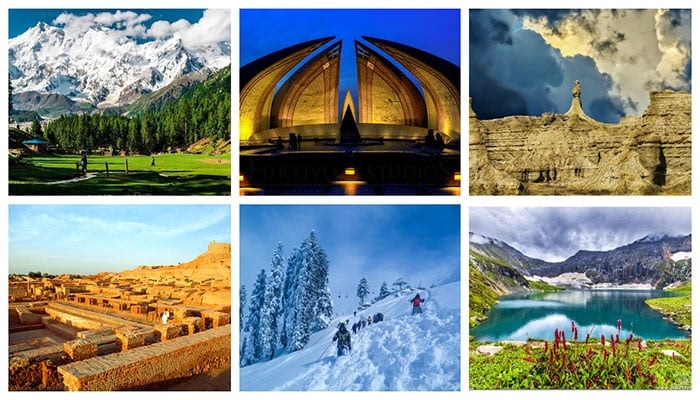
Why Pakistan Deserves a Place on Your Travel List in 2026
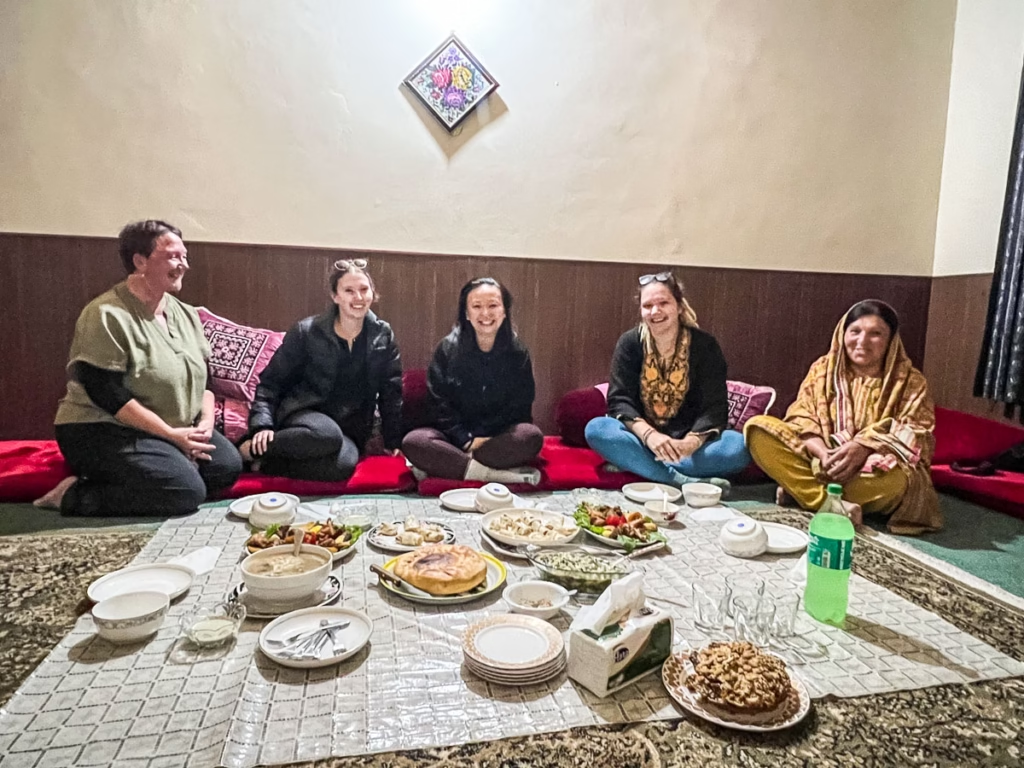
Pakistan has been called the world’s best-kept travel secret for so long that the phrase has become a cliche. But the underlying reality has not changed: Pakistan contains more 8,000-meter peaks than any other country on Earth, more Mughal monuments than India, a 5,000-year-old city with sewers and flush toilets predating Rome by 2,000 years, the world’s most linguistically diverse mountain region, a food culture that rivals any on the subcontinent, and a hospitality tradition so deeply embedded in society that strangers regularly invite foreign travelers into their homes for meals.
The visitor numbers tell the story of what is changing. Pakistan received approximately 2 million foreign visitors in 2024, up significantly from the 1.9 million recorded in 2018 before the pandemic. Social media coverage of Pakistan’s northern mountains, particularly Hunza Valley and the Karakoram, has driven a sustained surge of interest from travelers in Europe, North America, and East Asia. The country has responded by improving infrastructure, expanding the e-visa system, and developing new tourist facilities in previously underserved areas.
The country still has challenges. Some regions require careful planning and current information. The visa process has changed in 2026. Roads in remote mountain areas are demanding. But for prepared, culturally aware travelers, Pakistan offers experiences that genuinely cannot be replicated elsewhere on Earth.
Is Pakistan Safe for Foreign Tourists in 2026? The Honest Answer
The safety question deserves a direct, nuanced, and honest answer rather than either unqualified reassurance or excessive alarm.
Pakistan is not a uniformly safe country. Like every country, it has regions where travel is problematic, areas where caution is required, and areas where the practical safety record for foreign tourists is genuinely excellent. Understanding this regional variation is the key to planning a safe and rewarding trip.
The good news for most travelers is that the regions most visited by international tourists — Gilgit-Baltistan, Lahore, Islamabad, Swat Valley, Naran Kaghan, and Azad Kashmir — have strong safety records for foreign visitors. Gilgit-Baltistan in particular, including Hunza, Skardu, and the Karakoram Highway, is consistently described by experienced international travelers as one of the safest mountain regions in Asia. Crime against tourists is extremely rare. The communities are welcoming, the Pakistani army maintains a significant presence, and the tourism sector has strong incentives to ensure visitor safety.
| Region | Safety Assessment 2026 | Notes for Foreign Travelers |
| Gilgit-Baltistan (Hunza, Skardu, KKH) | Generally Safe | Strongest safety record for foreign tourists; exercise normal awareness |
| Islamabad | Generally Safe | Capital city with security infrastructure; standard urban precautions |
| Lahore and Punjab | Generally Safe | Check current local conditions; major tourist sites well-policed |
| Azad Kashmir (Neelum Valley, Murree) | Generally Safe | Current advisories from your government recommended; no Objection Certificate may be needed |
| Khyber Pakhtunkhwa (Swat, Naran, Chitral) | Mostly Safe with awareness | Check current government advisories; major tourist areas improved significantly |
| Sindh (Karachi, Mohenjo-daro) | Moderate caution | Karachi city requires awareness; Mohenjo-daro is a managed tourist site |
| Balochistan (Gwadar, Makran Coast) | Elevated caution required | Significant parts of Balochistan remain on Do Not Travel advisories; guided tours recommended for any visit |
| FATA border areas near Afghanistan | High risk | Avoid; these areas are not tourist destinations and are genuinely dangerous |
Pakistan Visa 2026: What Changed in January and How to Apply Now
Pakistan’s visa policy changed significantly on January 1, 2026. The Visa Prior to Arrival (VPA) facility, which had allowed tourists from certain countries to obtain visas upon landing at Pakistani airports, was suspended. This means that all foreign nationals now require a visa arranged before arriving in Pakistan.
The primary route for tourist visas is the Pakistan e-visa system, accessible at the official government portal evisa.gov.pk. The system accepts online applications from most countries. Processing time is typically 5 to 10 business days, though this varies. The e-visa costs USD 75 for most nationalities and grants a single entry for 30 days, extendable to 90 days from within Pakistan.
Citizens of 50-plus countries are eligible for an Electronic Travel Authorization (ETA), which is processed faster (sometimes within 24 hours) and is available at lower cost. Check the official portal for the current list of eligible ETA countries.
A tourist visa or ETA allows entry through the main international airports at Islamabad, Lahore, Karachi, Peshawar, and Faisalabad. The visa does not automatically permit entry to restricted border zones — travelers visiting areas adjacent to China (such as the Khunjerab Pass border zone) or certain parts of Azad Kashmir may need additional permissions from the relevant authorities.
How Much Does Pakistan Travel Cost? Daily Budget in USD (2026)
| Travel Style | Daily Budget USD | What Is Included | Best For |
| Budget backpacker | USD 20 to 35 per day | Shared guesthouses, local food from dhabas and markets, public transport, no activities | Long-term travelers; those with lots of time and flexibility |
| Mid-range comfortable | USD 50 to 100 per day | Private hotel rooms, restaurant meals, private transport for day trips, entrance fees | Most international travelers; comfortable without luxury |
| Upscale | USD 150 to 300 per day | 4-star hotels (Serena, Pearl Continental), private car and driver, guided tours, best restaurants | Business travelers; couples; those wanting convenience |
| Luxury | USD 300 plus per day | 5-star accommodation, chartered flights to remote areas, private guiding, exclusive camps | Luxury market; expedition companies; special experiences |
Note: These daily budget figures assume you are already in Pakistan. International flights to Islamabad from the USA typically cost USD 800 to 1,400 economy class depending on season and routing. Adding this cost to a 14-day trip brings total costs to approximately USD 1,500 to 2,500 for a budget traveler, USD 2,500 to 4,000 for a mid-range traveler, and USD 5,000 to 8,000 for an upscale trip.
Getting Around Pakistan: Transport Options Compared
| Transport Method | Best For | Cost Estimate | Considerations |
| Domestic flights (PIA, Serene Air) | Long distances quickly; Islamabad to Gilgit, Skardu, Lahore | USD 50 to 150 per sector economy class | Subject to weather delays in mountain destinations; book flexible fares |
| Private car with driver | Most comfortable for mountain travel; maximum flexibility | PKR 8,000 to 20,000 per day depending on vehicle and route | Recommended for most foreign tourists exploring northern Pakistan |
| Intercity bus (Daewoo Business Class) | Islamabad to Lahore, Karachi, other major cities | PKR 1,500 to 2,500 per journey | Comfortable, air-conditioned, punctual; not available in mountainous areas |
| Shared jeep (4WD) | Mountain valley exploration; Hunza side valleys, Skardu surroundings | PKR 500 to 2,000 per person shared | Adventure experience; basic comfort; essential for many mountain destinations |
| Local buses (Coasters) | Budget travel between towns in northern Pakistan | PKR 200 to 600 per journey | Crowded and slow; fine for short hops in towns |
| Careem and InDrive apps | Urban transport in Islamabad, Lahore, Karachi | Competitive with metered taxis; PKR 200 to 800 for most city trips | Best way to get around cities safely for foreigners |
Pakistan Culture Guide: What Foreign Visitors Need to Know
Pakistan is an overwhelmingly Muslim country with a conservative culture in many areas, though there is significant regional variation. Understanding and respecting cultural norms makes travel dramatically more rewarding and prevents unintentional offense.
Dress Code
Both men and women should dress modestly in public. For women, this means covering shoulders, chest, and legs below the knee. A loose shawl or dupatta (long scarf) is appropriate and appreciated in most settings. Tight-fitting clothing attracts unwanted attention. In Ismaili-majority areas like Hunza, norms are somewhat more relaxed, but modest dress remains appropriate. For men, shorts are unusual and best avoided outside hotel premises and trekking routes.
Photography Etiquette
Always ask permission before photographing people, particularly women. In many parts of Pakistan, photographing women without permission is deeply unwelcome and causes genuine offense. Men are generally more open to being photographed, particularly if approached respectfully with a smile and a gesture toward your camera. Military installations, border areas, and some religious sites prohibit photography; these restrictions are usually marked and should be strictly observed.
Ramadan Travel
During the holy month of Ramadan, Muslims fast from dawn to sunset. Eating, drinking, or smoking in public during daylight hours is considered disrespectful and is illegal in some forms in Pakistan. Many restaurants close during Ramadan daylight hours. However, travelers are not prohibited from eating privately in their hotel rooms, and most hotels in tourist areas make arrangements for non-Muslim guests. The evenings of Ramadan, particularly the iftar meal at sunset and the subsequent night market atmosphere, are culturally extraordinary and make Ramadan travel a unique experience.
Alcohol
Pakistan is officially a dry country. Alcohol is not available in public restaurants, bars, or shops. Better hotels in Islamabad and Lahore sometimes have licenses to serve alcohol to non-Muslim guests, but this is not universally the case and availability is limited. Travelers should not expect to find alcohol outside the largest international hotels and should plan accordingly.
Pakistan’s Four Regions: Which One Is Right for You?
| Region | Character | Best For | Best Season |
| Northern Pakistan (Gilgit-Baltistan, KPK mountains) | High altitude mountains, ancient fortresses, mountain cultures, world-class trekking | Adventure travelers, trekkers, photographers, mountain lovers | May to October |
| Punjab (Lahore, Multan) | Mughal monuments, Sufi shrines, legendary food culture, urban energy | History travelers, food lovers, cultural immersion | October to March |
| Sindh (Karachi, Mohenjo-daro) | Ancient civilizations, coastal culture, urban contrasts | History travelers, those adding the Indus Valley to an itinerary | October to February |
| Balochistan (Quetta, Makran Coast) | Dramatic desert landscapes, untouched coast, least touristed region | Very experienced travelers seeking authentic off-beaten-track experience | October to February |
Suggested Two-Week Pakistan Itinerary for First-Timers
| Day | Location | Activities |
| Day 1 to 2 | Islamabad | Arrive; Faisal Mosque; Margalla Hills hiking; Lok Virsa Museum; Pakistan Monument |
| Day 3 | Lahore (fly from ISB) | Lahore Fort and Sheesh Mahal; Badshahi Mosque; evening Food Street dinner |
| Day 4 | Lahore | Shalimar Gardens; Lahore Museum; Walled City walk; Wagah Border ceremony at sunset |
| Day 5 | Gilgit (fly from Lahore) | Arrive Gilgit; rest day at altitude; local market |
| Day 6 to 7 | Hunza Valley (Karimabad) | Drive Gilgit to Hunza; Baltit Fort; Eagle’s Nest viewpoint; Altit village |
| Day 8 | Upper Hunza (Passu) | Drive to Attabad Lake; boat ride; Passu Cones viewpoint; Hussaini Bridge |
| Day 9 to 10 | Skardu | Drive or fly to Skardu; Kharpocho Fort; Satpara Lake; Shangrila Resort |
| Day 11 to 12 | Fairy Meadows | Jeep from KKH to Tato; hike to Fairy Meadows; sunrise view of Nanga Parbat |
| Day 13 | Return Islamabad | Drive or fly to Islamabad; rest day |
| Day 14 | Depart | Optional morning: Taxila day trip before airport departure |
Frequently Asked Questions: Pakistan for First-Timers
A guide is not legally required for most tourist areas. However, for trekking in the Baltoro Glacier area and certain protected zones, registered local guides are mandatory. For general travel, a driver who speaks English and knows the roads is more practical than a formal tour guide. In cities like Lahore, the Walled City Authority’s organized tours are excellent value and context-rich. For first-time visitors who are not experienced solo travelers in South Asia, a local tour operator who handles logistics adds significant value.
Recommended vaccinations for Pakistan include hepatitis A and B, typhoid, tetanus, and routine vaccinations. Some travelers opt for rabies vaccination if planning extended rural travel. Yellow fever vaccination is required for travelers coming from countries where yellow fever is endemic. Consult a travel medicine clinic at least 4 to 6 weeks before departure. Malaria prophylaxis may be recommended for travel to certain areas of Sindh and Balochistan; discuss with your doctor.
Credit and debit cards are accepted in major hotels, upscale restaurants, and some shops in Islamabad and Lahore. Outside these urban centers, cash is the practical necessity. ATMs (HBL, MCB, UBL, Meezan Bank) are available in all major cities and in Gilgit, Skardu, Hunza, and Muzaffarabad. ATMs in mountain towns sometimes run out of cash on weekends. Carry adequate PKR cash when traveling to remote areas.