
 Farhan Faqir
Pakistan’s Festival Calendar — Why It Surprises
Pakistan is one of the world’s most culturally diverse countries, though this is not widely known internationally. The country is home to more than 70 distinct languages, dozens of separate ethnic groups, and communities whose traditions predate Islam, predate Alexander the Great’s passage, and in some cases predate written history. This diversity is expressed most vividly in its festival calendar.
From the Hindu Kush to the deserts of Sindh, from the Punjabi plains to the Balochi plateau, each region has its own calendar of celebration — harvest festivals, spring festivals, religious observances, musical traditions, and sporting events that have been maintained for centuries. For international visitors, this represents a rare opportunity: a chance to experience genuinely living traditional culture in places that receive a tiny fraction of the tourist attention given to neighboring India or Southeast Asia.
1. Shandur Polo Festival — July | Shandur Pass, 3,700m
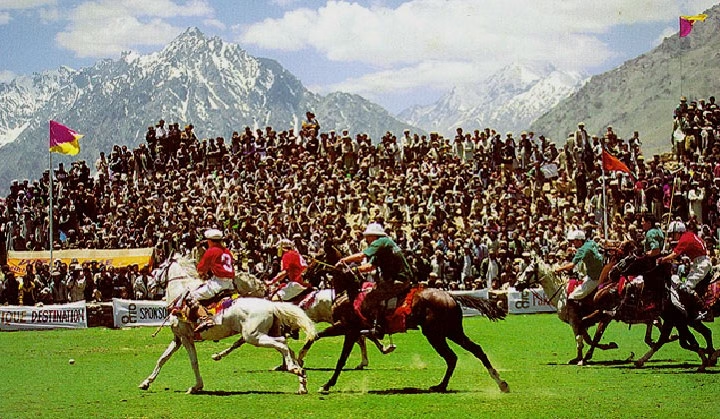
The Shandur Polo Festival is, without qualification, one of the most extraordinary sporting events anywhere in the world. Held in early July at Shandur Pass — a high plateau at 3,700 meters on the border of Chitral and Gilgit-Baltistan — it features an annual polo match between the teams representing Gilgit and Chitral, played according to ancient rules that bear only a superficial resemblance to modern polo.
The differences from modern polo are significant. There are no goal posts in the conventional sense — goals are scored by hitting the ball across the opposing team’s end line of the plateau. The field is larger and rougher than any modern polo pitch. The rules are less formalized, allowing for a more physical, more chaotic style of play that spectators describe as unlike anything in contemporary sports. The horses are local mountain breeds — smaller, tougher, and more agile than polo ponies — and the riders are village men who have grown up playing this game rather than trained professionals.
The setting transforms the event into something unforgettable. The plateau sits above 3,700 meters, surrounded by 5,000-meter peaks, with thousands of spectators camping on the surrounding hillsides. The air is thin, the sky enormous, and the atmosphere — combining the polo with traditional music, dance, food, and the reunion of communities from isolated valleys — is entirely unlike any comparable event.
Getting to Shandur: The pass is accessible from Gilgit (approximately 8–10 hours by jeep via Ghizer district) or from Chitral (approximately 6–8 hours). Both routes are scenic and challenging. Accommodation at Shandur during the festival is exclusively camping — bring or hire full camping equipment. The festival typically runs for 3 days in early July; exact dates vary by year.
2. Kalash Chilam Joshi — May | Kalash Valleys, Chitral
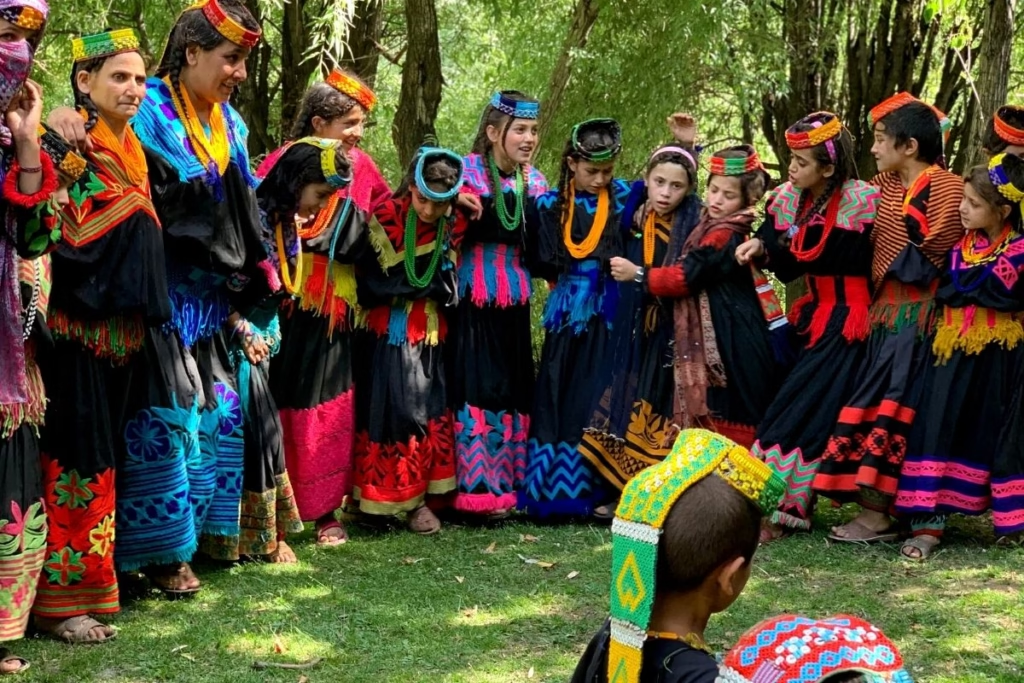
The Kalash people of the Chitral district are one of Pakistan’s most remarkable communities — a non-Muslim population of approximately 3,000–4,000 people who maintain pre-Islamic religious traditions, a distinct language (Kalasha), and a unique material culture in three remote valleys: Bumburet, Birir, and Rumbur. Their origins are debated — some traditions claim descent from Alexander’s soldiers, though genetic research suggests a more complex, older heritage.
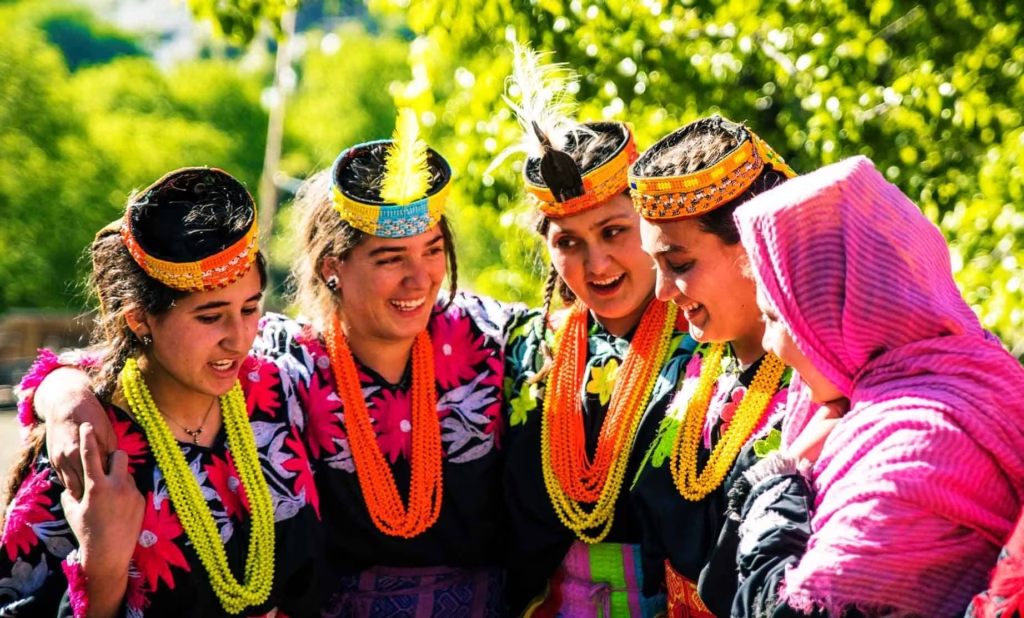
The Chilam Joshi festival, held in early May, celebrates the arrival of spring and the beginning of the agricultural season. The celebrations last several days and include: ritual offerings of milk and first vegetables to the gods of the Kalash religion; ceremonial songs performed by women in their distinctive traditional dress — black robes decorated with elaborate cowrie shell and bead embroidery; circle dances that continue for hours; storytelling; and communal feasting.
For visitors, the experience is extraordinary — there is no equivalent in Pakistan, and few equivalents anywhere in Asia, of a living pre-Islamic polytheistic religious festival observed by a small community in remote mountain valleys. The Kalash people are generally welcoming of respectful visitors during Chilam Joshi, though visitor numbers should be limited and cultural sensitivity is essential: photography should only be done with explicit permission, and participation in any ritual without invitation is inappropriate.
Access: From Peshawar or Chitral city, the Kalash valleys are 2–3 hours by road. Accommodation is available in small guesthouses in Bumburet Valley. Book well in advance for festival dates.
3. Navroz — March 21 | Gilgit-Baltistan and Chitral
Navroz (New Year in the Zoroastrian/Persian calendar, meaning ‘New Day’) is observed on March 21 throughout northern Pakistan, Central Asia, and Iran. In Gilgit-Baltistan, it marks the beginning of spring and the agricultural new year, and is celebrated with particular enthusiasm by the Ismaili Muslim community (which is the majority in Hunza and much of Gilgit).
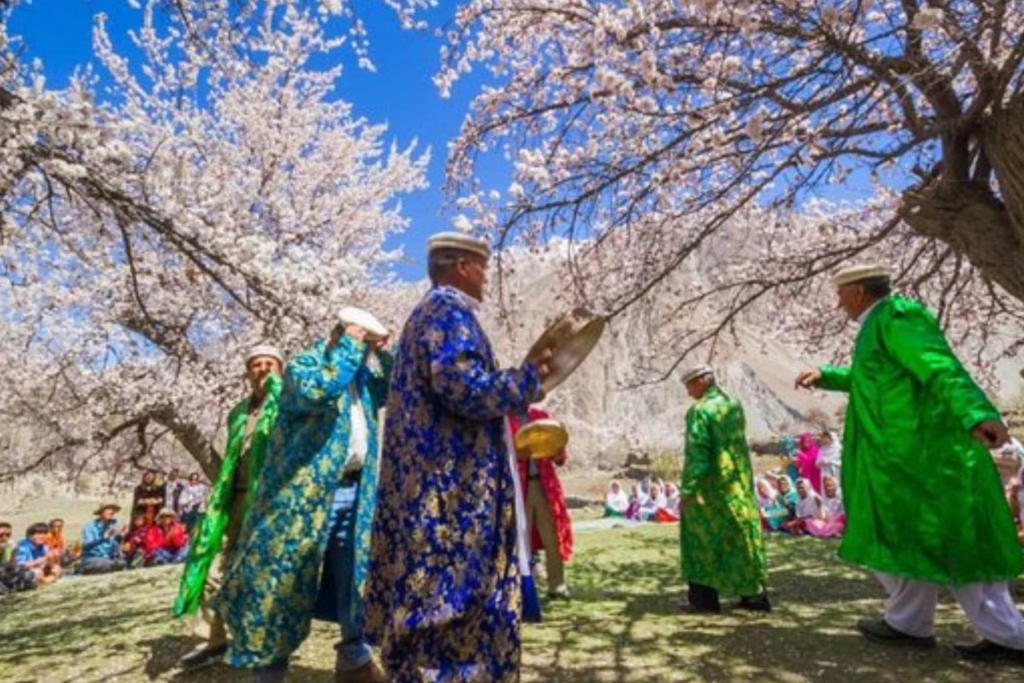
Celebrations include traditional music — particularly the surna (a loud wind instrument similar to an oboe) and dohl (drum) which are the traditional instruments of GB celebrations — communal polo matches, dancing, and feasting. In Hunza, the festivities often coincide with the first apricot blossoms, creating a visual backdrop of pink and white flowers. It is one of the most photographically beautiful times to be in the valley and one of the most socially vibrant.
4. Lok Mela — October | Islamabad
Lok Mela (People’s Festival), organized by the Pakistan National Council of the Arts, is Pakistan’s largest celebration of traditional crafts, performing arts, and cultural heritage. Held over approximately two weeks in October at the Lok Virsa campus in Islamabad, it brings together artisans, musicians, dancers, and food vendors from all four provinces and the northern territories.
The craft stalls alone are worth the visit: hand-knotted carpets from Balochistan; block-printed textiles from Sindh; embroidered shawls from Swat; carved wooden furniture from Charsadda; blue pottery from Multan; mirror-work from the Sindhi tribal areas; and dozens of other traditions that have been practiced for generations. Many artisans demonstrate their work live — watching a carpet weaver or a block printer at work is a direct connection to traditions that predate the Mughal Empire.
The performance schedule typically includes: Sindhi sufi music (qawwali and kafi forms); Punjabi folk dance (bhangra and luddi); Pashto attan (the national dance of the Pashtun people); Balochi traditional music; and the mountain music traditions of Gilgit-Baltistan. Entry to Lok Mela is free. It is easily accessible from central Islamabad.
5. Basant Kite Festival — February/March | Lahore
Basant, the spring kite-flying festival of Lahore, is traditionally one of the most visually spectacular urban celebrations in South Asia. At peak Basant, thousands of kites fill the sky above Lahore’s old city simultaneously, each flown by competitors attempting to cut each other’s strings using glass-coated or metalite cutting string. The rooftops of the old city are covered with kite fighters; the streets below are filled with spectators and vendors; music plays from every direction.
The festival was banned from 2007 to 2022 following deaths and injuries caused by sharp cutting strings (particularly metalite wire, which caused fatalities when it fell on motorcyclists and pedestrians). It has been selectively revived with restrictions — cutting string must now be cotton or conventional material only, and designated kite-flying zones have been established. The revival has been welcomed by Lahore’s cultural community, which viewed the ban as a loss of the city’s most distinctive tradition. When permitted and well-organized, there is nothing else quite like Basant anywhere in Pakistan.

6. Urs Festivals — Year-Round | Shrines Throughout Pakistan
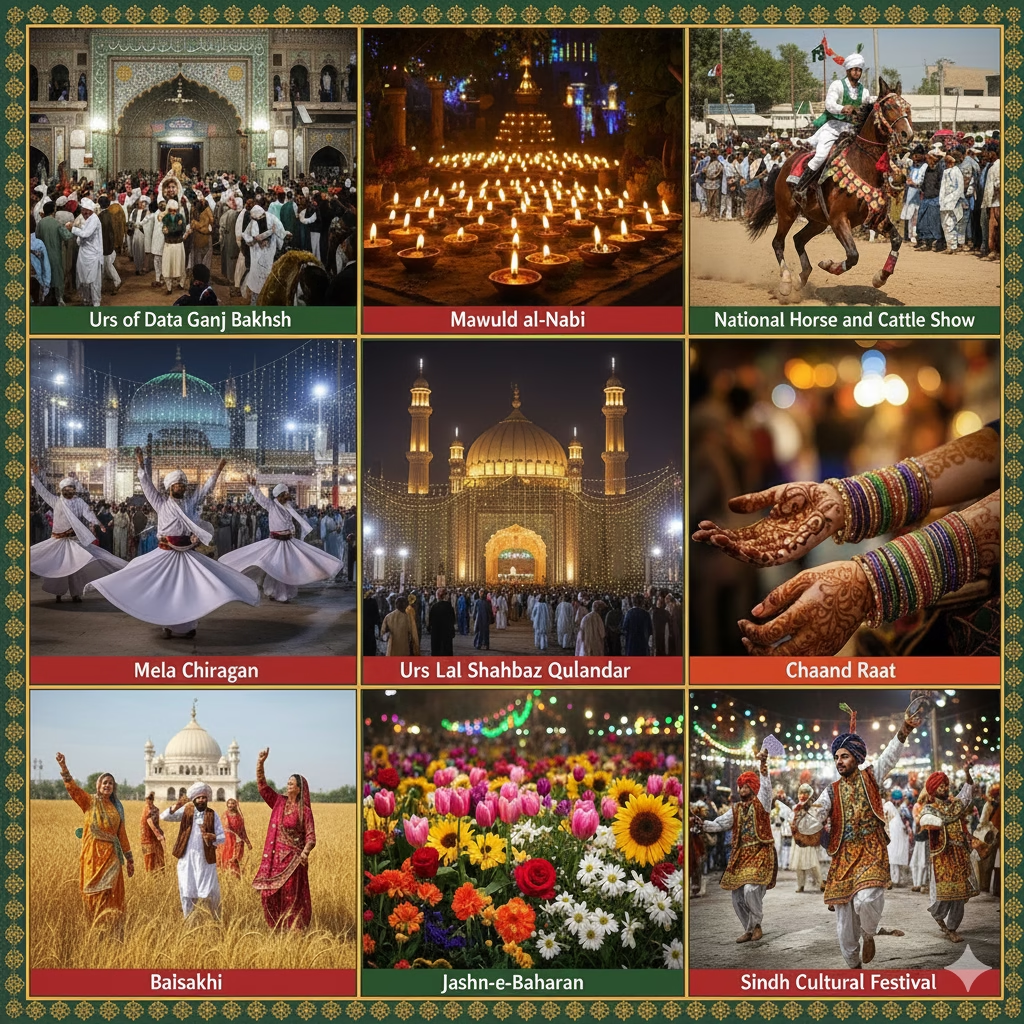
Pakistan has a strong Sufi tradition, and the urs festivals — annual commemoration events held at the shrines of Sufi saints on the anniversaries of their deaths — are among the most intensely atmospheric cultural events in the country. Major urs events include those at Data Darbar in Lahore (one of the oldest and most visited shrines in Pakistan), the urs of Lal Shahbaz Qalandar in Sehwan Sharif (famous for its ecstatic nocturnal dhamal dancing), and the urs of Shah Abdul Latif Bhittai in Bhit Shah.
These events involve: qawwali music performed through the night; dhamal (ecstatic devotional dance); the feeding of thousands of people; pilgrims traveling from across Pakistan; and an atmosphere that is simultaneously deeply religious and intensely communal. They represent the living Sufi tradition of South Asian Islam in its most public and accessible form.

1 comment
Wonderful web site. Plenty of useful information here. I am sending it to some friends ans also sharing in delicious. And of course, thanks for your effort!