
 Farhan Faqir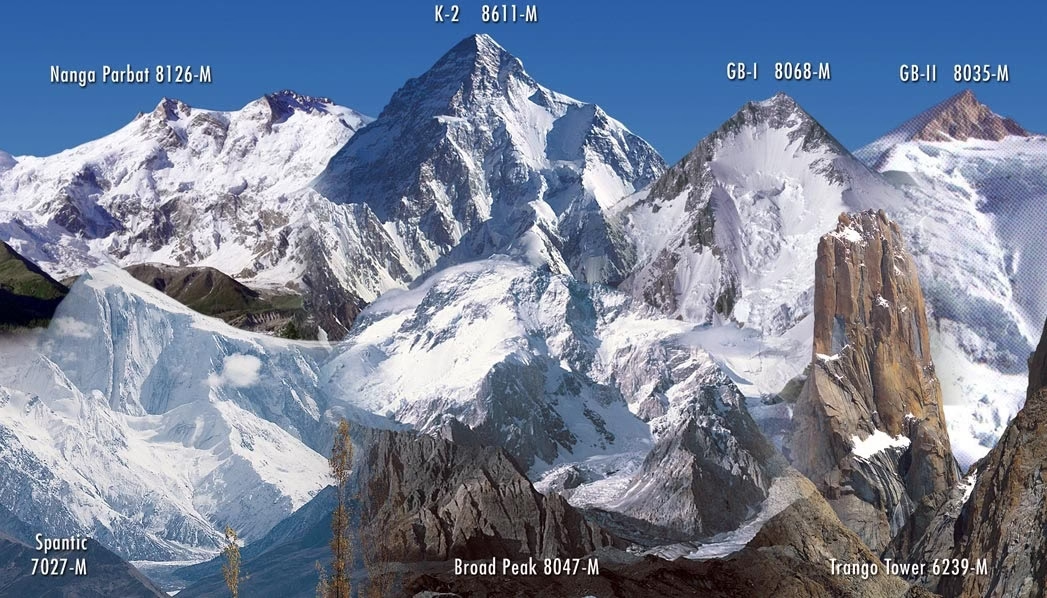
Pakistan — The Most Extreme Altitude on Earth
Pakistan’s mountains are not merely impressive. By the numbers, Pakistan contains more extreme altitude than any other country on Earth. Of the 14 mountains in the world that rise above 8,000 meters — the so-called eight-thousanders, a threshold that roughly corresponds to the ‘death zone’ where the human body cannot acclimatize — Pakistan contains 5. Nepal has 8 (most partly straddling the Chinese border), China has several shared with Nepal, and no other country has more than 2. The concentration of extreme altitude in the small area of Pakistan’s Gilgit-Baltistan province is a geological anomaly with no parallel.
This is the result of the collision between the Indian and Eurasian tectonic plates — one of the most active and fastest geological collisions on Earth. The Karakoram range, which hosts K2 and four other eight-thousanders, is one of the fastest-uplifting mountain ranges in the world. It is literally still growing.
The Five Eight-Thousanders
| Mountain | Height | World Ranking | Range | First Summit | Death Rate |
| K2 | 8,611m (28,251 ft) | 2nd | Karakoram | 1954 (Compagnoni & Lacedelli, Italy) | ~9.5–12% |
| Nanga Parbat | 8,126m (26,660 ft) | 9th | Himalayas (west anchor) | 1953 (Buhl, Austria — solo) | ~21% |
| Gasherbrum I (Hidden Peak / K5) | 8,080m (26,509 ft) | 11th | Karakoram | 1958 (Schoening & Clinch, USA) | ~10% |
| Broad Peak (K3) | 8,051m (26,414 ft) | 12th | Karakoram | 1957 (Austrian team) | ~8% |
| Gasherbrum II (K4) | 8,035m (26,362 ft) | 13th | Karakoram | 1956 (Austrian team) | ~10% |
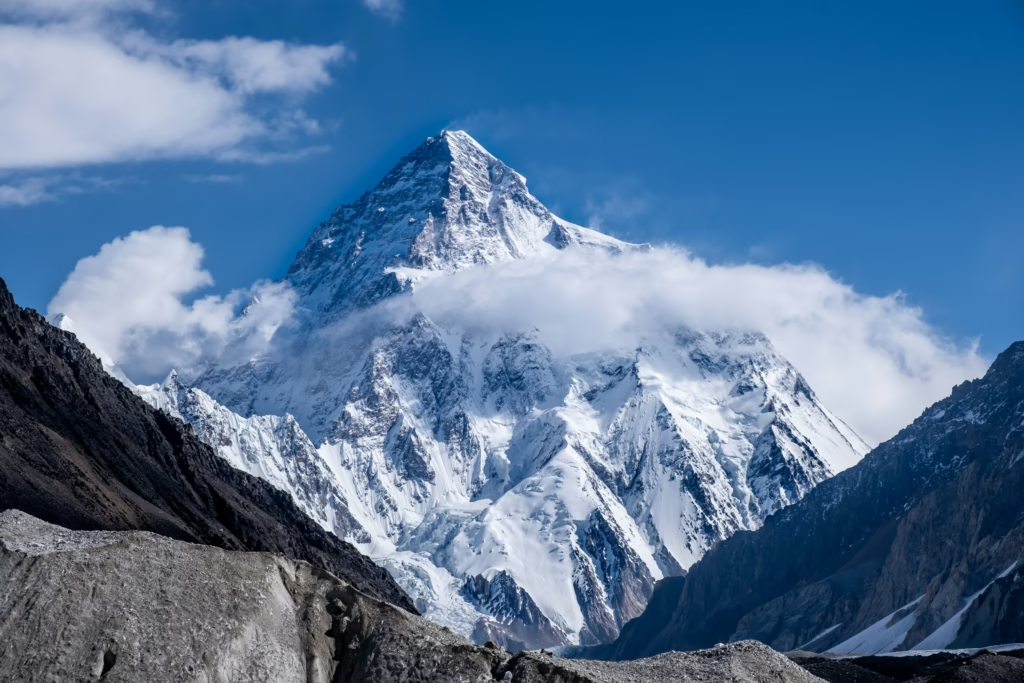
K2 — See Post 1 for Full Coverage
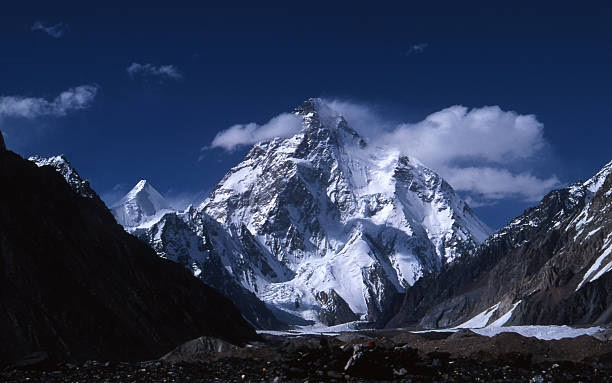
K2 is fully covered in Post 1 of this series. The essential facts: 8,611m, second highest in the world, historical fatality rate of approximately 9–12%, first summited in 1954, first winter ascent in 2021. See Post 1 for the complete guide.
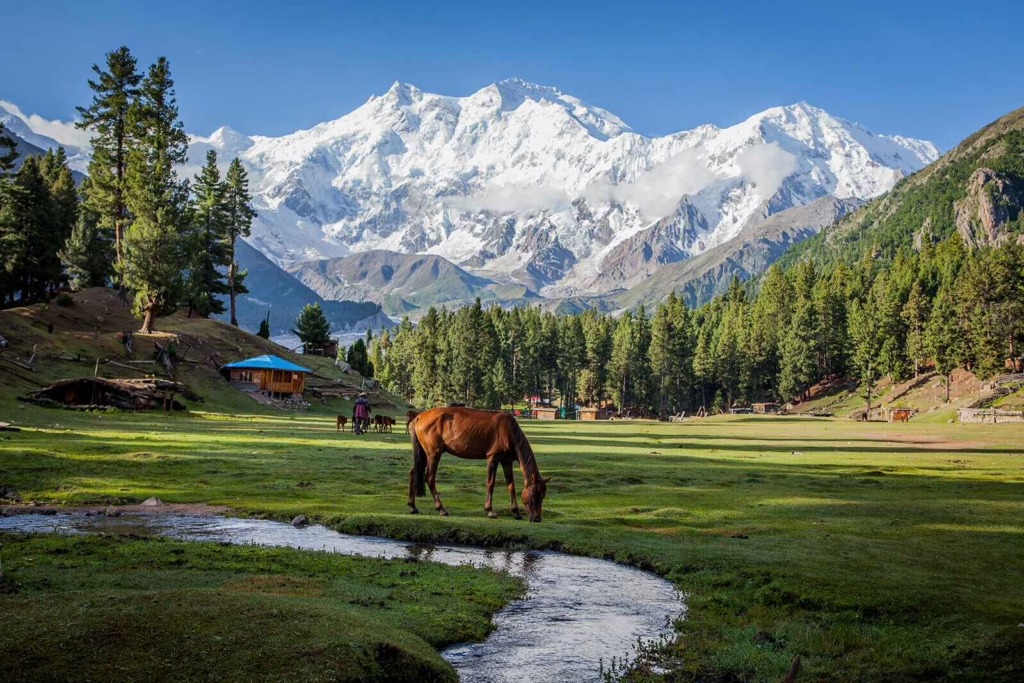
Nanga Parbat — See Post 2 for Full Coverage
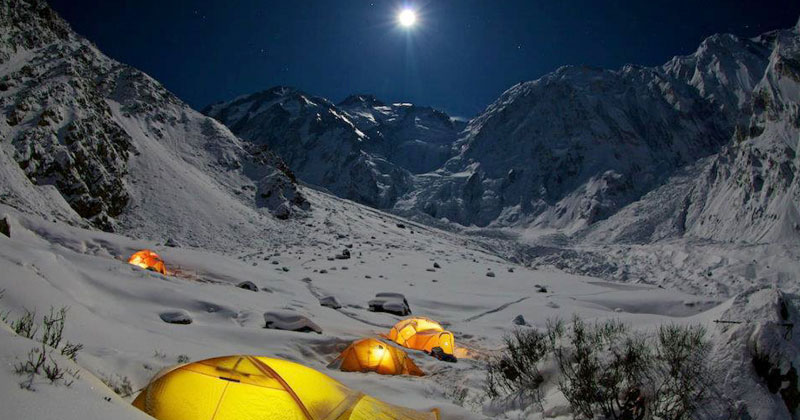
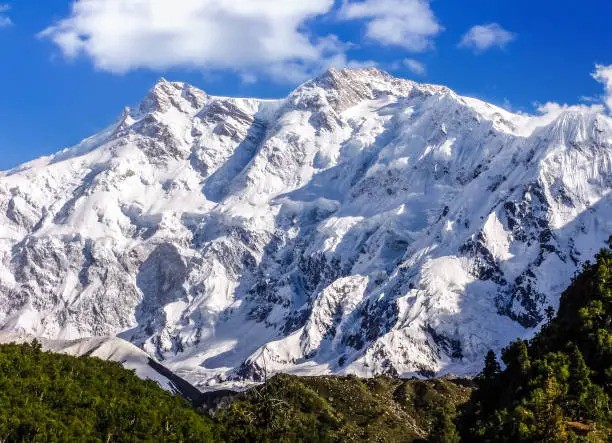
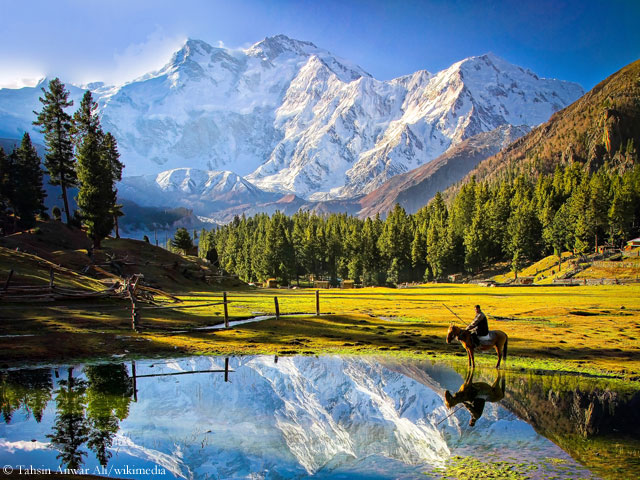
Nanga Parbat is fully covered in Post 2. The essential facts: 8,126m, ninth highest in the world, historical fatality rate of approximately 21%, ‘Killer Mountain’ nickname, first summited solo by Hermann Buhl in 1953. See Post 2 for the complete guide including Fairy Meadows trek.
Gasherbrum I — The Hidden Peak
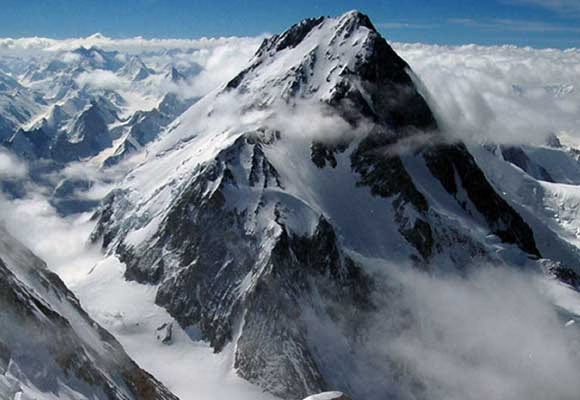
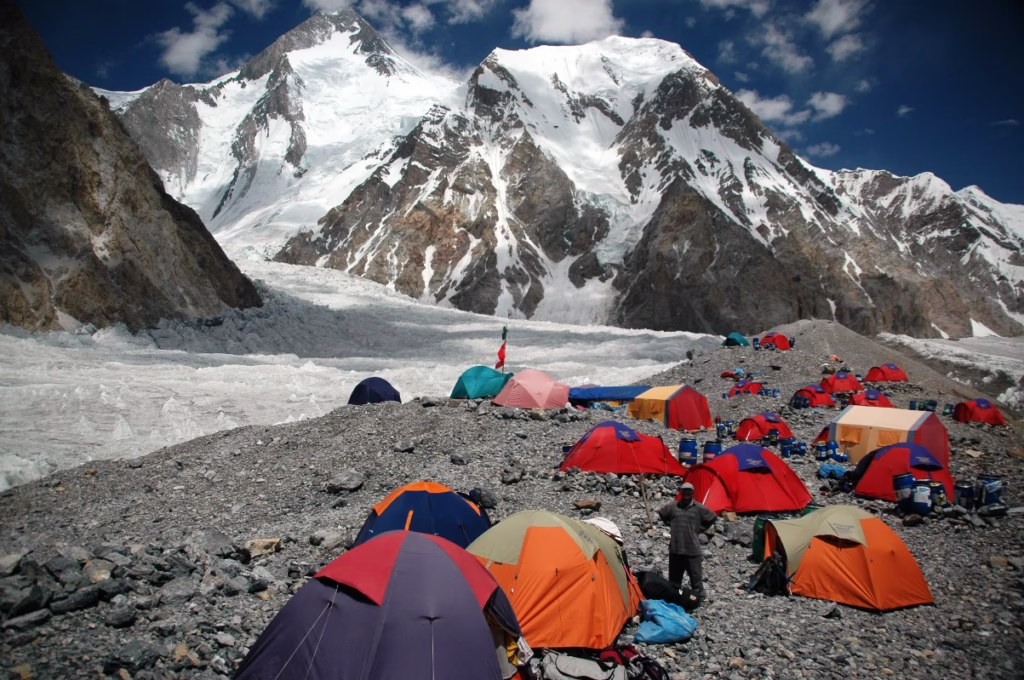
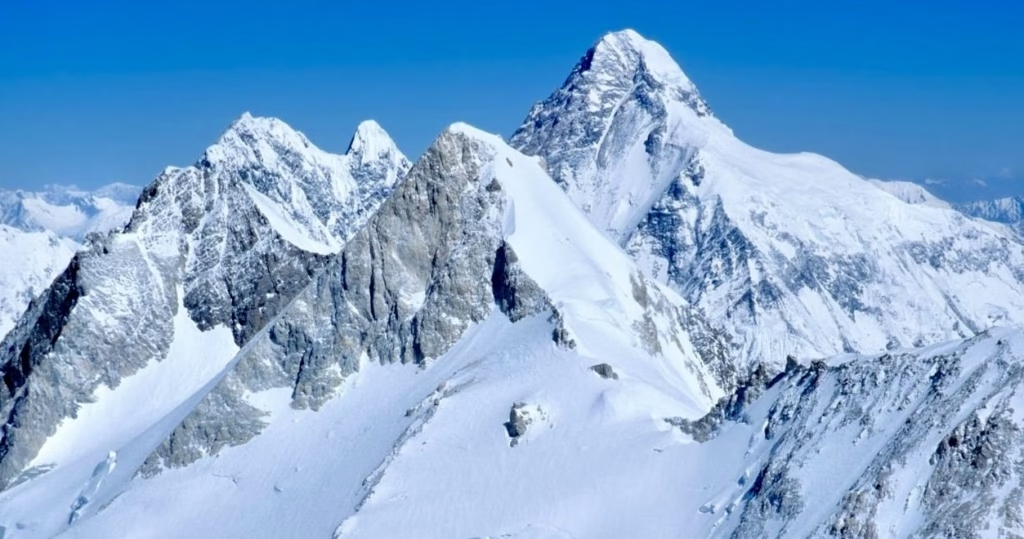
Gasherbrum I, also known as Hidden Peak and originally designated K5 in the Karakoram survey (the fifth peak surveyed), stands at 8,080 meters — the 11th highest mountain in the world. The name ‘Gasherbrum’ comes from the Balti language, meaning ‘Beautiful Mountain.’ The ‘Hidden’ in Hidden Peak refers to the mountain’s position: from the Baltoro Glacier approach, Gasherbrum I is concealed behind the shoulders of Gasherbrum II and other ridges until you are almost directly below it — a startling revelation of a massive peak that was invisible moments before.
Gasherbrum I was first summited on July 5, 1958, by American climbers Andrew Kauffman and Peter Schoening as part of the American Karakoram Expedition — the same year that Rakaposhi was first climbed. It is the highest of the Gasherbrum group and lies in the same geographic cluster as K2, Broad Peak, and Gasherbrum II — making the Baltoro Glacier region the most concentrated gathering of extreme altitude on Earth. Any expedition to K2 Base Camp will trek past the approaches to Gasherbrum I.
The mountain’s death rate of approximately 10% places it in the middle range of eight-thousander danger — significantly less dangerous than Annapurna (32%), K2 (9–12%), or Nanga Parbat (21%), but more dangerous than the ‘safer’ eight-thousanders like Cho Oyu.
Broad Peak — The Most Accessible Eight-Thousander
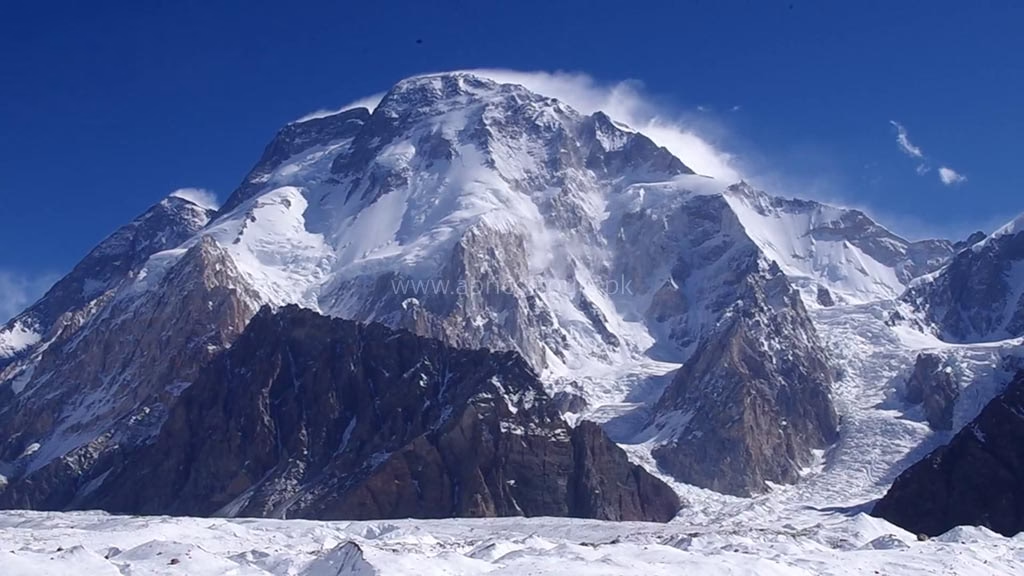
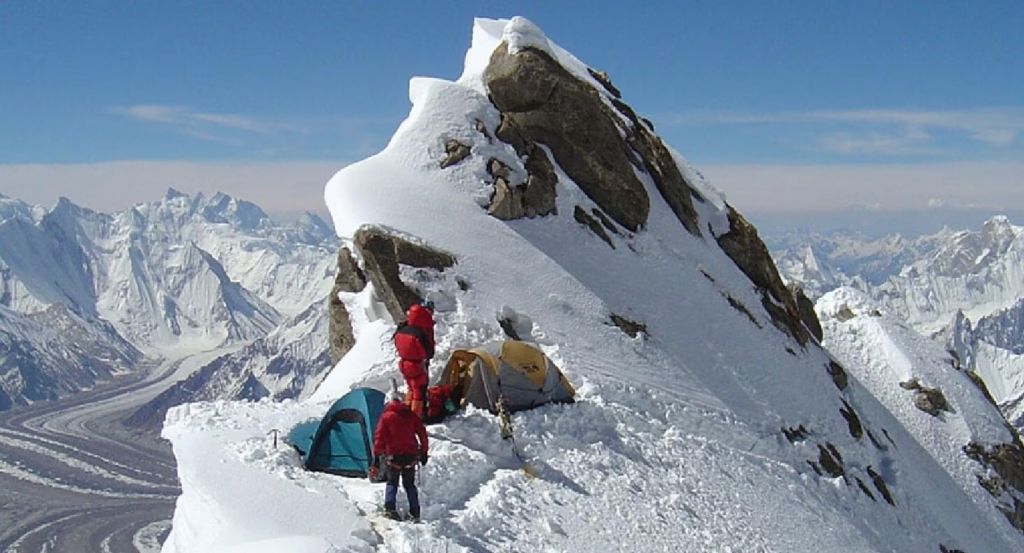
Broad Peak (8,051m), designated K3 in the original Karakoram survey, earned its name from its unusually wide summit plateau — approximately 1.5 kilometers of broad, almost flat summit ridge at high altitude. Located 8km southeast of K2 on the same Baltoro Glacier system, it is accessed via the same approach as K2 and is frequently climbed by expeditions using it as an acclimatization peak before their main K2 attempt.
It was first summited on June 9, 1957, by an Austrian team including Fritz Wintersteller, Marcus Schmuck, Kurt Diemberger (who went on to become one of the most celebrated high-altitude climbers and writers in the sport’s history), and Hermann Buhl — the same Austrian who had made the historic solo first ascent of Nanga Parbat four years earlier. Tragically, this was to be Buhl’s last summit: he disappeared on Chogolisa during the same 1957 expedition.
With a death rate of approximately 8%, Broad Peak is one of the more ‘accessible’ eight-thousanders in terms of relative risk — though ‘accessible’ in this context means a still-extraordinary level of danger. Its lower technical difficulty compared to K2 and its well-established route make it a relatively more achievable objective for highly experienced alpinists looking for their first eight-thousander summit.
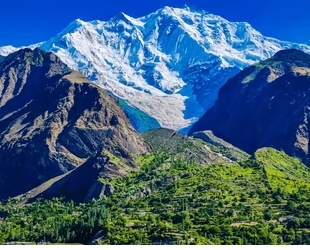
Gasherbrum II — The Easiest Eight-Thousander?
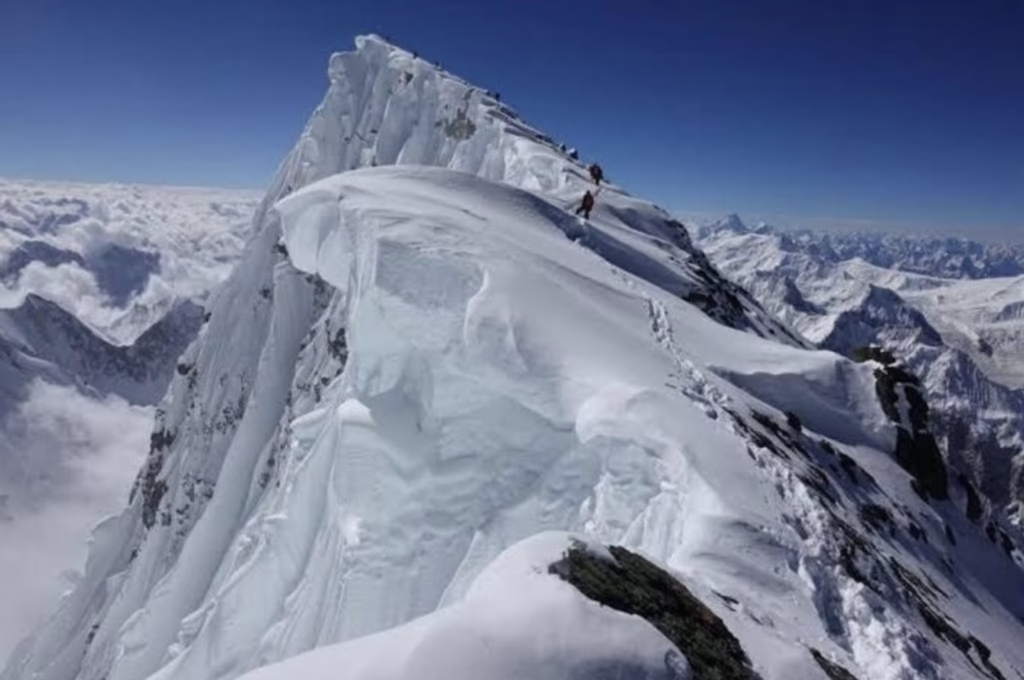
Gasherbrum II (8,035m), originally K4 in the Karakoram survey, is sometimes called the ‘easiest’ of the eight-thousanders — a designation that must be understood in context. With a death rate of approximately 10%, it is still one of the most dangerous mountains in the world. ‘Easier’ compared to K2, Nanga Parbat, or Annapurna does not mean safe.
The mountain was first summited on July 7, 1956, by an Austrian team — Fritz Moravec, Josef Larch, and Hans Willendorf — making it the second of the Gasherbrum group to be climbed (Gasherbrum I having been climbed two years later). The standard route on Gasherbrum II is technically less demanding than K2’s routes, and the mountain has become a relatively popular objective for commercial eight-thousander expeditions.
The Baltoro Glacier — The Greatest Concentration of Altitude on Earth
Four of Pakistan’s five eight-thousanders (K2, Gasherbrum I, Gasherbrum II, and Broad Peak) are clustered around the Baltoro Glacier system. The area around Concordia — where the Baltoro and Godwin-Austen glaciers meet — is genuinely extraordinary: you can stand in one spot and look at four 8,000-meter peaks simultaneously. No other place on Earth offers this. The trek to K2 Base Camp (covered in Post 1) passes through this area and gives access to views of all four peaks in a single journey.
Pakistan Mountaineering — The Current State
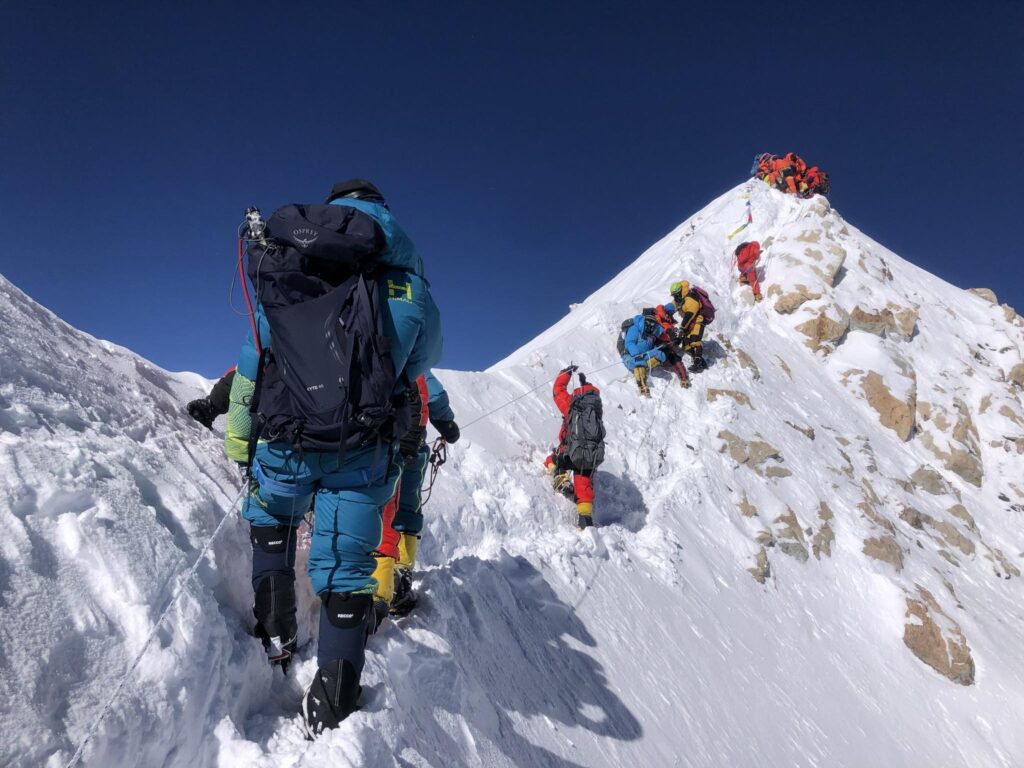
Pakistan’s high peaks attract serious mountaineers from around the world every climbing season. The Pakistan Alpine Club (PAC) in Islamabad issues permits for all major peaks. The commercial expedition industry — guided expeditions for paying clients, analogous to commercial Everest expeditions — has grown significantly in Pakistan since 2015, bringing more economic activity to Skardu and Gilgit but also more crowding on popular routes.
The summer 2025 season saw 41 K2 summits, continued activity on all Gasherbrum peaks and Broad Peak, and several attempts on Nanga Parbat. Pakistani climbers are increasingly part of international expeditions — both as High-Altitude Porters and as summit climbers in their own right. The Skardu economy during climbing season (May–August) is significantly supported by the logistical requirements of these expeditions: food, fuel, porters, equipment, and accommodation.

1 comment
First of all I would like to say superb blog!
I had a quick question which I’d like to ask if you do not mind.
I was curious to find out how you center yourself
and clear your mind before writing. I’ve had trouble clearing my thoughts in getting
my ideas out. I truly do take pleasure in writing but it just seems like the first 10 to 15 minutes are generally lost just trying to
figure out how to begin. Any recommendations or hints?
Many thanks!