Farhan Faqir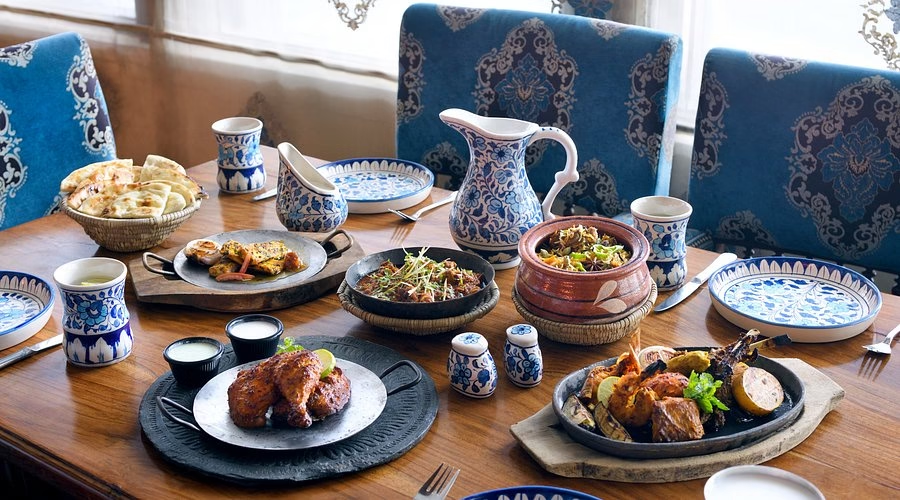
Why Pakistani Food Is One of the World’s Great Undiscovered Cuisines
Pakistani cuisine sits at the crossroads of Central Asian, Mughal, Persian, and subcontinental South Asian food traditions. It is simultaneously one of the richest and most overlooked food cultures on Earth. While Indian food has been internationalized through decades of diaspora restaurants in every Western city, Pakistani food — which shares some overlap but is distinctly its own tradition — remains largely unknown to foreigners who have not visited the country.
The food in Pakistan is designed for people who work hard physically in challenging climates. The portion sizes are enormous. The caloric density is high. The spices are complex and varied by region. And the hospitality culture ensures that a guest is never allowed to feel unsatisfied. For foreigners accustomed to restaurant portions and predictable menus, eating in Pakistan is a joyful kind of overwhelm.
This guide covers 25 essential dishes organized by category and region. For each dish, we note where the best version is found in Pakistan, what the experience of eating it is like, and what foreign visitors should know about ordering and eating it.
Pakistan’s Four Regional Food Traditions
| Region | Dominant Flavor Profile | Key Ingredients | Signature Dishes |
| Punjab (Lahore) | Rich, deeply spiced, butter-forward, intensely savory | Ghee, cream, tomatoes, garam masala, yogurt | Nihari, Halwa Puri, Paye, Lahori Karahi, Lassi |
| KPK (Peshawar, Swat) | Bold, smoky, minimal spice but maximum impact | Charcoal, whole spices, meat, simplicity | Chapli Kebab, Peshawari Karahi, Tikka, Lamb Chops |
| Sindh (Karachi) | Aromatic, influenced by coastal trade; tomato-rich | Seafood, tamarind, coconut, rice | Sindhi Biryani, Sindhi Curry, Karachi street food |
| Balochistan | Minimalist, large format, smoke-perfumed | Whole animals, open fire, rock salt | Sajji, Kaak (stone-baked bread), Dampukht |
Pakistan’s Four Regional Food Traditions
1. Nihari — The King of Pakistani Breakfasts
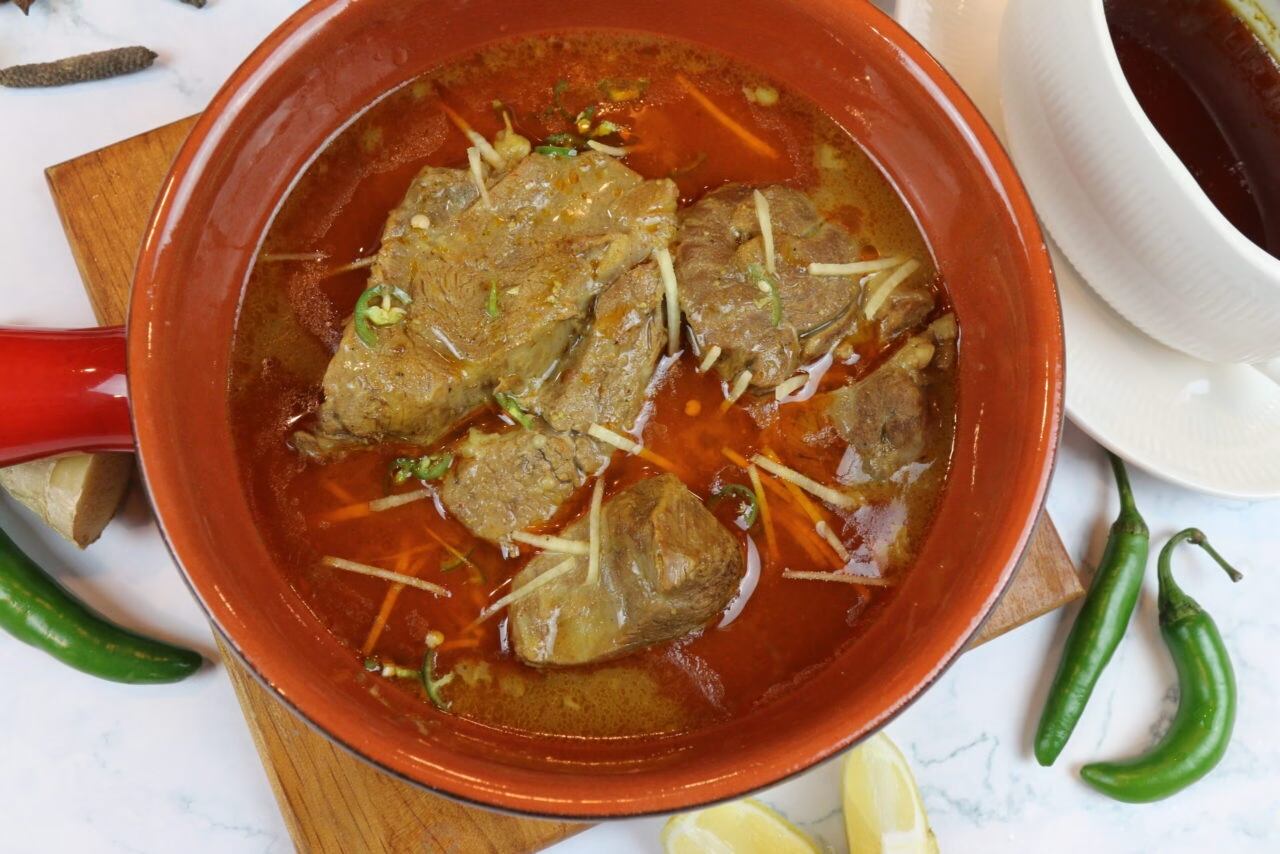
Nihari is a slow-cooked beef shank stew that was originally prepared in the overnight hours in large cauldrons and served as breakfast to the Mughal court and working classes of Delhi and Lahore. The meat falls apart after 8 to 12 hours of cooking. The gravy is complex with deep, dark spices including fennel, cardamom, ginger, and a specific spice blend called nihari masala. Topped with fried onions, fresh ginger julienne, green chilies, lemon, and coriander, a bowl of Nihari with fresh naan on a cold morning is one of the finest breakfast experiences on Earth.
WHERE TO EAT IT: Fazal-e-Haq Nihari, Gawalmandi, Lahore. Also excellent at any established restaurant in Lahore’s old city food streets. Karachi’s Nihari is slightly different in flavor profile and also worth trying.
2. Halwa Puri — The Lahori Breakfast Experience
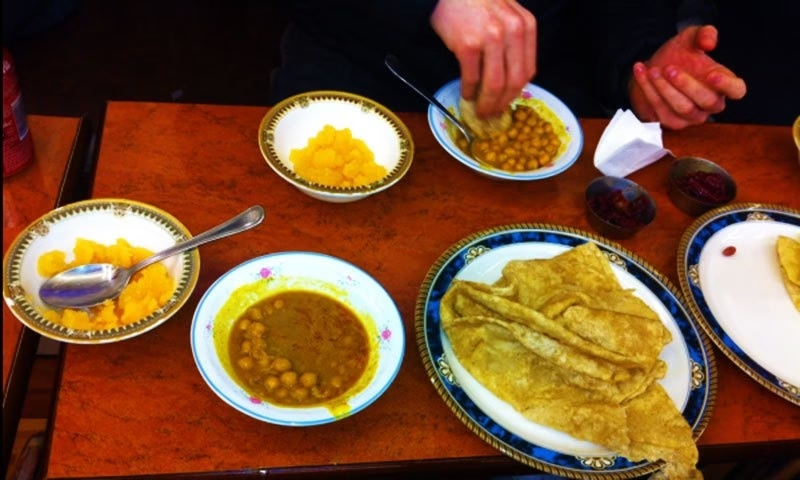
Halwa Puri is not a single dish but a breakfast combination: puri (deep-fried wheat bread, hot and puffy), halwa (sweetened semolina pudding cooked in ghee), channay (spiced chickpea curry), and achar (mixed pickle). The combination of sweet, savory, fried, and spiced in a single breakfast spread is extraordinary. Halwa Puri breakfasts in Lahore are a social institution — families arrive at 7 AM and linger for two hours. The food is served on steel plates with steel cups of strong sweet tea.
WHERE TO EAT IT: Hussain Chowk area, Lahore old city. Any established Lahori breakfast restaurant open before 10 AM. The best versions are found in working-class neighborhoods where the food is made for locals, not tourists.
3. Chapli Kebab — The Peshawari Masterpiece
Chapli Kebab is the signature dish of Peshawar and the wider KPK region. It is a large, flat, disk-shaped kebab made from coarsely ground beef or lamb mixed with tomatoes, onions, eggs, pomegranate seeds, coriander, and a specific Peshawari spice blend, then pan-fried in beef fat. The result is a kebab with a crunchy, caramelized exterior and a juicy, complex interior. Chapli Kebab is served at every roadside dhaba between Peshawar and the Khyber Pass, and the best versions are made to order, the kebab shaped and dropped into hot fat while you watch.
WHERE TO EAT IT: Namak Mandi area, Peshawar. Any roadside dhaba along the GT Road in KPK. In Lahore, Bundu Khan restaurant chain offers a reliable version.
4. Karahi — The National Dish
Karahi is named after the wok-like pan in which it is cooked. It is arguably the dish that best represents Pakistani cooking as a whole: chunks of meat (chicken, mutton, beef, or fish) cooked rapidly over high heat in a blend of tomatoes, green chilies, ginger, garlic, and spices until the gravy is reduced to a thick, clinging, intensely flavored coating on the meat. Karahi is eaten directly from the cooking vessel, scooping the meat and gravy with fresh naan. It is ordered by weight: a half-kilogram karahi feeds 1 to 2 people, a full kilogram feeds 3 to 4.
WHERE TO EAT IT: Namak Mandi, Peshawar (for mutton karahi cooked in beef fat — the most intense version). Fort Road Food Street, Lahore (for white karahi — a cream-enriched variant). Boat Basin, Karachi (for seafood karahi).
5. Biryani — A National Obsession with Regional Divisions
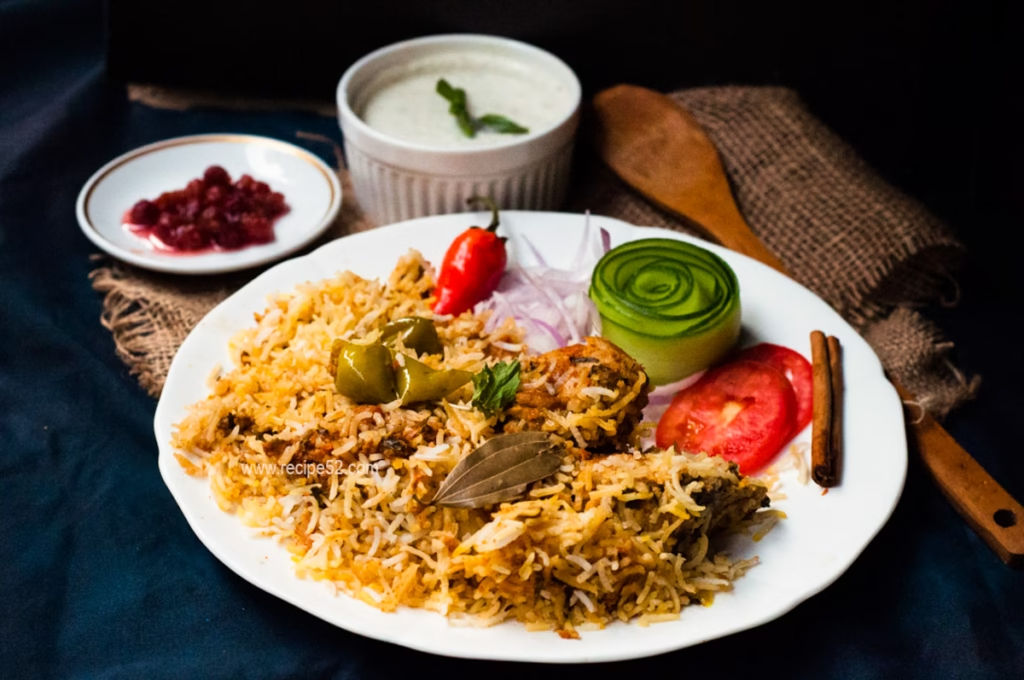
Every region of Pakistan has its own biryani and considers all others inferior. Lahori Biryani is aromatic with saffron and kewra water. Karachi Biryani is spicier with green chilies and sour elements from dried plums (aloo bukhara). Sindhi Biryani adds potatoes and is considered the most complex. Hyderabadi-style biryani cooked in the dum (steam-sealed) method is prized for its perfumed rice.
WHERE TO EAT IT: Bundoo Khan, Lahore (Lahori style). Student Biryani, Karachi (Karachi style — the most famous biryani restaurant in Pakistan). Any major restaurant in Karachi for Sindhi Biryani.
6. Sajji — Balochistan’s Whole-Roasted Masterpiece
Sajji is the signature dish of Balochistan and one of the most dramatic food preparations in Pakistan. A whole lamb or chicken, marinated only in salt and very minimal spice, is skewered on a metal rod and roasted slowly over an open wood fire for 4 to 6 hours. The result is smoky, tender meat with a deep bark of charred skin that breaks to reveal impossibly juicy, clean-tasting meat inside. Sajji is served whole on a platter with a mound of Kaak bread and a bowl of simple yogurt.
WHERE TO EAT IT: Quetta (best version in Pakistan, as the original). Increasingly available in major cities: Bundu Khan in Lahore offers a version. Ziafat Restaurant, Islamabad, serves a reliable Sajji.
7. Haleem — The Slow-Cooked Porridge That Became a Street Food Star
Haleem is a dish of broken wheat, lentils, and meat slow-cooked together until everything breaks down into a thick, porridge-like consistency. It is intensely savory, deeply nutritious, and topped with fried onions, ginger julienne, fresh coriander, lemon juice, and sometimes a drizzle of green chili oil. The best Haleem has a stringy, pull-apart quality from the meat and a complex, layered spice profile. It is eaten with naan and is one of the most satisfying cold-weather foods in Pakistan.
WHERE TO EAT IT: Usman Haleem, Lahore (institution; lines form before opening). Bohri Bazaar, Karachi. Peshawar Saddar bazaar street vendors.
8. Paye — Trotters for the Committed Carnivore
Paye (feet or trotters of a goat, sheep, or cow) slow-cooked overnight in a spiced broth until the collagen dissolves into a rich, gelatinous gravy and the meat falls from the bone. This is not a dish for hesitant eaters. It is a dish of extraordinary depth and richness, eaten as a Sunday morning breakfast in Lahore accompanied by fresh naan and strong chai. The collagen-rich broth has a thick, almost sticky quality that coats the mouth and fills the stomach for hours.
WHERE TO EAT IT: Paye Street, Data Darbar area, Lahore. Any large restaurant in the Gawalmandi area. Best eaten early morning (6 to 9 AM) when the overnight cooking is at its peak.
9. Seekh Kebab — Skewered Perfection
Seekh Kebab consists of minced meat (usually beef or lamb) mixed with onions, green chilies, coriander, and spices, molded around flat metal skewers, and grilled over charcoal. The exterior chars and crisps while the interior stays moist and fragrant. The quality difference between a factory Seekh Kebab and one made fresh from good meat and grilled to order is enormous. Good Seekh Kebabs are one of the most addictive things in Pakistani street food.
WHERE TO EAT IT: Any roadside barbecue stand in Lahore, Islamabad, or Peshawar. Fort Road Food Street, Lahore. Namak Mandi, Peshawar.
10. Daal Maash — The Everyday Soul Food of Pakistan
Daal Maash is a preparation of whole black urad lentils cooked slowly until soft and finished with a tempering of ghee, garlic, and dried red chilies. It is the everyday food of Pakistan, eaten in every home across every economic class with fresh roti. A well-made Daal Maash has a creamy, earthy depth that is completely satisfying. It is the dish that most Pakistani families would name as their comfort food.
WHERE TO EAT IT: Everywhere. Any Pakistani home. Any traditional Pakistani restaurant. The restaurant Cuckoo’s Den in Lahore’s Walled City serves an excellent version in a heritage setting.
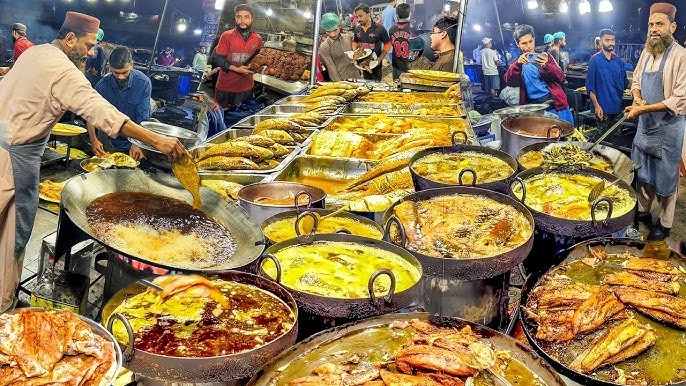
11. Mutton Chops (Lamb Chops) Peshawar Style
Marinated in basic spices (salt, black pepper, a little cumin), grilled over charcoal until the outside is charred and the inside pink and juicy. Simplicity is the point. Peshawari cooking philosophy is that excellent meat needs minimal intervention. A plate of four chops with naan, green chutney, and sliced onion is a perfect meal that takes 20 minutes to eat and stays with you for the rest of the day.
12. Fish Tikka — From the Rivers of the North
River trout from the mountain streams of Swat Valley, KPK, and GB is the finest freshwater fish in Pakistan. Marinated in a blend of yogurt, lemon, and spices and grilled over charcoal, Swat Valley trout has a clean, fresh flavor that requires no sauce. Trout restaurants in Kalam and Mahodand serve it straight from the river to the grill to the plate.
13. Sajji Rice
A Balochi specialty: long-grain rice cooked in the juices and drippings of the Sajji roast, absorbing the smoky, meaty flavors of the cooking fire. Often served underneath the Sajji itself, soaking in the fat that drips from the resting meat. One of the more unusual and delicious preparations of rice in South Asian cuisine.
14. Chicken Tikka (Pakistani Style)
Pakistani Chicken Tikka is not the red, cream-sauce preparation most Westerners know from Indian restaurant menus. It is bone-in chicken pieces marinated overnight in yogurt, ginger-garlic paste, and a deep blend of whole spices, then grilled over charcoal until charred on the outside and juicy within. The color comes from natural spices, not food coloring. It is served with a pile of thin naan, raw onion rings, green chili, and fresh coriander chutney.
15. Murgh Changezi — The Mughal Emperor’s Chicken
Named after Genghis Khan (Changez Khan in Urdu), this dish has Mughal-era Delhi origins and is particularly popular in Lahore. Large chicken pieces are marinated in a vivid orange spice paste and then cooked in a rich tomato and cream gravy with whole spices. The result is a chicken curry of depth and complexity that sits between a tikka and a korma. Changezi is festive food, served at celebrations and family gatherings.
16. Peshwari Charsi Karahi
In Namak Mandi (Salt Market) in Peshawar, a specific type of Karahi is made that Peshawarites consider superior to all others. It uses only meat, tomatoes, green chilies, ginger, and the fat rendered from the meat itself. No water, no additional oil, no extra spices. The reduction of these ingredients over extremely high heat in a cast iron karahi for about 20 minutes produces a concentrate of pure meat and tomato flavor that is unlike any other preparation.
17. Suji Halwa — Devotional Sweetness
Semolina cooked in copious ghee with sugar, cardamom, and saffron until each grain is separately coated and the whole mass is sticky, fragrant, and impossibly rich. Suji Halwa is made at religious occasions, distributed at mosques, offered at Sufi shrines, and eaten for breakfast with puri. It is food with emotional weight — associated with prayer, celebration, and community.
18. Lassi — The Drink That Makes Pakistani Summers Survivable
Pakistani Lassi is not a smoothie. It is whole-milk yogurt churned in a large earthen pot with ice and served in a large glass, sometimes with a layer of cream (malai) floating on top. Sweet Lassi is most common. Salty Lassi with cumin is a traditional accompaniment to spiced food. Lahori Lassi in particular, served in tall glasses with the cream top, is a benchmark experience for the city’s food culture.
19. Kashmiri Chai — The Pink Tea of the North
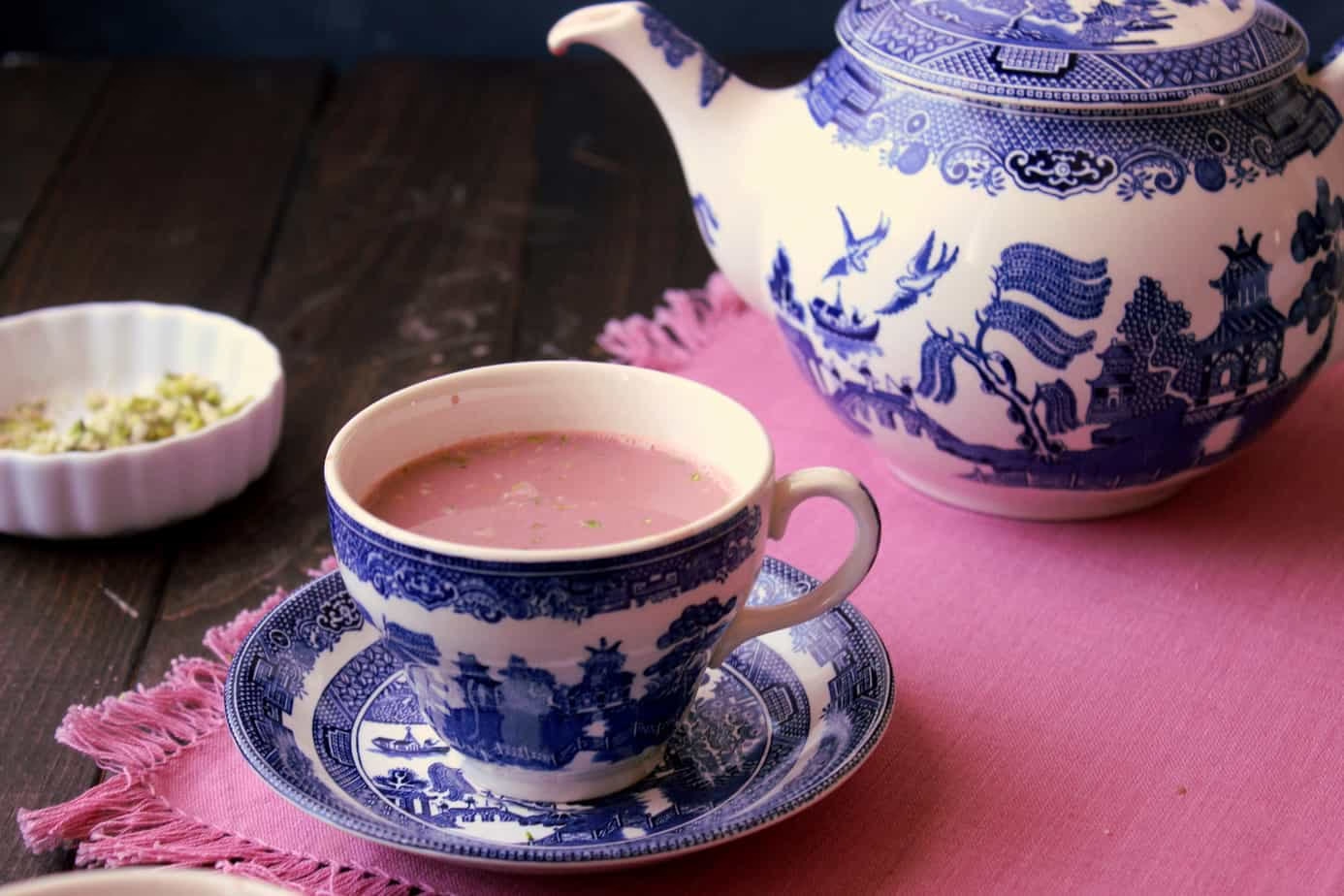
Kashmiri Chai, also called Noon Chai, is a green tea preparation that turns pink through a specific brewing process involving sodium bicarbonate and milk. It has a faintly savory, slightly sweet, creamy flavor with notes of cardamom and cinnamon. It is drunk from small cups on cold mornings throughout northern Pakistan and Azad Kashmir. Foreign visitors who encounter it for the first time are usually surprised both by the color and by how good it tastes.
20. Qorma — The Mughal Feast Dish
Qorma (the Urdu word from which korma derives) is meat slow-cooked in a deeply aromatic sauce of yogurt, fried onions, whole spices, and often nuts and dried fruits. Pakistani Qorma tends to be darker, richer, and more intensely spiced than the mild yellow-cream dish known in British Indian restaurants. Goat or lamb Qorma cooked for a wedding feast, served with rice, is the pinnacle of Pakistani formal cooking.
21. Aloo Gosht — Home Cooking at Its Best
The everyday family meal of millions of Pakistani households. Bone-in goat or mutton with potatoes in a moderately spiced tomato and onion gravy, eaten with fresh roti. Unpretentious, reliable, deeply comforting. The potatoes absorb the meat juices and the spiced gravy and become the best thing on the plate.
22. Tikka Boti (Mixed Grill)
A platter of mixed grilled meats — chicken tikka, seekh kebab, boti (chunks of marinated meat), and sometimes Chapli Kebab — served on a bed of naan with chutneys, raw onion, and lemon. The go-to order at any Pakistani barbecue restaurant and the format that lets foreigners sample multiple preparations in a single meal.
23. Gol Gappa (Pani Puri) — The Exploding Street Food
Hollow crispy wheat shells (gol gappay) filled with a mixture of mashed potato and chickpeas, then dunked into a thin, intensely spiced tamarind and mint water. The entire thing is placed in the mouth at once and explodes with sweet, sour, spicy, and savory flavors simultaneously. This is the most universally consumed street food in Pakistan. Vendors are found on every corner in every city. The eating process is inherently social and somewhat messy and that is entirely the point.
24. Falooda — The Summer Dessert Drink
Falooda is a cold dessert drink: a glass layered with rose syrup, vermicelli noodles, basil seeds, milk, and a scoop of vanilla or rose ice cream. It is drunk with a spoon-straw combination that allows eating and drinking simultaneously. Sweet, cold, pink, and fragrant with rose water, Falooda is one of Pakistan’s most distinctively enjoyable summer treats.
25. Sheer Khurma — Eid’s Sweetest Celebration
A sweet milk-based dessert made with vermicelli, dates, dried fruits, nuts, cardamom, and saffron, served warm on the morning of Eid. In Pakistani households, making and sharing Sheer Khurma on Eid morning is a tradition so embedded in culture that the occasion would feel incomplete without it. For foreign travelers who happen to be in Pakistan during Eid, being offered Sheer Khurma by a host family is one of the most welcoming gestures of Pakistani hospitality.
Vegetarian Eating in Pakistan: Is It Possible?
Pakistan is a heavily meat-eating culture and most restaurant menus are organized around meat dishes. However, vegetarian eating is entirely possible with some strategy. Daal (lentil preparations) of multiple kinds are ubiquitous and excellent. Aloo dishes (potato-based curries), saag (spinach and mustard greens), and mixed vegetable curries are available at most traditional restaurants. In larger cities, specific vegetarian restaurants exist. Lahore and Islamabad have growing vegetarian and vegan cafe cultures.
The main challenge for strict vegetarians is that many daal and vegetable preparations are cooked with ghee (clarified butter) or sometimes with meat stock. Asking specifically whether a dish is cooked in ghee or oil, and whether any meat stock is used, is the appropriate approach. Most restaurants will accommodate the request without issue.
Frequently Asked Questions: Pakistani Food for Visitors
Pakistani food is spiced, not automatically super-spicy in the chili-heat sense. The complexity comes from combinations of whole and ground spices including cardamom, cinnamon, cloves, cumin, coriander, and garam masala blends. Green and red chilies add heat, but many dishes are moderately spiced. If you are heat-sensitive, asking for kam mirch (less chili) is understood in all restaurants and is a completely normal request.
Street food in Pakistan, eaten from busy, high-turnover vendors, is generally safer than poorly run restaurants because the rapid turnover means food is fresh. Cooked food served hot is safest. Avoid raw salads and unpeeled fruit from unknown sources. Bottled water is essential throughout Pakistan. Trusted street food vendors with visible high customer volumes are the practical safety indicator.
Pakistan is officially a dry country. With meals, Lassi (yogurt drink) is the perfect accompaniment to spiced food. Cold fresh lime soda (nimbu pani) is widely available and refreshing. Rooh Afza, a rose-based cordial mixed with cold water, is a classic Pakistani summer drink. Tea, consumed almost continuously throughout the day, accompanies everything.