Farhan Faqir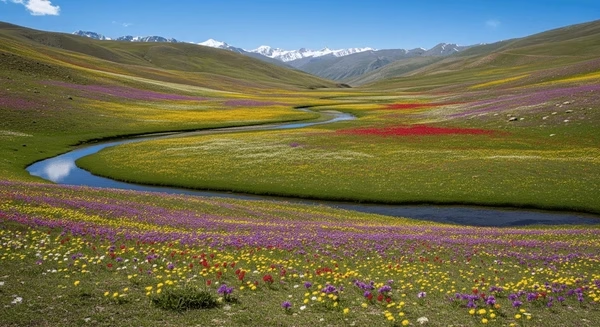
Deosai: The Landscape That Looks Like Another Planet
Deosai means Land of Giants in Shina, the primary language of Gilgit-Baltistan. The name refers to the legend that the plateau was once the domain of giants — beings so large that the wide, treeless expanse was scaled to their proportions rather than human ones. Standing on Deosai, you understand the myth immediately. The plateau extends for 3,000 square kilometers at an average elevation of 4,114 meters, and in every direction the ground rolls away to distant horizons without the interruption of a single tree. It is the second-highest plateau on Earth after the Tibetan Plateau.
In July and August, this vast highland turns into one of the most extraordinary wildflower meadows in Asia. Hundreds of species of alpine flowers bloom simultaneously — blues, yellows, purples, whites, and pinks — across every square meter of ground. The flowers are so dense that from a distance the plateau surface looks painted. Glacial streams cut through the meadows, and Himalayan brown bears — Pakistan’s largest surviving population — wander across the open ground with the confident indifference of animals that have no natural predators.
In September, the flowers fade and the plateau shifts to golden and rust-brown tones as the grass prepares for winter. By October, snowfall begins and the access road closes. By November, Deosai is buried under meters of snow that will not clear until June of the following year.
Planning a broader trip to the region? Read our complete Skardu Travel Guide 2026 — Deosai is one of several unmissable stops from Skardu city.
Deosai at a Glance
| Detail | Information |
| Location | Gilgit-Baltistan, between Skardu and Astore districts |
| Average elevation | 4,114 meters — world’s second-highest plateau |
| Area | Approximately 3,000 square kilometers |
| Nearest city | Skardu (approximately 25 km to the Shatung entrance gate) |
| Best season | July to September; wildflowers peak mid-July to mid-August |
| Access | Jeep only; no paved road within the park; standard vehicles cannot manage the terrain |
| Entry permit | Required; obtained at park entrance; approximately PKR 600 to 1,000 per person |
| Camping | Permitted in designated areas; bring all supplies including fuel |
| Wildlife | Himalayan brown bear, snow leopard, Tibetan wolf, Marco Polo sheep, bar-headed goose |
The Himalayan Brown Bear: Why Deosai Matters Globally
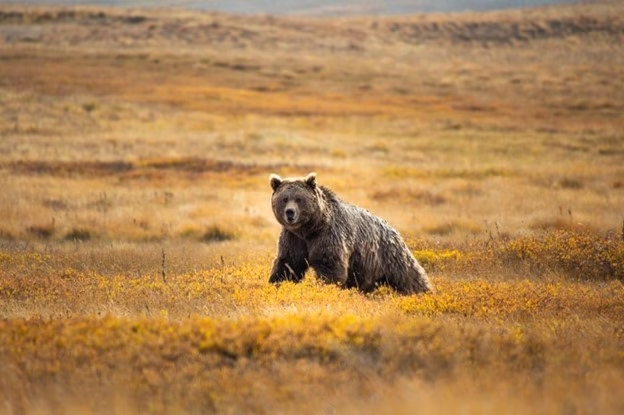
The Himalayan brown bear (Ursus arctos isabellinus) is one of the rarest bears in the world. Its population across Pakistan, India, and China is estimated at fewer than 150 individuals in total. Deosai National Park holds the largest single population in Pakistan — approximately 40 to 50 individuals as of the most recent survey — which makes the park a global conservation priority.
Before Deosai was protected as a national park in 1993, poaching had reduced the bear population to a critical level. The protection status and the conservation efforts of the Snow Leopard Foundation and WWF Pakistan have allowed a modest recovery. The bears are now a regular sight for visitors during summer months, typically spotted grazing on roots and berries in the open meadows.
Observing a Himalayan brown bear on Deosai is not a guaranteed experience, but it is a realistic one during July and August. Bears tend to be active in the early morning and late afternoon. Areas near the Sheosar Lake and the Bara Pani River are particularly productive for sightings. A local guide who knows the plateau can significantly improve viewing chances.
Wildflower Season: When Deosai Explodes With Color
The wildflower season on Deosai, peaking in mid-July to mid-August, is one of the most spectacular botanical events in Asia. The combination of the late snow melt (the plateau is buried until June) and the intense solar radiation at 4,100 meters forces alpine flowers into a compressed, explosive blooming period. Species that would bloom sequentially over months at lower elevations bloom simultaneously at Deosai.
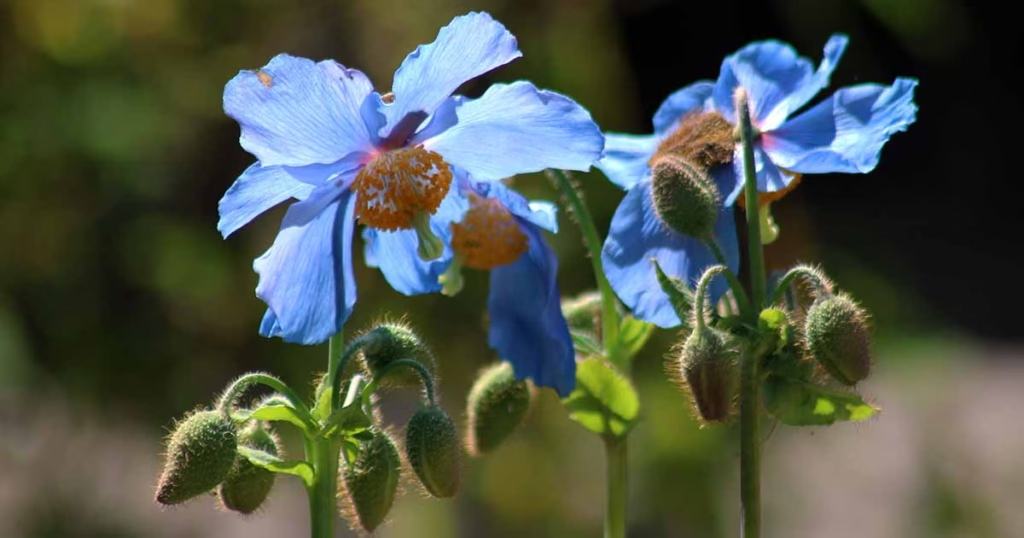
The dominant species include Geranium, Potentilla, Primula, Ranunculus, Meconopsis (Himalayan blue poppy), Gentiana, and dozens of grass and sedge species that provide the green matrix in which the flowers are set. The overall effect, particularly viewed from any slight elevation across the plateau, is of a colored carpet extending to the horizon.
For photographers, the wildflower season combined with dramatic storm light afternoon thunderstorms are common in July and August creates conditions for exceptional landscape images. Wide-angle compositions showing the flower carpet with distant peaks and storm clouds are achievable in a single visit. If you want to plan around the best light windows across the wider region, our guide to the Top 5 Autumn Photography Spots in Gilgit-Baltistan covers the full seasonal rhythm of color and light.
Sheosar Lake: Mirror of the Gods at 4,142 Meters
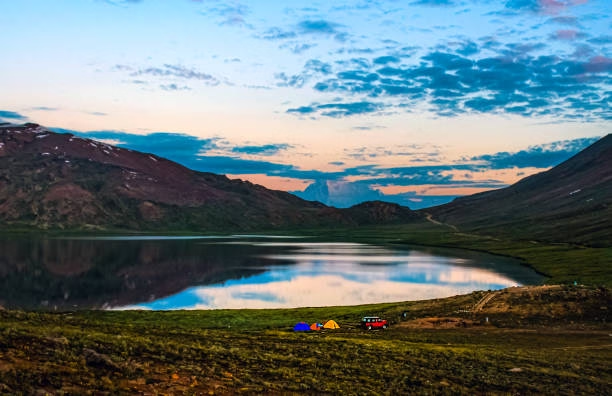
Sheosar Lake, located near the center of the Deosai plateau at 4,142 meters, is one of the highest lakes in Pakistan. The lake is approximately 2.5 km long and 1.5 km wide, set in a shallow basin in the plateau with no dramatic cliff backdrop but extraordinary 360-degree views of the rolling highlands. On calm mornings, the surrounding sky and hills are reflected in the lake surface with perfect clarity.
Bar-headed geese the remarkable birds that annually cross the Himalayas during migration, flying over altitudes that would kill most birds use Sheosar Lake as a staging and resting point. In summer, families of geese with goslings are regularly visible along the lake margins. Various duck species and wading birds also frequent the lake, making it a productive birdwatching location even for non-specialist visitors.
Sheosar is not the only high-altitude lake worth visiting in the region. Attabad Lake in Hunza and Satpara Lake near Skardu are two others that reward a detour see our Hunza Valley Travel Guide 2026 for everything on Attabad.
Camping on Deosai: The Ultimate Pakistan Experience
Spending a night camping on Deosai is, for most travelers who do it, the most memorable night of their Pakistan trip. The combination of physical remoteness, the silence of the plateau at night (interrupted only by the wind and the distant howl of Tibetan wolves), the extraordinary density of stars visible at 4,100 meters with zero light pollution, and the knowledge of bears moving in the dark outside the tent creates an experience of complete wilderness immersion.
Camping requires self-sufficiency: there are no facilities on the plateau beyond the entrance gate area. Tents, sleeping bags rated to at least minus 10 degrees Celsius (nights are cold even in July), stove, fuel, all food and water must be carried in. Water sources (glacial streams) are available on the plateau but should be filtered or boiled. Waste must be carried out. The designated camping areas are near the Sheosar Lake and Bara Pani River.
Tour operators in Skardu offer Deosai camping packages including jeep transport, guide, tent, sleeping equipment, cooking, and food for approximately PKR 8,000 to 15,000 per person for a one-night two-day trip. Self-organized camping costs the park entry fee plus jeep hire from Skardu (PKR 10,000 to 20,000 per jeep per day including driver).
If camping in the wild is your thing, Gilgit-Baltistan has other world-class wilderness experiences beyond Deosai. Our Gojal Valley Travel Guide 2026 covers camping near Shimshal and the Passu Cones equally remote, equally unforgettable.
How to Get to Deosai from Skardu
Deosai is accessible by jeep from Skardu, approximately 25 km to the Shatung entrance gate. The road to the gate is rough and a standard vehicle will struggle; a four-wheel drive jeep is strongly recommended. From the gate, jeeps continue across the plateau to Sheosar Lake and other destinations. The jeep road through the plateau is unmaintained and in some sections consists of tracks through the meadow with no road surface at all.
Jeeps are available for hire in Skardu from multiple operators near the city center and around the main bazaar. The going rate for a full-day Deosai jeep hire including driver is PKR 10,000 to 20,000 depending on the vehicle type and negotiation. Tour operators in Skardu can arrange complete packages including the jeep, guide, park entry permits, and camping equipment.
If you are driving yourself from Islamabad, the full journey follows the Karakoram Highway one of the most dramatic roads on Earth and worth reading about before you drive it.
Deosai and the Snow Leopard
While the brown bear is the flagship species of Deosai, the plateau also supports a snow leopard population that uses it as hunting and dispersal habitat. Snow leopard sightings on Deosai are rare the species is cryptic throughout its range but camera traps operated by the Snow Leopard Foundation have documented regular activity across the plateau. Winter offers the best theoretical sighting opportunity, but Deosai in winter is completely inaccessible.
The best place in the region for dedicated snow leopard and Marco Polo sheep habitat is Khunjerab National Park our full guide covers wildlife, timing, and the world’s highest border crossing.
Frequently Asked Questions: Deosai National Park
Yes, bear sightings are reasonably common during July and August when the bears are active in the open meadows foraging for roots, berries, and groundhogs. Early morning and late afternoon near the Sheosar Lake and Bara Pani River give the best chances. Hiring a local guide who knows bear movement patterns significantly improves sighting probability.
A day trip from Skardu to Deosai is possible and covers the entrance gate area and Sheosar Lake. However, an overnight camping stay is strongly recommended for the full experience — the wildflower meadows, bear activity, night sky, and wolf howls at dusk and dawn cannot be experienced in a day trip. A full day trip also leaves very little time for exploration given the distances involved across the plateau.
Deosai is typically accessible from mid-June, when snow plow teams clear the access road, through late September or early October when the first heavy autumn snowfall closes the road. The wildflower peak is mid-July to mid-August. After mid-September the flowers are gone but the plateau has a beautiful golden character and is significantly less visited.
Yes. Himalayan brown bears have not been involved in attacks on visitors to Deosai. They are generally shy and will move away from human presence if given the opportunity. Basic bear safety practices apply: do not approach bears, store food in sealed containers away from the sleeping area, make noise while walking to avoid surprising bears, and follow guide instructions. The park management maintains guidelines for visitor behavior around wildlife.