Alina Alam
Why Skardu Is Unlike Any Other City in Pakistan
Skardu sits at 2,228 meters in the wide valley carved by the Indus River through the heart of Baltistan — a region whose culture, landscape, and history are as distinct from the rest of Pakistan as Tibet is from India. The city of approximately 200,000 people is the administrative capital of Baltistan district and the logistical hub for expeditions to K2, Broad Peak, and the Baltoro Glacier. But Skardu is far more than a base camp city — it is a destination of genuine substance in its own right.
The valley walls around Skardu rise from the 2,228-meter valley floor to over 6,000 meters within 30 kilometers — one of the greatest vertical rises of any inhabited valley on Earth. The Indus River, broad and silt-heavy from glacial flour, flows past the old city before cutting south through the Karakoram toward the Punjab plains. Ancient fortifications perch on rock outcroppings above the bazaar. Apricot and apple orchards fill the valley floor in spring. And Deosai — one of the largest and highest plateaus on Earth, home to Pakistan’s last significant brown bear population — begins just 25 kilometers from the city center.
How to Get to Skardu
| Route | Transport Options | Duration | Notes |
| By air from Islamabad | PIA daily flights (ATR aircraft); private charters | 55 minutes | Subject to weather cancellations; book flexible fares; mountain weather delays are common and can be multi-day |
| By road from Islamabad | Via N-35 / KKH then Skardu Road (via Gilgit or Jaglot junction) | 16–20 hours | Long but deeply scenic; overnight buses available; road improves each year via CPEC upgrades |
| By road from Gilgit | Via KKH south then east via Jaglot-Skardu road | 6–8 hours | Best road option; road follows the Indus and is dramatic throughout |
Top Attractions in and Around Skardu
1. Kharpocho Fort — The Eagle’s Nest Above Skardu
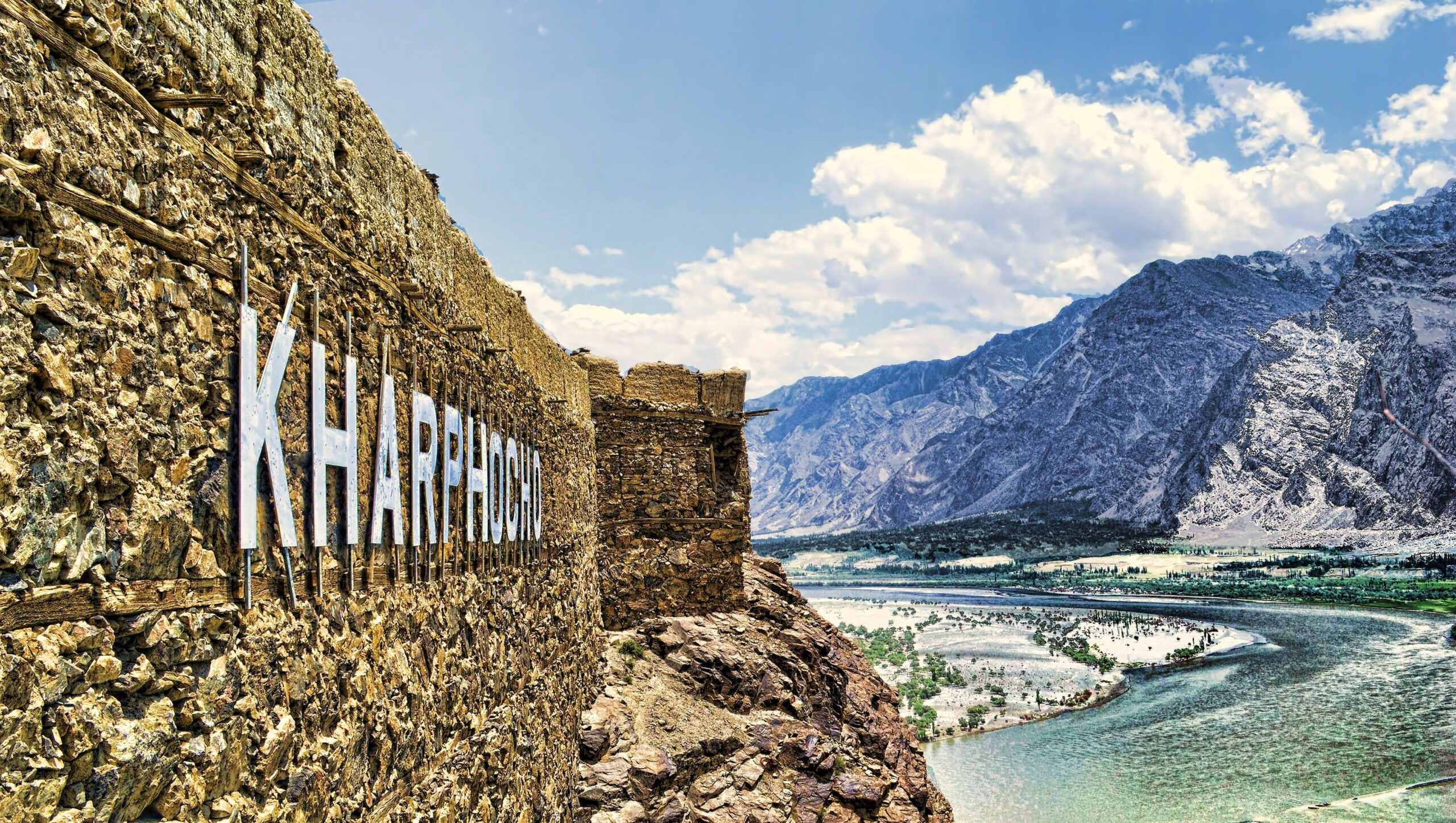
Kharpocho Fort (‘King of Forts’ in Balti) sits on a 100-meter rock outcropping directly above Skardu city — unmissable from anywhere in the valley. Built in the 16th century by Ali Sher Khan Anchan, the ruler of Baltistan who unified the kingdom and fought the Mughal Empire to a standstill, the fort was later expanded by subsequent rulers. It offers panoramic views of the entire Skardu Valley, the Indus River below, and the surrounding peaks. Access is by a 30-minute steep hike from the base or by jeep on a rough track.
2. Deosai National Park — The Land of Giants
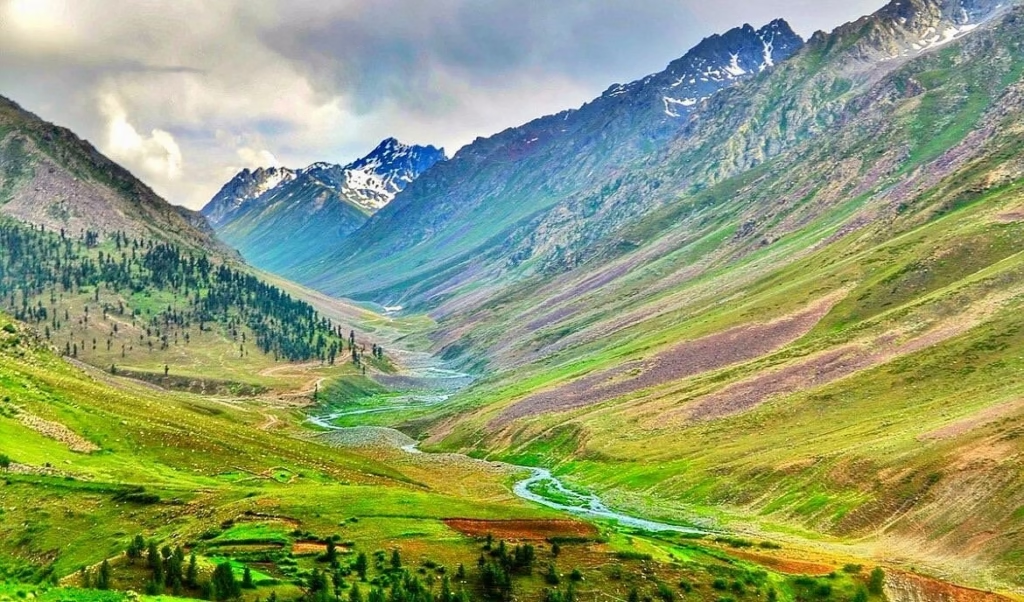
Deosai (‘Land of Giants’ in Shina) is a high-altitude plateau covering over 3,000 square kilometers at an average elevation of 4,114 meters — the world’s second-highest plateau after Tibet. In summer (July–September), the plateau is carpeted with wildflowers in extraordinary density. Brown bears — approximately 40–50 individuals representing Pakistan’s largest remaining population — roam the plateau. Snow leopards, Himalayan wolves, and dozens of migratory bird species have been documented. The entrance to Deosai is at Shatung, 25 km from Skardu. Jeeps are mandatory — no paved roads exist on the plateau.
3. Shangrila Resort and Lower Kachura Lake
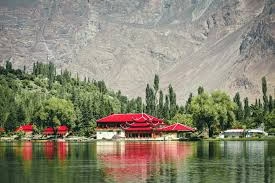
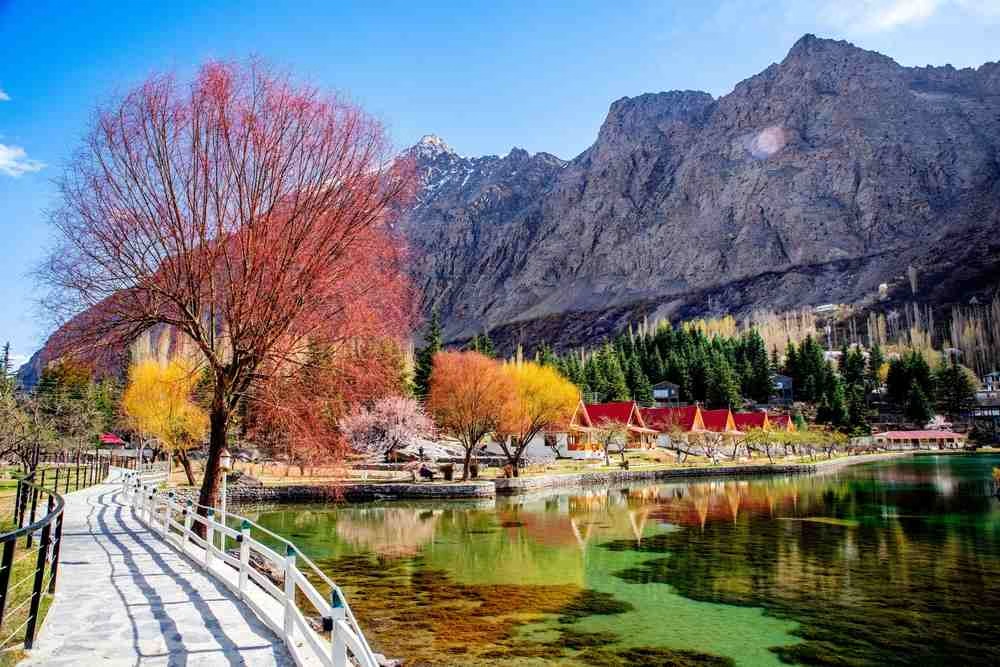
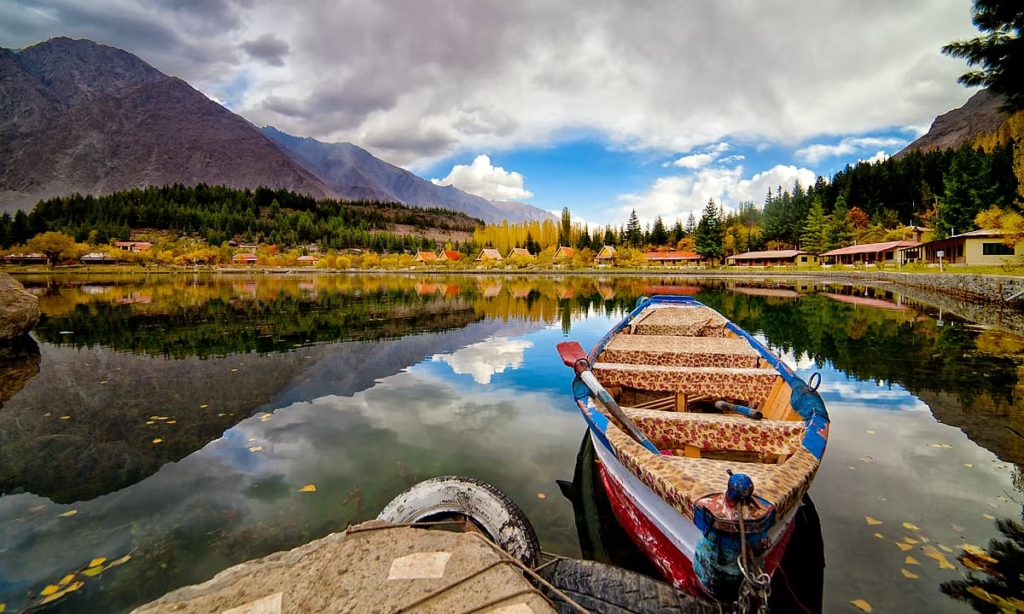
Shangrila Resort, 30 minutes from Skardu city, sits on the shore of Lower Kachura Lake — a small, startlingly blue lake surrounded by willows and mountain views. The resort was built in the 1980s by Agha Abdul Qayyum Khan (a Pakistani Air Marshal) and includes an extraordinary feature: part of the resort was built from the fuselage of a crashed DC-3 aircraft, now serving as a cafe. The combination of mountain lake, garden resort, and crashed-plane cafe is one of Pakistan’s most surreal and memorable tourist sites.

4. Satpara Lake
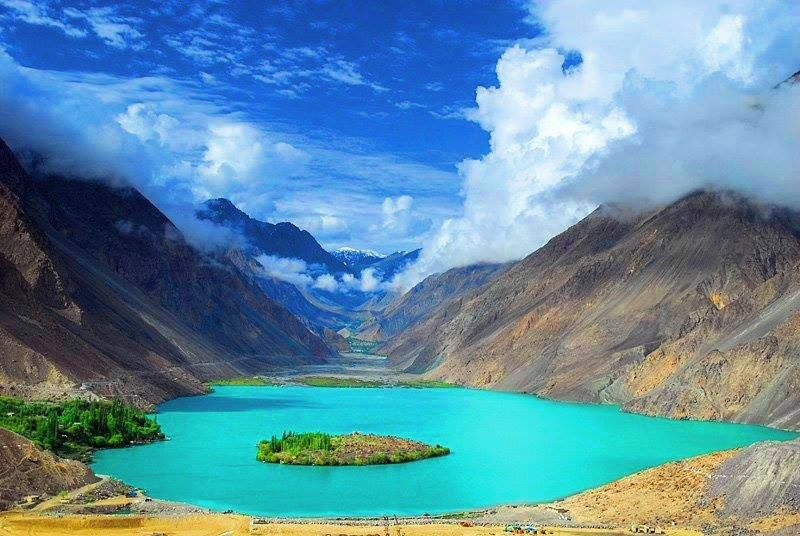
Satpara Lake, 10 km from Skardu city, is the main water reservoir for the city and a popular picnic destination. Sitting at 2,636 meters, surrounded by bare rocky mountains, the lake is vivid blue-green on clear days from the glacial meltwater it receives. Fishing (with permit), boating, and camping on the shore are permitted. The lake is accessible by regular vehicle — no jeep required — making it an easy half-day trip.
Where to Stay in Skardu
| Property | Category | Price Range (2026) | Best For |
| Serena Hotel Skardu | Luxury | PKR 25,000–55,000/night | Best in Baltistan; full international standard; mountain views from every room |
| Shangrila Resort | Upscale | PKR 15,000–35,000/night | Unique lakeside setting; aircraft cafe; best resort experience |
| Mashabrum Hotel | Mid-range | PKR 5,000–10,000/night | Good location; comfortable; reliable quality |
| Concordia Motel | Mid-range | PKR 4,000–8,000/night | Popular with trekkers heading to Baltoro; central; good value |
| Karakoram Crest Hotel | Mid-range | PKR 5,000–9,000/night | Mountain views; clean; family-friendly |
| Local guesthouses (bazaar) | Budget | PKR 1,500–3,500/night | Basic; local experience; variable quality — inspect before committing |
Best Time to Visit Skardu
| Season / Month | Conditions | Highlights |
| March–April | Apricot and cherry blossoms; warming temperatures; some rain | Flower season; orchards spectacular; fewer tourists than summer |
| May–June | Peak warmth beginning; Deosai opens (mid-June); K2 expedition season starts | Best all-round conditions; wildflowers peak; everything accessible |
| July–August | Warm; Deosai fully open; busiest domestic tourism period | All attractions accessible; Deosai brown bears active; some haze |
| September–October | Crystal-clear air; autumn color; excellent photography conditions; cooling nights | Highly recommended; best light; fewer crowds than summer |
| November–March | Cold; Deosai closes (snow); some road closures; very quiet | Winter wilderness experience; Kharpocho accessible year-round |
FAQ: Skardu Travel Guide
Minimum 3 days for city sights (Kharpocho Fort, Satpara, Shangrila) and a day trip to Deosai. Add 2–3 days for surrounding valleys, local trekking, and the Baltistan Cultural Museum. Allow 7–10 full days to experience the area properly without rushing. For K2 base camp trekkers, Skardu is the starting point and requires 2 full days for preparation, permits, and the jeep journey to Askole.
Skardu Airport (IATA: KDU) serves daily flights from Islamabad in good weather. The airport is surrounded by high mountains that make approaches weather-dependent. In monsoon-influenced periods (July–August) and in winter, delays and cancellations of 1–3 days are common. Always plan flexibility into your schedule and have the road option researched as a backup.
Skardu is one of the most family-friendly destinations in GB. The Shangrila Resort provides comfortable accommodation and a safe lakeside environment. Satpara Lake and Kharpocho Fort are accessible with children. Deosai is a long jeep journey but spectacular for older children. The altitude (2,228m) is moderate and manageable for healthy children with acclimatization.