Farhan Faqir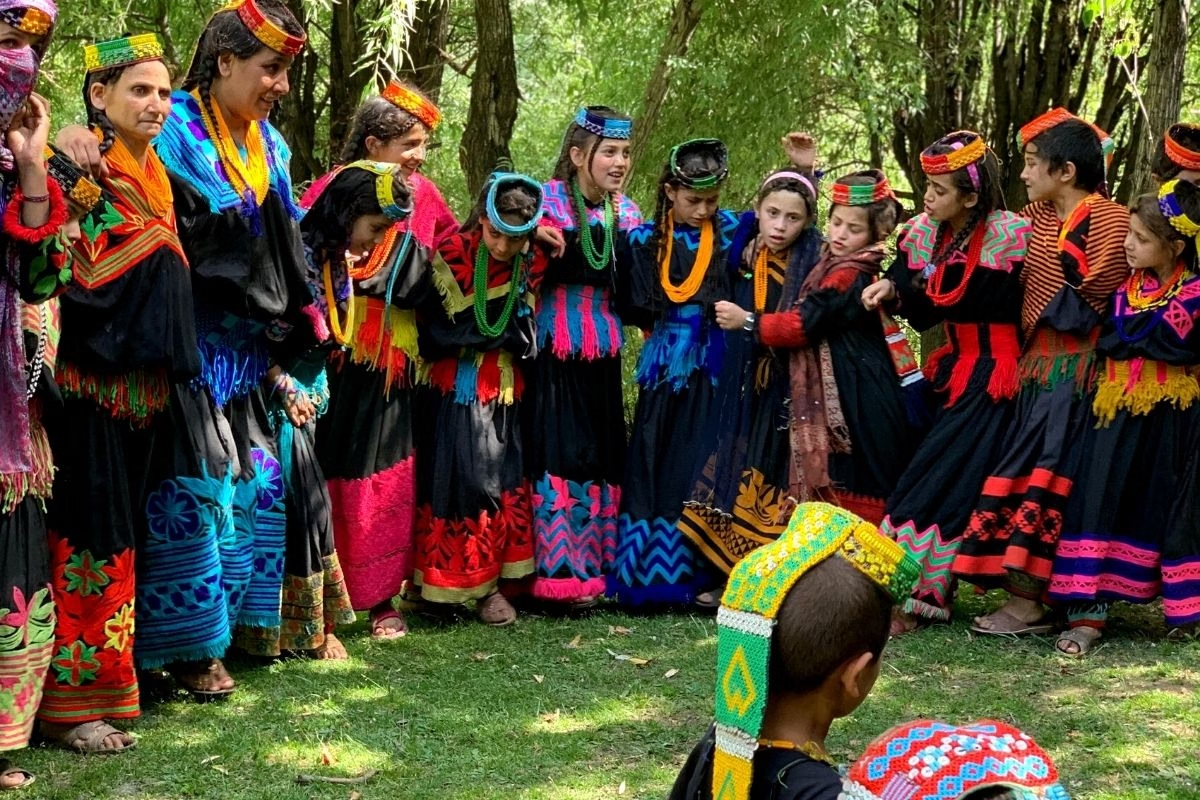
Who Are the Kalash? Three Thousand Years of Survival Against Every Odd
Deep in the narrow valleys of Chitral district in northwestern Pakistan, approximately 3,500 people live a life that is unlike anything else in South Asia. The Kalash people are Pakistan’s last polytheistic community — they worship a pantheon of gods and goddesses, maintain sacred shrines in their villages, perform ecstatic dances at festivals, drink wine made from their own vineyards, and bury their dead in open-air wooden coffins rather than underground — all while surrounded by one of the world’s most conservative Islamic regions.
They have lived this way for at least 3,000 years, possibly longer. Through the conversion of surrounding Nuristan (formerly known as Kafiristan) to Islam in the 1890s, through the pressures of Pakistani state-building in the 20th century, and through the ongoing social and economic pressures that continue to reduce their numbers through conversion, the Kalash have maintained their distinct identity with extraordinary tenacity.
For travelers, the Kalash represent something genuinely rare: a living indigenous culture that has resisted assimilation and maintained its traditions as a matter of deliberate cultural pride rather than isolation. The Kalash know very well that they are unusual. They have been the subject of anthropological research, documentary films, and journalistic interest for decades. Their response to this attention has generally been to welcome respectful visitors as a form of cultural engagement rather than cultural invasion.
The Alexander the Great Theory
The most popular and debated theory about Kalash origins holds that they are descendants of soldiers from Alexander the Great’s army who settled in these valleys after his campaigns in 326 BCE. The physical appearance of many Kalash people — fair skin, light eyes, sometimes light hair — combined with certain cultural elements including their wine-drinking tradition seem to support a Mediterranean origin.
Genetic studies conducted since 2015 have produced complex and contested results. A 2019 study published in Science magazine found evidence of genetic material consistent with ancient Greek or more broadly ancient Western Eurasian origins in the Kalash genome, but the interpretation of this finding remains debated among geneticists and anthropologists. The Kalash themselves often embrace the Alexander connection as part of their cultural narrative, regardless of what the scientific evidence ultimately establishes.
The Kalash Religion: Polytheism at the Heart of Pakistan
The Kalash religion centers on a pantheon of deities of which Dezao (the creator god) is supreme, served by a hierarchy of lesser gods and spiritual forces. The most important deity for daily life is Mahandeo, the god of justice, who is believed to adjudicate disputes and whose sacred areas are maintained throughout the valleys. Imra is a powerful supernatural figure associated with Dezao and is central to Kalash cosmology.
Kalash religious practice centers on the concept of purity (onjeshta) and impurity (pragata). Certain places, spaces, and activities are classified as pure and others as impure. The village shrines, temples, and altars are pure spaces accessible only in states of ritual purity. Women are considered ritually impure during menstruation and childbirth and retreat to a special building (bashali) during these periods. These purity distinctions shape Kalash spatial organization and daily life in ways that anthropologists have studied extensively.
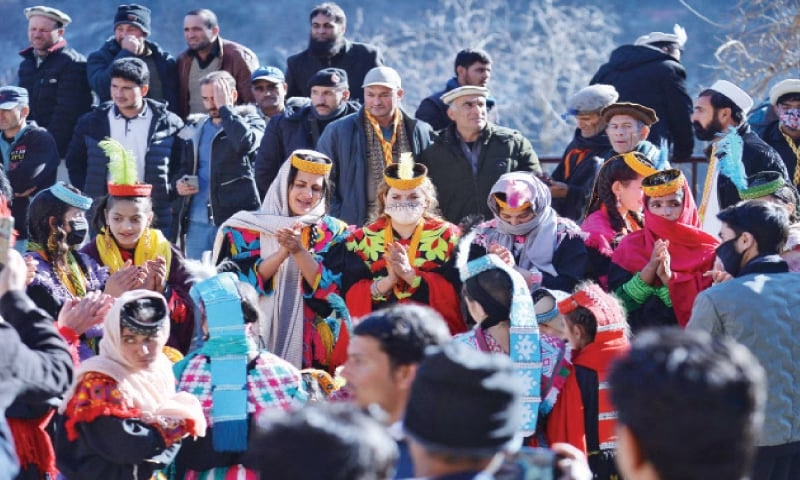
The Three Kalash Valleys: Bamburet, Birir, and Rumbur
| Valley | Character | Best For | Accessibility |
| Bamburet | Largest and most visited; most tourist infrastructure; good roads; festivals held here | First-time visitors; those wanting accommodation options and easier access | Best road; accessible by standard vehicle in good conditions |
| Birir | Southernmost and most traditional; least tourism pressure; most conservative culture preserved | Travelers wanting authenticity; those willing to walk more; best for cultural immersion | Rougher road; jeep recommended; fewer guesthouses |
| Rumbur | Northern valley; quieter than Bamburet; good walking; Guru shrine important in Kalash religion | Second visit; those interested in Kalash sacred sites; good hiking | Good road to valley head; jeep for deeper exploration |
Kalash Festivals: The Best Reason to Time Your Visit
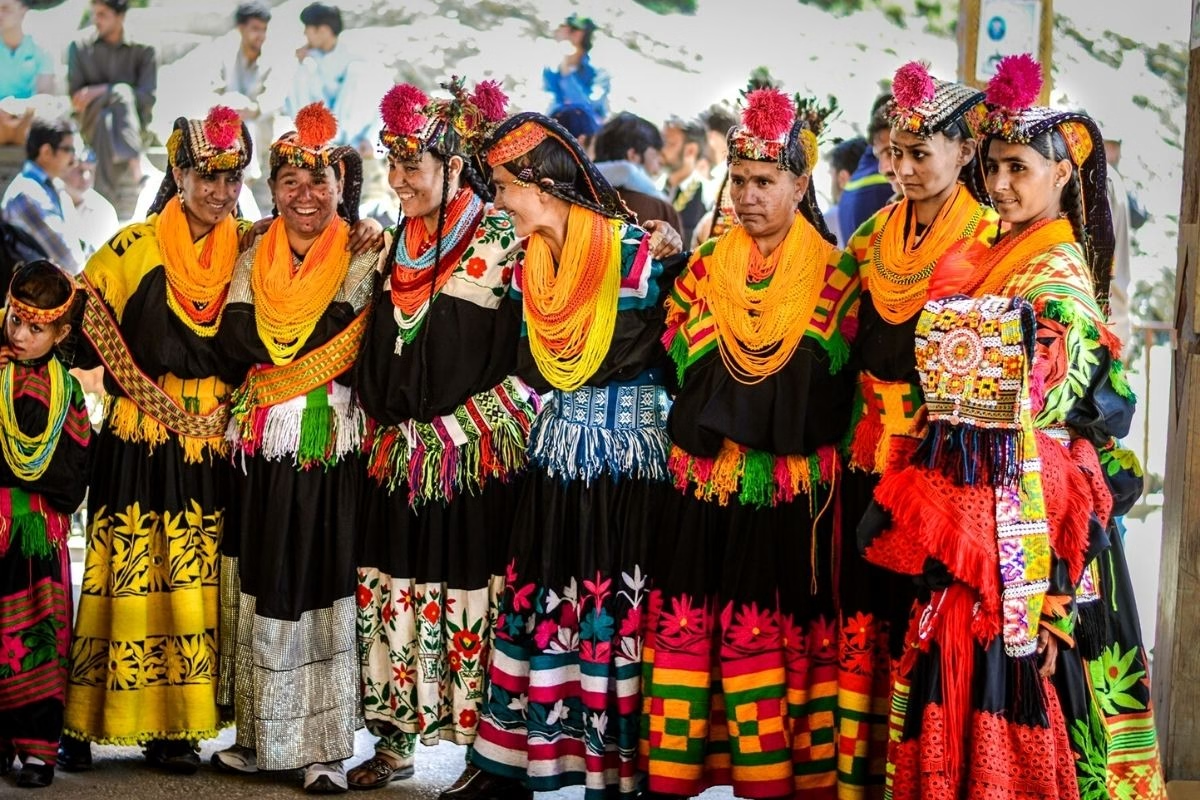
The three major Kalash festivals are among the most extraordinary cultural events accessible to foreign visitors in Pakistan. Each corresponds to an agricultural season and involves multiday ceremonies with communal dancing, singing, feasting, and ritual performances.
Chilimjusht: The Spring Celebration (May)
Chilimjusht, held in late May, celebrates the arrival of spring and the return of the animals from winter grazing. It is the most exuberant and accessible of the three festivals for foreign visitors. The main events include circle dancing by women in their elaborate traditional dress — a hypnotic, continuous movement that continues for hours — plus singing of traditional songs, feasting, and the offering of first fruits to the gods. Bamburet Valley is the center of Chilimjusht celebrations.
Uchau: The Summer Festival (August)
Uchau celebrates the summer harvest of grapes, corn, and walnuts. The festival involves communal winemaking — a practice completely distinct from surrounding Muslim communities for whom alcohol is forbidden — and the first tasting of the new vintage. Goat sacrifices are made to the gods and the meat is shared communally. Uchau is more intimate and less oriented toward outsiders than Chilimjusht.
Chaumos: The Winter Solstice Festival (December)
Chaumos, held around the winter solstice in December, is the most sacred of the three festivals and involves the deepest ritual content. Purification ceremonies, fire rites, and songs praising Dezao are central. Foreign visitors are welcome to observe certain parts of Chaumos, but some ritual elements are restricted to Kalash participants only. December in Chitral is cold but the festival atmosphere is extraordinary.
Chitral Town and Chitral Fort
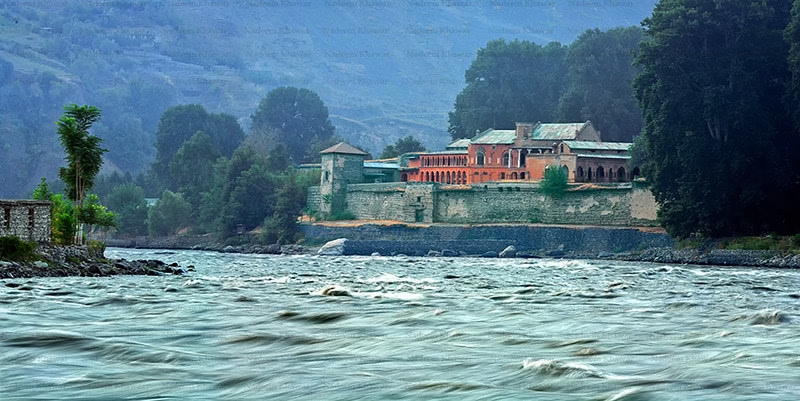
Chitral town, the administrative center of Chitral district at 1,500 meters, is the gateway to the Kalash valleys and a destination in its own right. Chitral Fort, built in the 17th century and famous as the site of the 46-day Siege of Chitral in 1895 (when British-Indian forces held it against a besieging force for six weeks until relief arrived), is accessible to visitors and offers a compelling introduction to the region’s history.
The Chitral bazaar sells Chitrali caps (the distinctive flat-topped wool cap worn throughout the region), locally woven woolen cloth, dried fruit, honey, and Kalash handicrafts. The bazaar is less crowded and more authentic-feeling than tourist-oriented markets in northern Pakistan’s more visited areas.
How to Get to Chitral from Islamabad
Chitral is accessible by two routes: air and road. PIA operates flights from Peshawar to Chitral Airport, a 45-minute flight that gives spectacular views of the Hindu Kush. These flights are weather-dependent and subject to cancellation, so build flexibility into any schedule.
The road route from Islamabad via Peshawar, Dir, and the Lowari Tunnel takes approximately 10 to 12 hours. The Lowari Tunnel, completed in 2017, opened the Chitral road to year-round use for the first time in history, as the previous route over the Lowari Pass was blocked by snow for months each winter. The road from the tunnel to Chitral town and onward to the Kalash valleys is in reasonable condition for a standard vehicle.
From Chitral town to the Kalash valleys, the distances are: Bumburet 35 km (1 to 1.5 hours), Birir 25 km (1 hour), Rumbur 45 km (1.5 to 2 hours). Jeeps and shared vans serve all three valleys from Chitral town.
Visitor Ethics: How to Engage Respectfully with Kalash Culture
The Kalash have welcomed visitors for decades but they are not a tourism attraction to be consumed. They are a community of 3,500 people dealing with pressures of modernization, conversion, and economic change. The following ethical guidelines make visits better for everyone.
- Always ask permission before photographing individuals, particularly women. Many Kalash women are accustomed to photography but the decision belongs to them.
- Do not enter Kalash sacred spaces (shrines, the bashali women’s house, certain ceremony areas) unless explicitly invited.
- Buy local products: Kalash wine, walnuts, handicrafts, embroidered items. Economic support for the community is one of the most meaningful contributions visitors can make.
- Do not offer to bring alcohol as a gift or gesture of connection. While the Kalash do drink wine, alcohol from outsiders can create complex social dynamics.
- If invited into a Kalash home, accept the invitation. The hospitality expressed through food and conversation is the most genuine cultural exchange possible.
- Learn a few words of Kalasha language. Locals are delighted when visitors make the effort.
Where to Stay in Chitral and the Kalash Valleys
| Accommodation | Location | Category | Notes |
| Chitral Guest House | Chitral town | Mid-range | Reliable; English-speaking staff; good base for valley trips |
| Mountain Inn Chitral | Chitral town | Mid-range | Popular with trekkers and Kalash festival visitors; book in advance for festival dates |
| Bumburet Valleys Guesthouses (multiple) | Bamburet Valley | Budget to mid-range | PKR 1,500 to 4,000 per night; basic but adequate; staying in-valley essential for festival experience |
| Birir Guesthouses (community-run) | Birir Valley | Budget | PKR 1,000 to 2,500; most traditional setting; limited facilities |
| Shandur View Hotel | Chitral, near polo ground | Mid-range | Good choice for Shandur Festival visitors in July |
Frequently Asked Questions: Chitral and Kalash Valley
Yes, if done thoughtfully. The Kalash have actively engaged with responsible tourism as part of their cultural preservation strategy. Tourism brings income, international awareness, and a measure of cultural protection. Many Kalash community leaders and elders actively encourage respectful visitors. The critical word is respectful: approach the community as guests, not spectators.
Yes. Chilimjusht in May is the most accessible festival for foreign visitors and is held in Bamburet Valley, which has the best accommodation. Advance planning is essential as guesthouses fill up during festival periods. The Chaumos festival in December is more sacred and some elements are restricted, but observation of the public portions is generally permitted.
Chitral district has a good safety record for tourists visiting the town and the Kalash valleys. Check current government advisories from your home country before travel as KPK province advisories can change. The Kalash valleys themselves are among the safer and more welcoming areas of the region.