
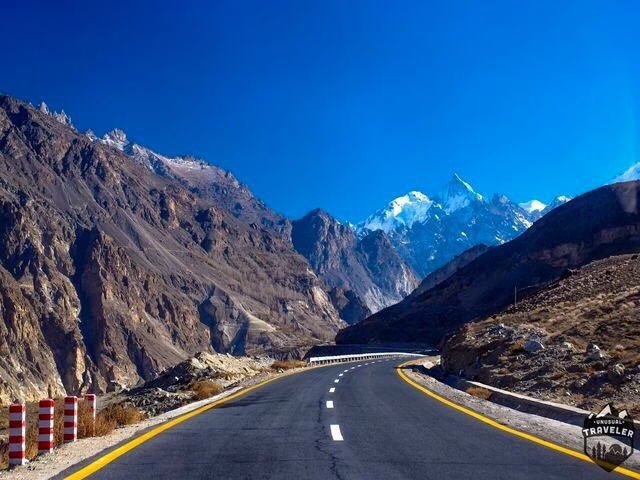
The Karakoram Highway (KKH), often called the “Eighth Wonder of the World,” is more than just a road. It’s a legendary route carved through some of the world’s most dramatic landscapes. Officially known as National Highway 35 (N-35) and the China–Pakistan Friendship Highway, this 1,300 km (810 mi) marvel connects Hasan Abdal in Pakistan’s Punjab to Kashgar in China’s Xinjiang region.
The KKH winds through towering peaks, glaciers, and deep valleys. It offers one of the most thrilling journeys on Earth, blending natural beauty, ancient history, and human engineering in one unforgettable adventure.
⛰️ What Is the Karakoram Highway?
The Karakoram Highway is one of the highest paved international roads in the world. It reaches a stunning 4,714 meters (15,466 ft) at the Khunjerab Pass, where it crosses into China and becomes China National Highway 314.
- Total Length: Around 1,300 km (810 mi)
- Pakistani Section: About 806 km (501 mi)
- Chinese Section: Around 494 km (307 mi)
- Strategic Role: Part of the Asian Highway AH4 and a major route in the China–Pakistan Economic Corridor (CPEC)
Moreover, the highway passes through the meeting point of three great mountain ranges , the Himalayas, Karakoram, and Hindukush. This rare geological crossroad makes the journey both scenic and scientifically fascinating.
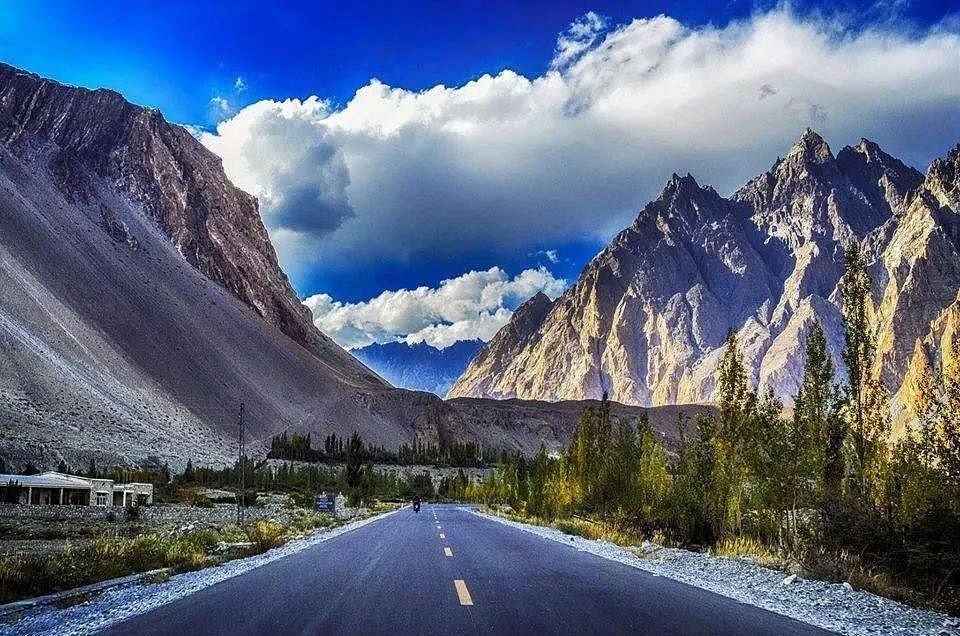
🚧 History: A Monument of Friendship and Sacrifice
The KKH is not just a road; it’s a story of friendship, courage, and sacrifice.
- Construction Period: Began in 1962, completed in 1979, and opened to the public in 1986.
- Collaboration: Built jointly by Pakistan and China, involving the Pakistan Army’s Frontier Works Organization (FWO) and Chinese engineers.
- Historical Roots: The modern KKH follows an ancient Silk Road route, which once connected South and Central Asia.
However, this engineering marvel came at a heavy price. More than 1,000 workers lost their lives , about 810 Pakistanis and 200 Chinese , due to landslides, avalanches, and extreme weather. Their sacrifice gave the KKH its proud title, “The Eighth Wonder of the World.”
🗺️ Top Attractions Along the Karakoram Highway
Traveling the KKH is a continuous feast for the senses. Each turn offers breathtaking views, historical treasures, and glimpses of vibrant local life.
Pakistani Section: Hasan Abdal to Khunjerab Pass
1. Junction Point of the Three Mountain Ranges (Jaglot)
See where the Karakoram, Himalayas, and Hindukush ranges meet. You can also witness the merging of the Indus and Gilgit Rivers ,a sight to remember.
2. Nanga Parbat Viewpoint
Catch a clear view of Nanga Parbat (8,126 m), the world’s ninth-highest mountain, often called the “Killer Mountain.”
3. Gilgit Valley
A lively town surrounded by rugged peaks. It’s an excellent stop for short hikes, local food, and markets.
4. Hunza Valley
The crown jewel of Gilgit-Baltistan. It offers stunning views of Rakaposhi (7,788 m), Diran Peak, and the historic Baltit and Altit Forts. The people of Hunza are known for their warmth and hospitality.
5. Attabad Lake
This turquoise lake was formed by a landslide in 2010. The China–Pakistan Friendship Tunnels now make travel around the lake smooth and safe.
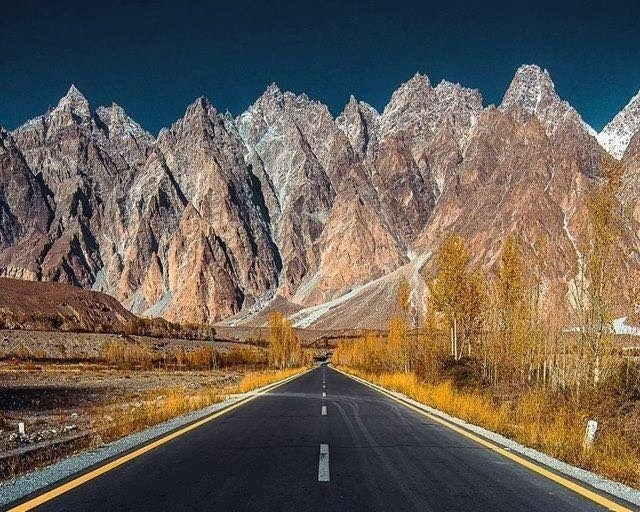
6. Passu Cones (Tupopdan)
These pointed peaks near the village of Passu are among the most photographed mountains in Pakistan.
7. Sost & Khunjerab Pass
Sost is the last town before China. The Khunjerab Pass, at 4,714 meters, is the highest paved border crossing in the world. Nearby lies the Khunjerab National Park, home to snow leopards and Marco Polo sheep.

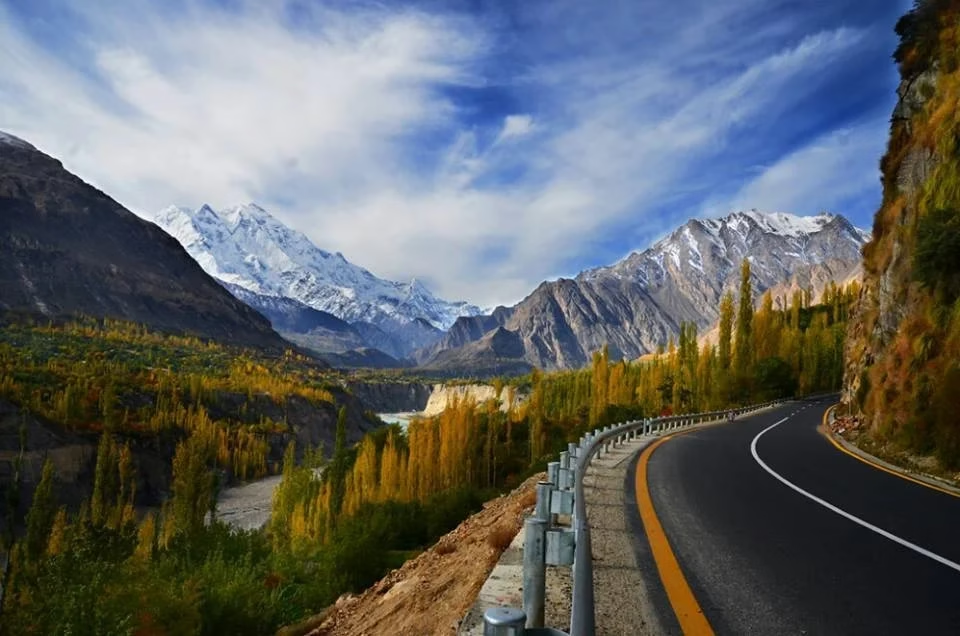
🌿 Natural Wonders Along the KKH
In addition to mountains, the KKH offers some of the most beautiful natural sites in Pakistan:
- Glaciers: Visit the Passu, Batura, Minapin, and Ghulkin glaciers.
- Rivers: The Indus, Hunza, and Gilgit Rivers flow alongside the highway, creating magical views.
- Lakes: Don’t miss Upper and Lower Kachura Lakes near Skardu, just a short detour from the KKH.
🏛️ Cultural Heritage and Historical Sites
As you travel, you’ll find history etched in stone and fort walls.
- Petroglyphs & Rock Carvings:
Found near Chilas and Shatial, these carvings , some over 7,000 years old , show early Buddhist and Central Asian art. - Ancient Forts:
Visit Altit Fort (900 years old) and Baltit Fort (700 years old) for a peek into Hunza’s royal past. - Silk Road Legacy:
The KKH still follows the path of the old Silk Route, reminding travelers of centuries of trade and exploration.
🧭 Travel Tips for Exploring the Karakoram Highway
Best Time to Travel:
- May to October is ideal. Roads are open, and weather is pleasant.
- Avoid July and August, as monsoon rains can trigger landslides.
- Khunjerab Pass stays closed from January to April due to snow.
How to Get There:
- By Bus: NATCO offers regular trips between Rawalpindi, Islamabad, and Hunza.
- By Car or Jeep: Perfect for flexibility and comfort. Local drivers are skilled at handling mountain roads.
- By Motorcycle or Bicycle: A dream route for adventure lovers, offering freedom and unmatched scenery.

Safety Tips:
Before traveling, always check weather and road updates. Carry warm clothing, extra fuel, and food supplies. Also, note that mobile signals may be weak in some remote valleys.
✨ Final Thoughts
The Karakoram Highway is more than a route , it’s a journey through history, culture, and nature. From the ancient Silk Road to modern tunnels and bridges, it tells a story of resilience and unity.
In short, whether you love mountains, history, or adventure, the KKH is a trip you’ll never forget. It connects not just countries, but hearts, cultures, and generations.

1 comment
Keep up the great work, I read few posts on this site and I believe that your web blog is really interesting and contains sets of superb information.