
Winter in GB — The Season Nobody Knows About
Most travelers to Gilgit-Baltistan arrive between June and October for trekking, mountain views, and autumn color. The winter months — December through March — are treated by most visitors as a no-go period: too cold, too inaccessible, too quiet. This is, from the perspective of adventurous travelers, an almost complete misunderstanding of what winter in GB actually is.
Winter in Gilgit-Baltistan is extraordinary. The valleys fill with snow. The rivers partially freeze. The mountains — already overwhelming in summer — take on a more severe and dramatic quality in winter light, every detail defined by the contrast of white snow and black rock. The air is crystalline. The guesthouses and tea stalls that are crowded with trekkers in summer serve you alone, and the conversations you have with locals, freed from the demands of the tourist season, are longer, deeper, and more genuine.
The practical challenges are real. Some roads close. Some hotels shut for winter. Temperatures in the main valleys drop to -5°C to -15°C. Above 3,000m, conditions are genuinely extreme. But for travelers who prepare properly — and who accept that some spontaneity will be replaced by careful planning — winter in GB rewards with experiences that the summer crowd never gets.


1. Skiing at Naltar — Pakistan’s Only Ski Resort
Naltar Valley, 40km from Gilgit city, is home to Pakistan’s oldest and only functioning ski resort. The valley has hosted skiing since the 1950s, when the Pakistan Air Force (PAF) began training personnel in winter survival and snow operations here. The PAF continues to manage the resort and has been the primary force in developing and maintaining skiing as a sport in Pakistan.
The resort sits between 2,900m and 3,100m, in a bowl of pine forest that receives 3–4 meters of snowfall in a good season. It has five main runs of varying difficulty — from beginner-appropriate gentle slopes to more challenging steeper sections — served by three J-bar lifts. The total vertical drop is modest by European standards but the setting — pine-forested slopes opening to views of snow-covered Karakoram peaks — is genuinely spectacular.
Pakistan’s national ski team trains at Naltar, and the resort has hosted national competitions including the National Ice Sports Championship held in January 2025, which saw participation from 12 teams representing all Pakistani provinces. International competitions have also been held here, though the resort’s facilities remain basic compared to major ski destinations.
Naltar Ski Resort — Practical Info
| Detail | Information |
| Location | Naltar Valley, 40km from Gilgit city |
| Altitude range | 2,900m – 3,100m |
| Typical season | January to March (depending on snowfall) |
| Ski lifts | 3 J-bar lifts (longest: 1.5km, installed 2016) |
| Equipment rental | Available on-site: approximately Rs 1,000–1,500/day |
| Lift pass | Approximately Rs 500–800/day |
| Ski school | Available for beginners through PAF-affiliated instructors |
| Management | Pakistan Air Force (PAF) |
| Access | Jeep from Gilgit: ~1.5 hours. Road can be difficult after snowfall. |
| Accommodation | PAF rest house (book through PAF Gilgit) + private guesthouses in Naltar village |


2. Ice Climbing on Frozen Waterfalls
In winter, the waterfalls of Gilgit-Baltistan freeze solid, creating vertical columns of ice that range from 20 to 80 meters in height. These frozen waterfalls have attracted a small but growing ice climbing community — initially Pakistani military and alpine club members, increasingly recreational climbers from Pakistan’s urban centers, and occasionally international ice climbers who combine Pakistan winter trips with K2 or Nanga Parbat winter expedition support visits.
The best ice climbing is found around Gilgit city (several waterfalls within 30–60 minutes), in Naltar Valley, and in the Ghizer district. The Gilgit area waterfalls are most accessible — reachable by jeep or even tuk-tuk in some cases.
Ice climbing is a highly technical activity requiring specific equipment (ice axes, crampons, ice screws, ropes, harness) and training. Do not attempt without a qualified guide and proper equipment. Several adventure operators in Gilgit now offer introductory ice climbing experiences including equipment rental and instruction. A one-day introductory session costs approximately Rs 5,000–8,000 per person.
3. Winter Trekking and Snowshoeing
For experienced winter trekkers with proper equipment, the lower valleys of Gilgit-Baltistan offer remarkable snowshoeing and winter hiking. The Naltar Valley in winter is particularly suited to this — its pine forests under snow, the lakes frozen to mirror-smooth ice, and the absence of other visitors creates a winter landscape of unusual beauty.
Other good winter trekking areas include: the Bagrot Valley near Gilgit city (accessible by jeep, beautiful under snow); the area around Karimabad in Hunza (the main valley road usually remains passable, and the orchards under snow create a different but equally beautiful landscape); and the approaches to several local viewpoints near Gilgit and Gilgit-Ghizer road.
Winter trekking above 3,000m in GB requires: full cold-weather gear rated to at least -20°C; experience with snow travel; knowledge of avalanche risk; and ideally a local guide who knows current conditions. Solo winter trekking in remote areas is not recommended.
4. Traditional Winter Polo on Snow
Traditional polo — the ancient predecessor of the modern sport — is played in Gilgit throughout winter, including on snow-covered grounds when conditions permit. The Gilgit polo ground near the city center hosts matches throughout the year, including in winter months when the ground may be frozen or snow-covered. These are not formal sporting events with grandstands and spectator infrastructure — they are community games watched from the sidelines by locals, with the natural energy and unpredictability of a community sport rather than a tourist attraction.
Visitors who find themselves in Gilgit city during winter and ask at their guesthouse or hotel about polo matches will often be directed to a game within a day or two. Watching traditional mountain polo — fast, physical, played on sure-footed local horses by riders who have grown up with the sport — is one of the most authentic cultural experiences available in GB, and it is entirely free.


5. Ice Hockey in Hunza
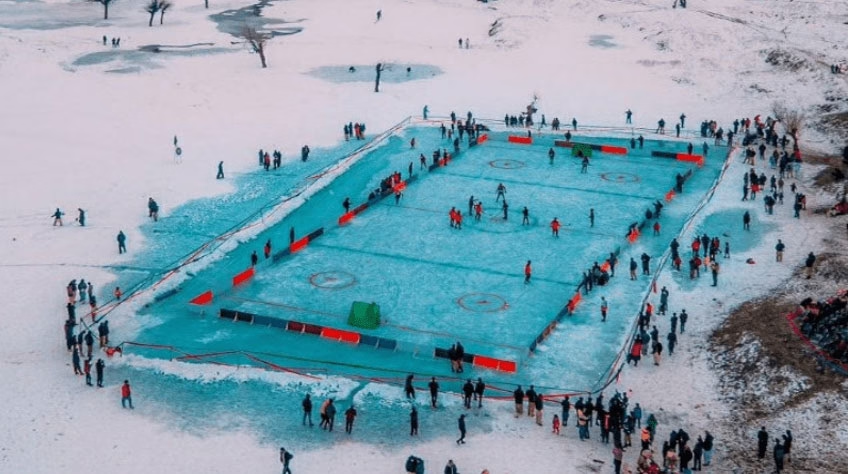
Ice hockey arrived in Hunza in the 1980s and has become a genuinely popular winter sport in the valley. The polo ground in Karimabad is flooded in cold weather to create a natural ice surface, and informal matches are played throughout winter. The Hunza Ice Hockey Association now organizes more formal league competition, and the sport has spread to several other GB valleys.
Visitors who are in Hunza in winter and want to watch — or even participate in an informal game — should ask at their accommodation. The skating on the polo ground is also open to visitors who bring or hire skates.
Winter Wildlife — Snow Leopard Country
Winter is the best season for wildlife observation in parts of Gilgit-Baltistan, because snow forces animals down from summer high-altitude ranges. Snow leopards — the region’s most famous resident — are most commonly seen in winter in valleys like Chitral, Hunza, and the Gilgit district. The Snow Leopard Foundation Pakistan operates guided wildlife tours from Gilgit, and winter spotting expeditions are available from several operators.
Sighting a snow leopard in the wild is not guaranteed — these are solitary, crepuscular animals with territories of hundreds of square kilometers. But winter, when they descend to valley elevations in pursuit of prey, offers the best odds. The experience of tracking a snow leopard in fresh snow in the Karakoram is, for wildlife enthusiasts, one of the great experiences Pakistan offers.
Practical Winter Travel Guide — GB
| Factor | Information |
| Best winter destinations | Gilgit city (ice climbing, polo), Naltar Valley (skiing), Hunza (snowshoeing, ice hockey) |
| Temperature Gilgit valley | 0°C to -10°C (January nights); daytime can reach +5°C |
| Temperature Skardu valley | Colder than Gilgit: -10°C to -20°C (January nights) |
| Road Islamabad to Gilgit | Usually open year-round; delays after heavy snowfall |
| Road Gilgit to Skardu | Can close for 1–5 days after heavy snowfall; check before travel |
| Air access | Gilgit and Skardu airports operate in winter; more weather-related cancellations than summer |
| Accommodation | Many hotels close in winter; confirm before travel. PAF rest houses more consistently available. |
| Essential clothing | Full winter kit: base layer, fleece, insulated jacket (-20°C rated), waterproof outer, thermal boots |
Is Winter GB Worth It?
The honest answer is: yes, for the right traveler. If you need warm weather, predictable access, and a full range of accommodation and restaurant options, GB in winter is not the right choice. But if you are comfortable with cold, flexible with logistics, and want to experience one of Pakistan’s most beautiful regions in a completely different mode — quiet, dramatic, intimate, and entirely without the summer crowds — then winter in GB will be among the most memorable travel experiences of your life.
Official Tourism Guidance:
👉 https://www.gilgitbaltistantourism.gov.pk
👉 https://visitgilgitbaltistan.gov.pk
