Why Hunza Valley Food is Famous Worldwide
The Hunza Valley became internationally famous in the 1970s when physicians and nutritionists began examining claims that the people of this isolated mountain valley lived extraordinary long lives in exceptional health. Dr. Robert McCarrison, a British military surgeon who worked in India in the early 20th century, was one of the first to document what he believed were unusual health patterns among Hunzai people.
Subsequent researchers noted that the traditional Hunzai diet was remarkably different from Western diets: very high in fresh and dried fruits, whole grains, fermented foods, and seasonal vegetables; extremely low in processed foods, refined sugar, and red meat. Daily physical activity — farming, walking on mountain terrain — was universal. Some researchers claimed lifespans regularly exceeding 100 years, though modern researchers have noted that birth record-keeping in isolated mountain communities was historically unreliable, making precise age claims difficult to verify.
What is beyond dispute is that the traditional Hunzai diet, before the arrival of packaged and processed food in the 1980s and 1990s, was nutritionally excellent by any measure. It is now studied by nutritionists, longevity researchers, and food scientists worldwide — and several of its core components, particularly the dried apricots, walnuts, and fermented foods, have been independently validated as nutritionally exceptional.
The 20 Essential Foods of Hunza
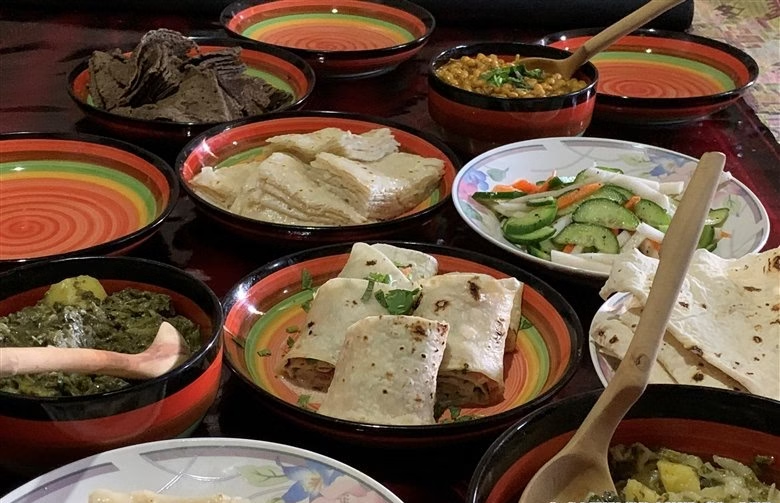
1. Chapshuro (Chapchuru) — The Hunzai Flatbread Burger
Chapshuro is the king of Hunzai street food and the dish most visitors remember best. A thick flatbread is filled with a mixture of spiced minced meat — traditionally yak, goat, or mutton — with onions, fresh herbs, and sometimes dried apricots or walnuts. The filled bread is then sealed and cooked on a stone griddle or pan-fried until the crust is golden and the filling is fragrant. The result is a portable, filling, and deeply satisfying meal that functions as breakfast, lunch, or dinner depending on the hour.
Every Hunzai family has its own chapshuro recipe, passed down through generations. The spice balance varies valley to valley — some use more dried red pepper, some add local mountain herbs that have no English name. In Karimabad, chapshuro is sold from stalls throughout the bazaar for approximately Rs 150–250 per piece. It is the Hunzai equivalent of fast food — but made with ingredients that have been grown, dried, and prepared with care.
2. Diram Phitti — Ancient Hunzai Flatbread
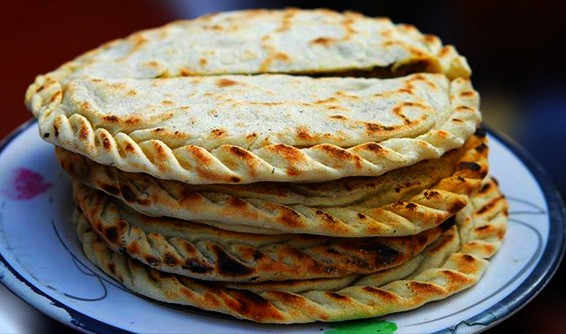
Before wheat became the dominant grain in Hunza, buckwheat and corn were the primary staples. Diram Phitti is made from these older grains — buckwheat or corn flour mixed with water and a small amount of fat, then cooked on a hot stone or iron griddle until it has a dense, slightly chewy texture. It lacks the refinement of wheat bread but has a nutty, earthy depth of flavor.
Diram Phitti was historically a staple winter food when wheat supplies ran low and altitude made grain growing difficult. Today it is eaten more as a traditional or ceremonial food — served at celebrations, offered to guests as a taste of the old Hunza, and sold in tourist-oriented restaurants as a heritage dish. It is best eaten fresh off the griddle, spread with local butter or apricot oil.
3. Harissa — Winter Comfort in a Bowl
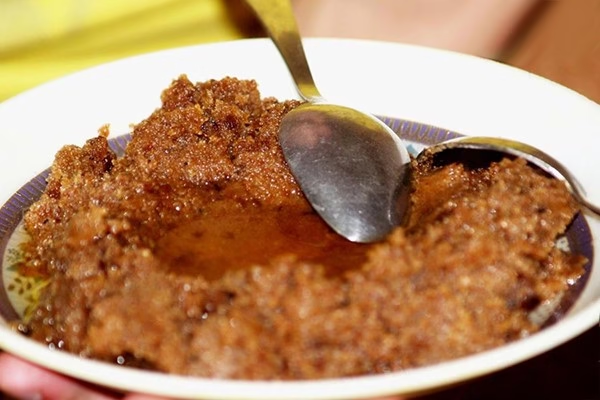
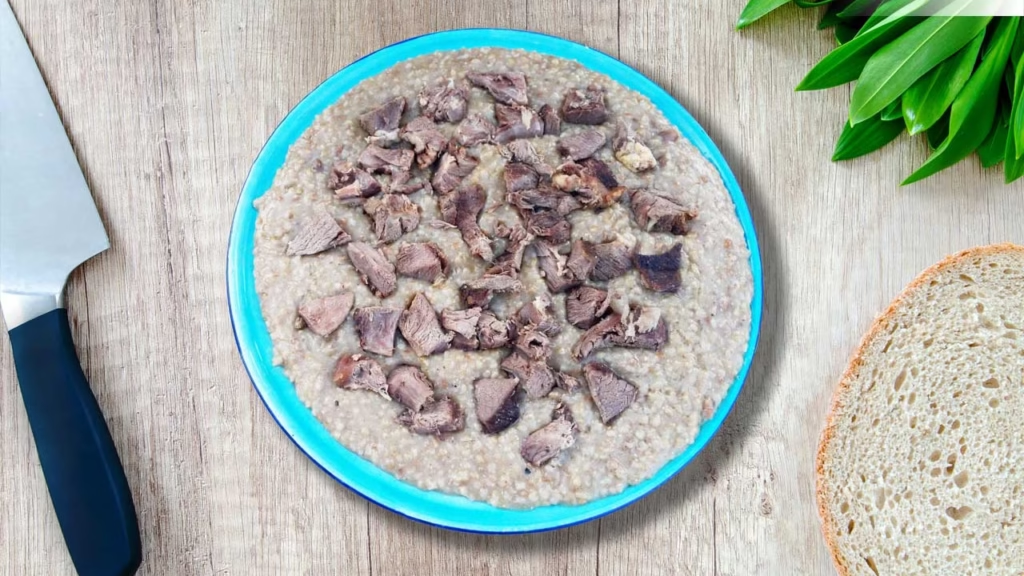
Harissa is one of Hunza’s great comfort foods — a slow-cooked porridge made from whole wheat grain and meat (usually chicken or mutton) simmered together for many hours until the grain breaks down completely and the mixture becomes a thick, smooth, deeply savory paste. The texture is similar to polenta or grits but the flavor is entirely its own.
Harissa is a celebratory and winter food — traditionally prepared for Eid, weddings, the cold months, and occasions when community gathering calls for substantial, warming food. The long cooking process — often 4–6 hours over low heat — fills the house with a smell that Hunzai people associate with warmth, family, and festivity. It is topped with clarified butter before serving, which melts into the porridge and adds richness.
4. Hunza Apricots — The Most Nutritious Dried Fruit in the World
The apricots of Hunza Valley are in a different category from the apricots sold in supermarkets worldwide. Two heritage varieties — Halman and Sher Bakhti — have been cultivated in Hunza for centuries. Both are smaller than commercial apricots, with a richly sweet and complex flavor when dried. The drying process — done naturally on rooftops in the summer sun — concentrates not just the sweetness but also the nutritional density.
Dried Hunza apricots are extraordinarily rich in beta-carotene (converted to Vitamin A in the body), potassium, dietary fiber, and iron. Some studies have found their antioxidant content to be significantly higher than commercially grown and dried apricots. They are a daily food in traditional Hunzai households — eaten as snacks, cooked into sauces, pressed into oil, and given to children as the primary sweet.
The apricot harvest — late July for most of Hunza — turns the valley into an extraordinary landscape: every rooftop covered in bright orange apricots drying in the sun, the orchards heavy with fruit, the air scented with sweetness. Fresh apricots are available from late June through August. Dried apricots are available year-round and are sold throughout Pakistan.
Apricot oil, cold-pressed from the kernels inside the apricot seeds, is used in Hunza both as a cooking fat and cosmetically. It is light, non-greasy, and rich in oleic acid and Vitamin E. Bottles of genuine Hunza apricot oil are sold in the Karimabad bazaar and make excellent gifts.
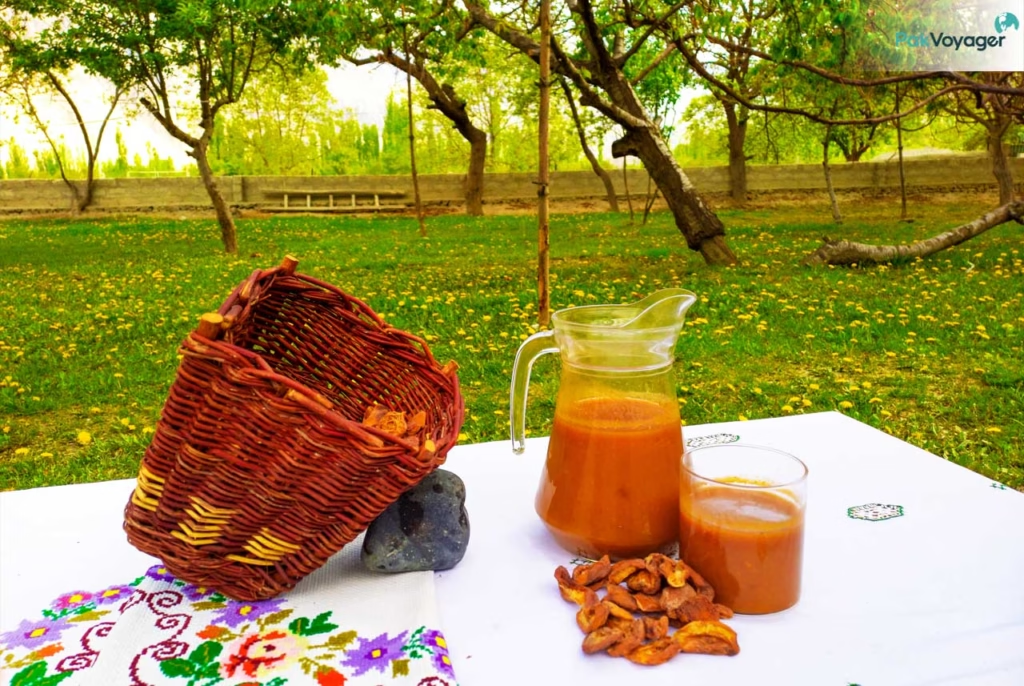
5. Tumuru Tea — The Spice Tea of the Mountains
Tumuru is the local name for the berry of Zanthoxylum armatum — a plant related to Sichuan pepper, found growing wild throughout the hills of Gilgit-Baltistan. The berries are dried and ground to make a tea that is mildly spicy, intensely aromatic, and quite unlike any commercial tea.
Tumuru tea is not available commercially outside of Gilgit-Baltistan. It is found in local homes, traditional guesthouses, and small tea stalls. Locals drink it for its believed digestive and medicinal properties — it is thought to ease altitude discomfort, improve circulation, and warm the body in cold weather. For visitors, it is an entirely unique flavor experience and a direct connection to the mountain pharmacopoeia that Hunzai people have maintained for centuries.
6. Mulberry Products — The Tree That Feeds Everyone
Mulberry trees line every path, every water channel, and every village boundary in Hunza. Both white mulberries (shehtoot) and black mulberries grow here in abundance, and virtually every part of the fruit is used. Fresh mulberries are eaten straight from the tree in season (June–July). They are dried in large quantities for winter, when they become a dense, sweet, chewy snack. Dried mulberries ground to flour are used in bread-making, giving the bread a natural sweetness and dark color.
One of the most sustaining traditional snacks in Hunza is dried mulberries mixed with crushed walnuts — a combination that is high in antioxidants, healthy fats, and natural sugars, requiring no preparation and providing sustained energy. Trekkers and farmers carry it as trail food.
Mulberry wine is also produced in Hunza — one of Pakistan’s most openly acknowledged local alcoholic beverages. It is technically produced for household use but is offered to guests in many guesthouses and hotels in the valley.
7. Ghee — The Ancient Fat
Traditional Hunzai ghee (clarified butter) is made from the milk of local cows and yaks, slowly simmered until the water evaporates and the milk solids separate. The resulting golden fat is then stored — sometimes for months or years — developing a deeper, nuttier flavor as it ages. Old ghee, aged for a year or more, is considered a delicacy and a medicine in traditional Hunzai households.
The fat content and flavor profile of traditional Hunzai ghee differs significantly from commercially produced ghee because it comes from animals that graze on mountain pastures with diverse, mineral-rich plants. It is used as a cooking fat, spread on bread, added to tea, and used as a base for many traditional dishes.
8. Gur Gur Chai (Butter Tea)
Gur Gur Chai — named for the gurgling sound of the traditional wooden churn used to make it — is Hunza’s version of butter tea, essentially identical to the butter tea drunk across Tibetan-influenced cultures from Bhutan to Ladakh. Strong tea is brewed, then churned vigorously with yak butter and salt until it becomes a rich, savory emulsion that is more soup than tea in character.
The first sip is almost always a surprise to visitors who expect something sweet. Gur Gur Chai tastes deeply savory, slightly smoky, and fatty in a way that is warming and substantial rather than refreshing. At altitude, in cold weather, with significant energy expenditure, it makes complete physiological sense — high in calories, hydrating, and warming. Offered to every guest as a gesture of hospitality, declining it is considered impolite.
9. Dawdo — Daily Sustenance
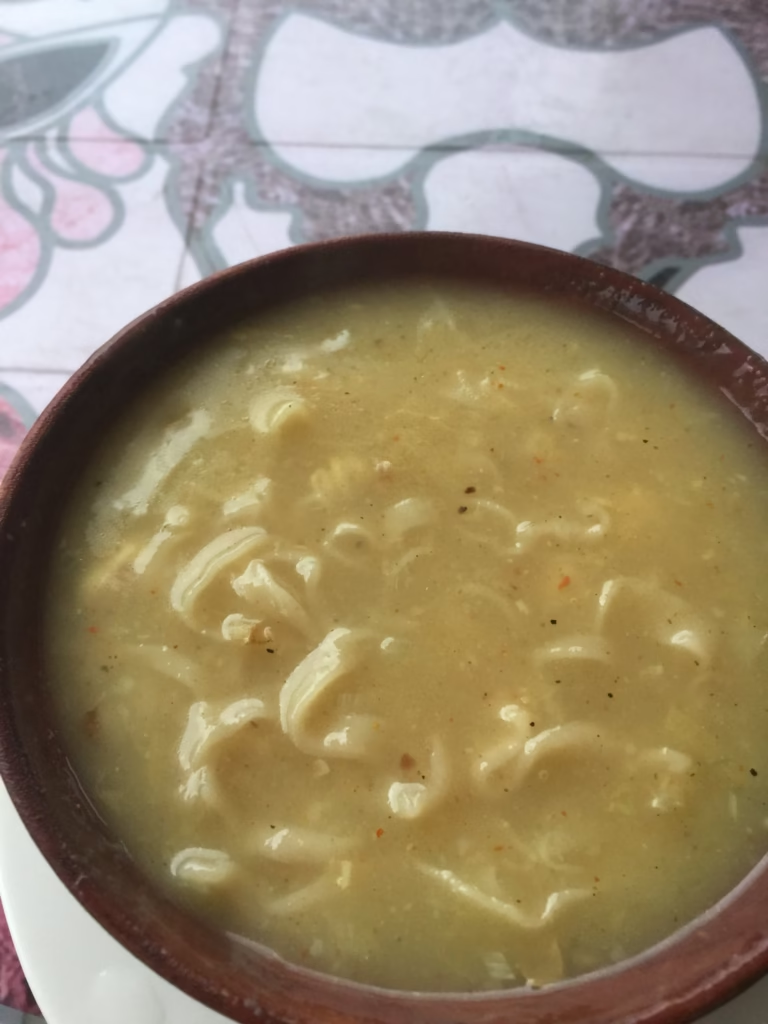
Dawdo is the simplest and most elemental Hunzai food — a thick wheat flour soup cooked with butter or ghee, salt, and sometimes dried fruits or vegetables. It was historically the daily meal for much of the Hunzai population: quick to prepare, filling, using ingredients that could be stored through the winter. Today it is eaten less frequently as packaged foods have become available, but it remains a fixture in traditional homes and is served in heritage-focused guesthouses as a taste of authentic Hunzai daily life.
10. Mountain Trout — Fresh From Glacial Streams
The rivers and streams of Gilgit-Baltistan are fed by glaciers and snowmelt, making them cold, clear, and well-oxygenated — ideal conditions for wild trout. Brown trout and rainbow trout have both been present in these waterways for centuries. Local fishermen catch them with handlines and nets. The flesh of mountain trout from these cold waters has a firmer texture and more intense flavor than farmed fish.
Trout is typically prepared simply in Hunza — grilled whole over an open fire with only salt and perhaps a squeeze of apricot juice. The fish itself is good enough that elaborate preparation would only obscure it. Available in Karimabad restaurants from spring through autumn. Fishing licenses are technically required; ask at local guesthouses about current regulations.
Foods 11–20: The Complete List
| # | Food | Description |
| 11 | Burus Shaak | Flatbread stuffed with wild mountain spinach and herbs; a vegetarian version of chapshuro |
| 12 | Khichri | Rice cooked with lentils and spices; a common everyday meal |
| 13 | Tselpo | Roasted barley grain, ground and eaten dry or mixed with butter tea; traditional energy food |
| 14 | Garlic chutney | Made from wild mountain garlic; intensely flavored; served alongside most meals |
| 15 | Walnut products | Fresh walnuts in September; walnut oil used in cooking; walnut-mulberry trail mix |
| 16 | Yak meat | Consumed mainly in autumn and winter; dried or slow-cooked; gamey and rich |
| 17 | Maize bread | Dense bread from local corn varieties; heavier than wheat bread; traditional winter staple |
| 18 | Lassi | Yogurt-based drink from local cultured milk; both sweet and salted versions served |
| 19 | Fruit wines | Apricot and mulberry wines produced for household use; offered to guests in many guesthouses |
| 20 | Sharbat-e-Hunza | A cold drink made from dried apricots, rosewater, and mountain water; sold in bazaar stalls in summer |
The Hunza Diet and Modern Science
The specific health claims associated with the Hunzai diet have been examined with increasing scientific rigor in recent decades. The extraordinary lifespan claims (some accounts spoke of people routinely living to 120 or even 140) have been largely attributed to poor record-keeping rather than genuine extreme longevity. However, what the research does support is that the traditional Hunzai diet is nutritionally excellent by contemporary standards — high in fiber, antioxidants, and healthy fats from nuts and apricot oil; low in sugar, processed food, and excess sodium; and accompanied by sustained daily physical activity.
The specific components that have attracted most scientific interest are: the dried apricots (exceptionally high in beta-carotene and antioxidants); the walnuts (high in omega-3 fatty acids); the fermented foods (believed to support gut microbiome health); and the overall caloric moderation imposed by the relatively limited food supply in a pre-packaged-food era.