Farhan Faqir
Islamabad — The Capital That Surprises
Islamabad, Pakistan’s capital since the government’s relocation from Karachi in 1966, defies almost every expectation visitors bring to it. Where Lahore is historical, chaotic, and sensory; and Karachi is vast, intense, and commercial — Islamabad is organized, green, relatively clean, and genuinely pleasant to spend time in. It was purpose-built on a master plan developed by Greek architect Constantinos Apostolou Doxiadis in the 1960s, and its grid of wide, tree-lined roads and landscaped sectors remains largely intact.
For travelers heading to Gilgit-Baltistan, Islamabad is the necessary gateway — international flights arrive at Islamabad’s Benazir Bhutto International Airport, and domestic connections to Gilgit and Skardu depart from the same airport. But the city deserves more than the overnight transit most visitors give it.
Top Attractions
1. Faisal Mosque — A Masterpiece of Modern Islamic Architecture
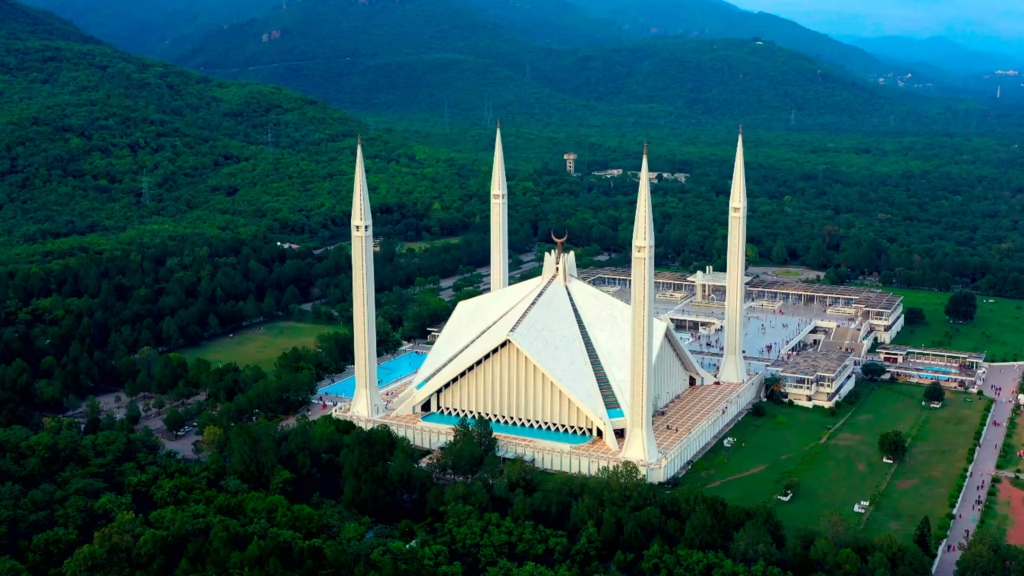
The Faisal Mosque is one of the most distinctive religious buildings in the world and Pakistan’s most visited single landmark. Designed by Turkish architect Vedat Dalokay following an international competition in the 1960s, and named after Saudi King Faisal who funded its construction, the mosque broke radically with Islamic architectural tradition: instead of the conventional dome that crowns virtually every major mosque in the world, Dalokay designed a structure based on the form of a Bedouin desert tent — eight triangular concrete sections rising to form a shell-like main prayer hall, flanked by four slender minarets.
The mosque can accommodate up to 300,000 worshippers when its courtyard is included. The interior is equally innovative — the main hall is entirely free of internal columns, the space opening immediately to the full height and the shimmering mosaic-covered ceiling. Non-Muslim visitors are welcome outside prayer times; modest dress is required (shawls are available at the entrance for women; shoes must be removed).
The mosque is located at the foot of the Margalla Hills at the top of Faisal Avenue — the city’s main ceremonial boulevard — and is visible from much of northern Islamabad. The surrounding grounds include gardens and a small Islamic research center. Best visited in early morning when the light is clear and before tour groups arrive.
2. Margalla Hills National Park — Hiking Above the City
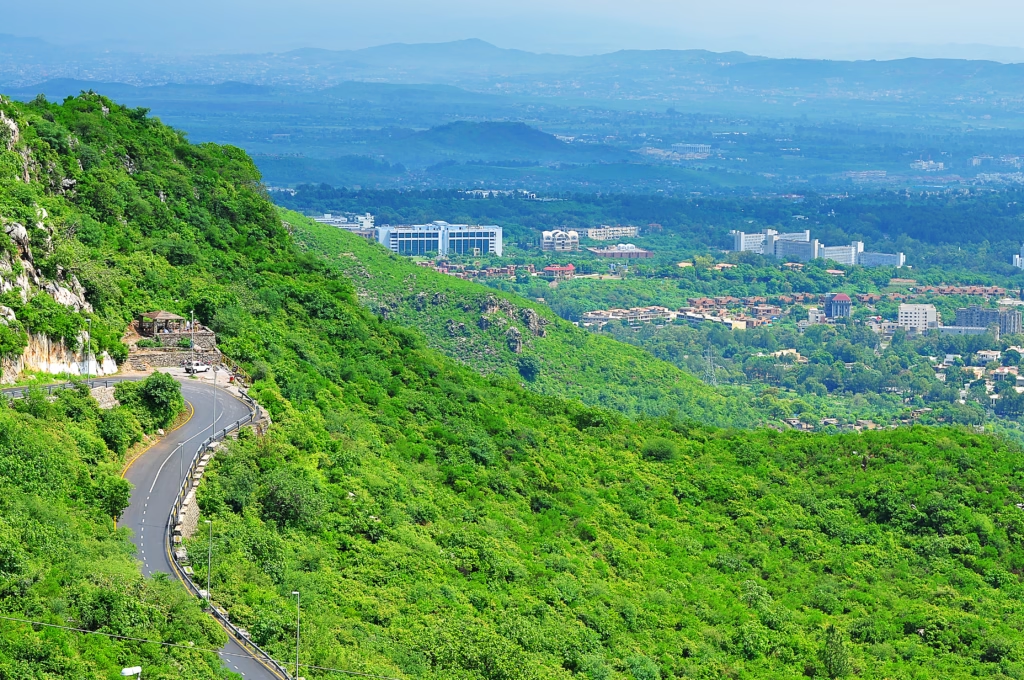
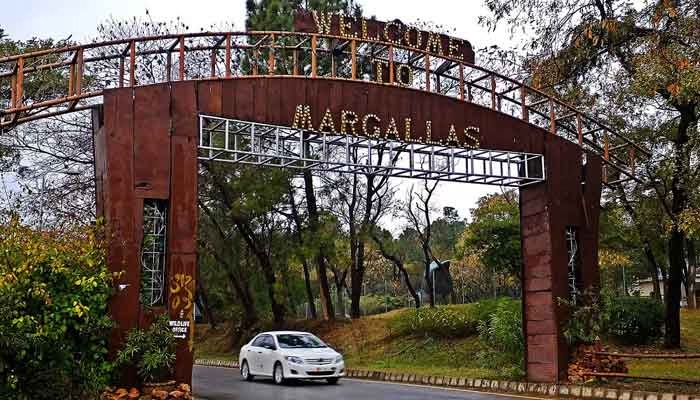
The Margalla Hills rise directly behind Islamabad, forming the city’s northern boundary and providing a natural park of approximately 15,000 hectares that includes forest, wildlife, and well-maintained hiking trails. The hills are the southernmost extension of the Himalayan foothills, and on very clear days the snowcapped peaks of the higher Himalayas are visible from the ridge.
Trail 3 and Trail 5 are the most popular hiking routes. Trail 3 (2–3 hours return, moderate difficulty) climbs through subtropical pine and deciduous forest to a viewpoint over the city. Trail 5 (3–4 hours return, more challenging) goes higher and offers better mountain views. Both trails start from marked trailheads in the F-7/Sector area, accessible by taxi from central Islamabad.
Wildlife in the Margalla Hills includes Leopards (present but rarely seen), barking deer, hog deer, rhesus monkeys (frequently seen on trails), and abundant birdlife including several species of eagle and kite. The park is managed by the Capital Development Authority and trails are generally well-marked. Carry water — the trails have no facilities.
3. Lok Virsa Museum — Pakistan’s Cultural Diversity in One Building
The Lok Virsa Museum (Folk Heritage Museum), located at the Shakarparian Hills in Islamabad, is the finest introduction to Pakistan’s cultural diversity available in a single location. The museum’s collection focuses on the traditional material culture of Pakistan’s four provinces and northern territories: textiles (embroidery, weaving, block printing, tie-dye); crafts (pottery, woodwork, metalwork, mirror work); musical instruments from every region; photographs and documentary materials; and displays on traditional architecture.
The quality of the collection is genuinely high — this is not a tourist-oriented overview but a scholarly institution that has been collecting ethnographic material since the 1970s. The galleries on Sindhi embroidery, Balochi tribal textiles, and the material culture of Gilgit-Baltistan are particularly strong. Entry fee is nominal (approximately Rs 100). A visit before traveling to GB gives useful context for what you will encounter.
4. Pakistan Monument — The Symbolic Heart
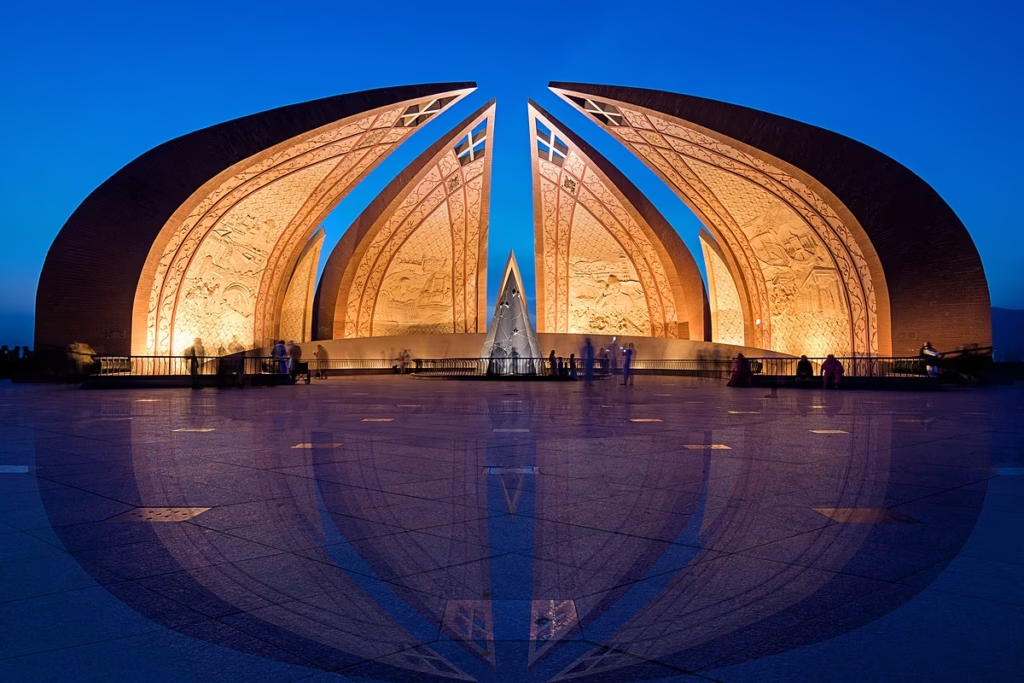
The Pakistan Monument, completed in 2007, is a large-scale public artwork and museum on the Shakarparian Hills. Designed to represent the unity of Pakistan’s provinces, the monument’s four large ‘petals’ and three smaller ones symbolize the four provinces and three territories. The surrounding museum documents Pakistani history from the Indus Valley Civilization to independence and beyond. The monument site offers a panoramic view over Islamabad and, on clear days, toward the Margalla Hills and the distant mountains.
Food and Restaurants in Islamabad
Islamabad has one of the best restaurant scenes in Pakistan — a combination of the capital city’s diverse, educated population and the presence of a large diplomatic community that has created demand for quality food across many cuisines.
- For Pakistani food: Usmania Restaurant in Blue Area is an institution — generations of politicians, diplomats, and ordinary Islamabadis have eaten here. The BBQ and karahi are exceptional. Approx Rs 1,500–2,500 per person.
- For desi breakfast: Islamabad’s dhaba culture along the Rawalpindi/Islamabad border is excellent. Nihari (slow-cooked beef), paye (trotters), and paratha are the specialties. Rs 200–400 per person.
- For grilled meat: Monal Restaurant on the Margalla Hills offers expensive but spectacular views alongside decent food. Best for the experience rather than the cuisine. Rs 3,000–5,000 per person.
- For international cuisine: F-7 Markaz (Super Market) and F-6 Markaz have numerous international options from Japanese to Lebanese to Continental.
Day Trips from Islamabad
| Destination | Distance | Time | What to See |
| Taxila (UNESCO) | 35 km | 45 min | Ancient Gandhara city; Taxila Museum; Buddhist ruins from 6th century BCE – 7th century CE |
| Rohtas Fort (UNESCO) | 280 km | 3 hours | 16th-century unconquered Mughal fortress; 4.2 km perimeter walls; 12 gates |
| Murree | 60 km | 1.5 hours | British colonial hill station; cooler temperatures; pine forests; pedestrian mall |
| Khanpur Dam | 55 km | 1 hour | Popular picnic spot; water sports; green landscape |
| Nathia Gali | 80 km | 1.5 hours | Alpine resort village in Galyat Hills; hiking; colonial-era bungalows |
| Rawalpindi Old City | 15 km | 20 min | Historical bazaars; Raja Bazaar; food streets; centuries-old commercial heart |