
 Farhan Faqir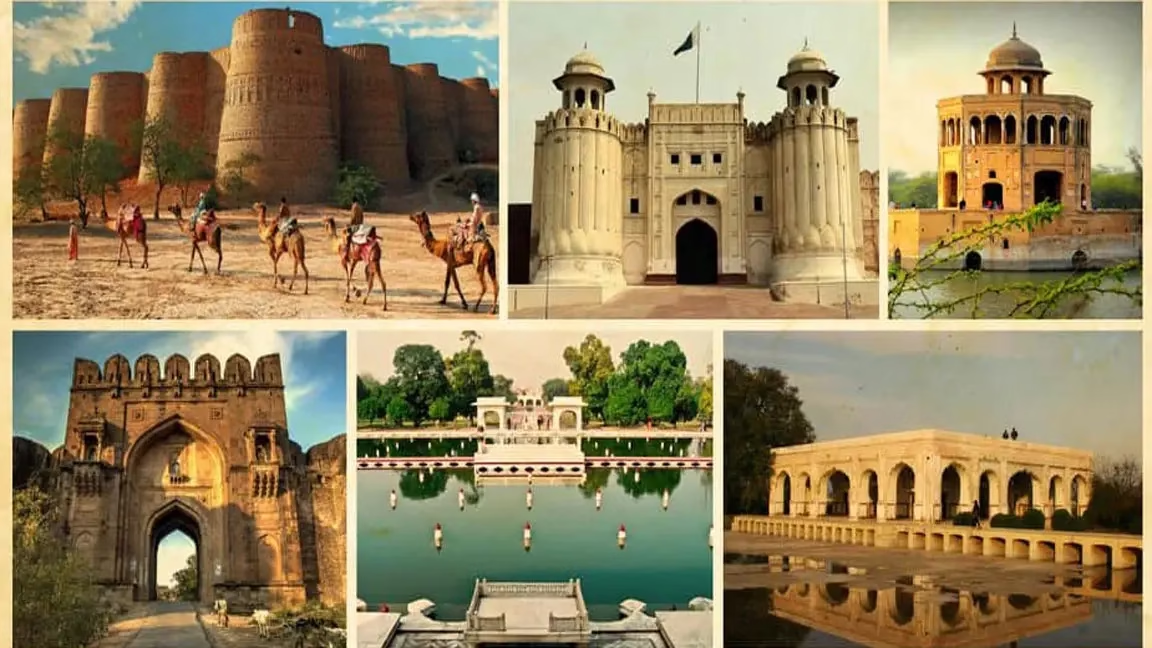
Pakistan — A Cradle of Human Civilization
Pakistan’s territory has been continuously inhabited for at least 9,000 years — the earliest Neolithic farming settlements in the Indus Valley date to approximately 7000 BCE, making this region one of the earliest agricultural centers in the world. The Indus Valley Civilization, which emerged here around 3300 BCE, was one of the three earliest urban civilizations in human history, contemporary with ancient Egypt and Mesopotamia.
This depth of history means that Pakistan’s archaeological and historical landscape is extraordinary by any global standard. Alexander the Great passed through here in 326 BCE. Buddhist missionaries traveled through these valleys for centuries. Gandhara — the hybrid Greco-Buddhist civilization that emerged after Alexander’s passage — produced some of the finest sculpture in ancient Asia. The Mughals built their greatest monuments here. The British Empire’s frontier was here.
Despite this, Pakistan’s heritage sites are among the most undervisited significant historical locations in the world. The combination of distance, media narrative, and tourist infrastructure challenges means that millions of travelers who would visit these sites if they were in Italy or Egypt have never considered them. The 6 UNESCO World Heritage Sites represent the internationally recognized pinnacle of this heritage — and each is worth a journey.
1. Mohenjo-daro — City of the Dead (2600–1900 BCE)
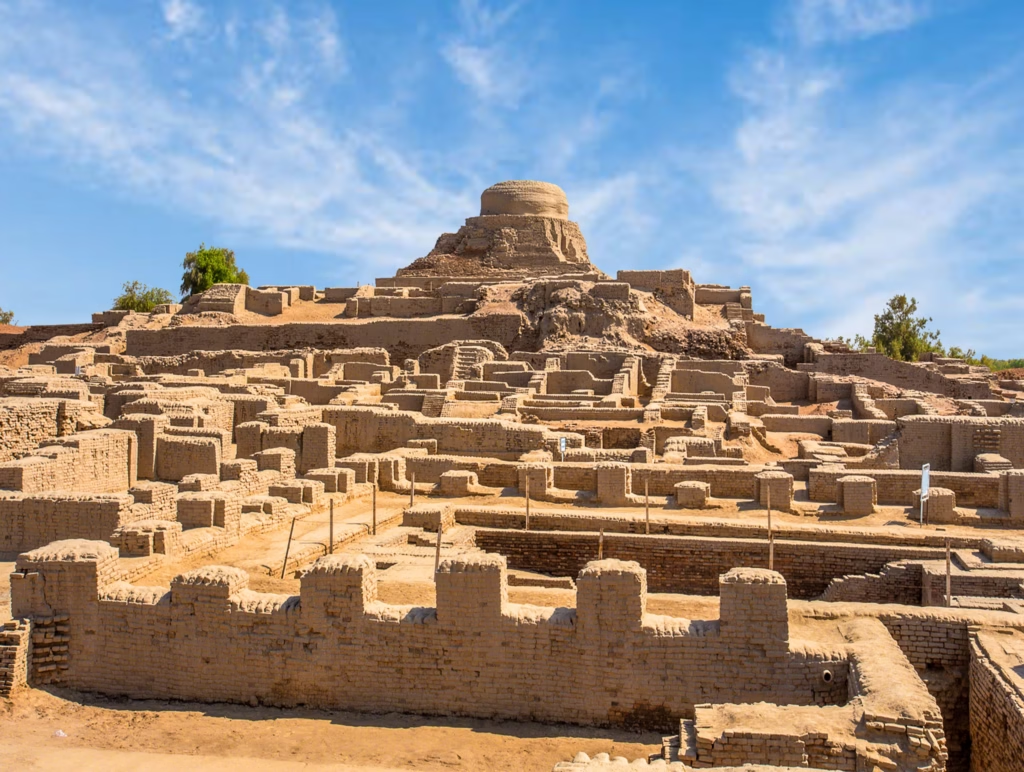
Mohenjo-daro, located in Sindh province approximately 400km northeast of Karachi, is one of the most important archaeological sites in the world. Built around 2600 BCE at the height of the Indus Valley Civilization, it was one of the two largest cities of the ancient world at its peak — contemporary accounts suggest a population of 40,000–50,000, making it comparable to the largest Egyptian or Mesopotamian cities of the same era.
The city’s urban planning is what makes it most extraordinary — and most puzzling. The streets run on a precise cardinal grid. Brick sizes are standardized throughout the city — the same proportions used in Harappa, 600km to the northeast. Every house had access to a drainage system that channeled waste to covered drains running under the streets — a level of municipal sanitation that most European cities did not achieve until the 19th century CE. The Great Bath — a large, watertight pool in the central citadel — was probably used for ritual purification.
What has no explanation is the absence of anything that looks like a palace, a temple, a king’s tomb, or any other clear evidence of centralized authority or hierarchy. Unlike Egypt or Mesopotamia, the Indus Valley Civilization left no monumental art depicting rulers, no royal tombs filled with treasures, and no texts that have been deciphered. This egalitarian anomaly has fascinated archaeologists for a century.
Mohenjo-daro means ‘Mound of the Dead’ in Sindhi — the name given by locals when the site was first discovered by outsiders. British archaeologist John Marshall began systematic excavation in 1922, and the site was designated a UNESCO World Heritage Site in 1980. It faces severe erosion threats from rising groundwater (a consequence of modern irrigation in the surrounding area) and the number of visitors allowed on-site is controlled.
2. Taxila — Where Buddhist Greece Met the East (6th century BCE – 7th century CE)
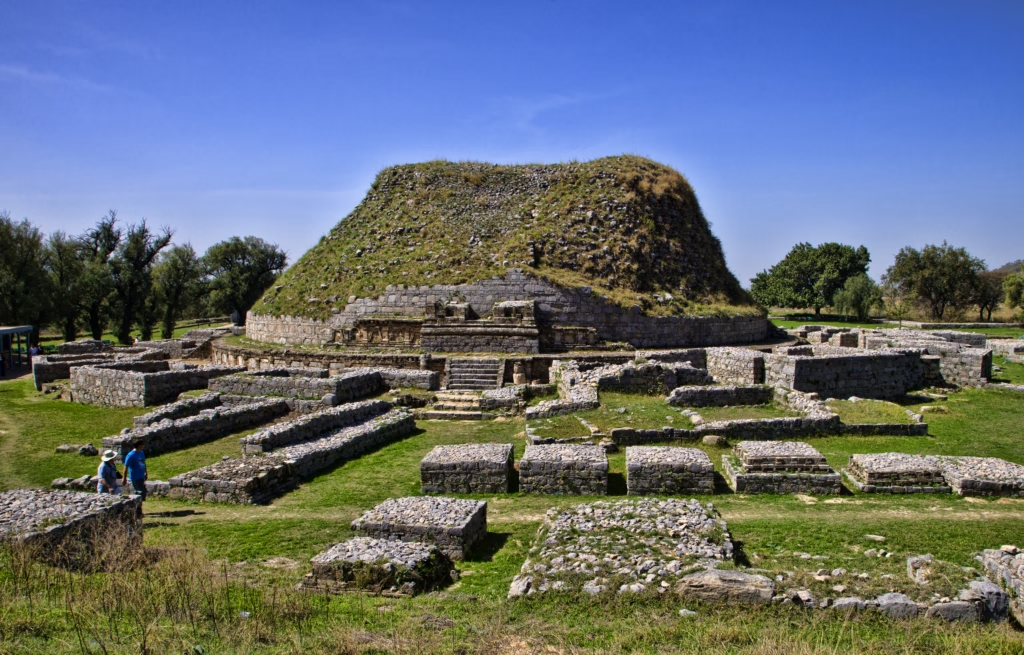
Taxila (ancient name: Takshashila) is a complex of archaeological sites 35km northwest of Islamabad representing over 1,000 years of continuous urban occupation — from its role as a major city in the Achaemenid Persian Empire (6th century BCE) through its peak as a Gandharan capital to its abandonment following the White Hun invasions of the 5th–6th century CE.
At Taxila’s height, between approximately the 1st and 4th centuries CE, it was one of the great centers of learning in the ancient world. Students traveled from China, Sri Lanka, Central Asia, and as far as the Mediterranean to study at its monasteries and schools. The subjects taught included philosophy, medicine, mathematics, law, and the Vedic sciences. The Buddha himself is traditionally said to have received his secular education at Taxila before his renunciation — though this is a tradition rather than verifiable history.
What makes Taxila architecturally unique is the Gandharan artistic tradition — a synthesis of Greek artistic conventions (developed in the Greek colonies left by Alexander’s armies) with Buddhist iconography and Indian artistic traditions. The result was the first sculptural representation of the Buddha in human form (earlier Buddhist art avoided depicting the Buddha directly). These sculptures — showing a meditative figure with distinctly Greek facial features, wearing robes that fall in classical folds — are among the most extraordinary artistic achievements of the ancient world.
The Taxila museum contains the finest collection of Gandharan sculpture in Pakistan. The archaeological sites include Bhir Mound (the earliest city), Sirkap (the Hellenistic-Parthian city), Sirsukh (the Kushan city), and dozens of Buddhist stupas and monasteries scattered across a wide area.
3. Takht-i-Bahi — A Buddhist Monastery Almost Perfectly Preserved (1st century CE)
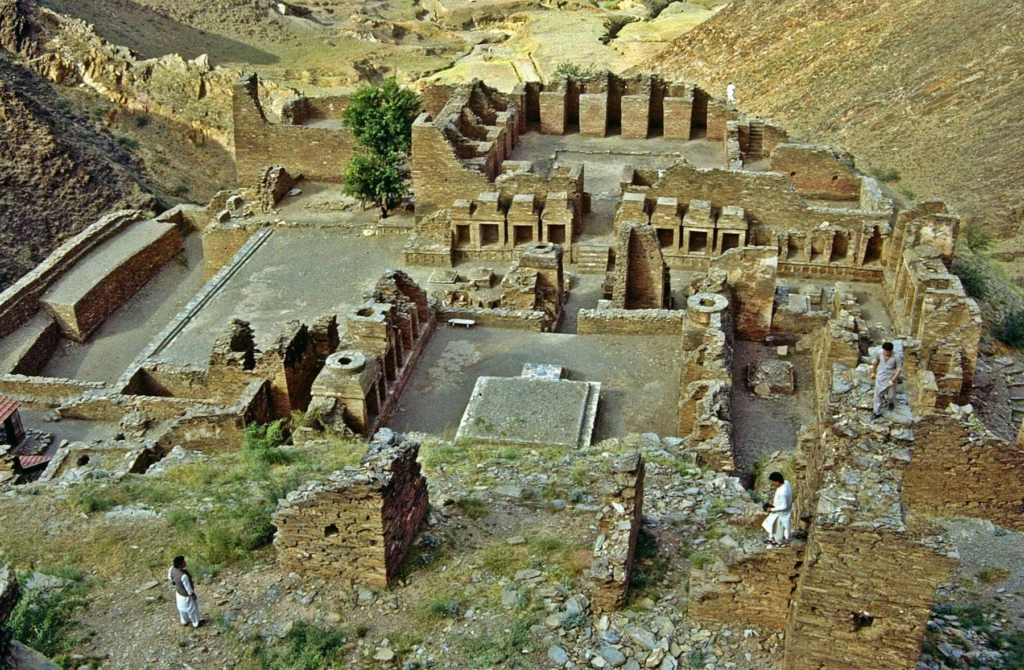
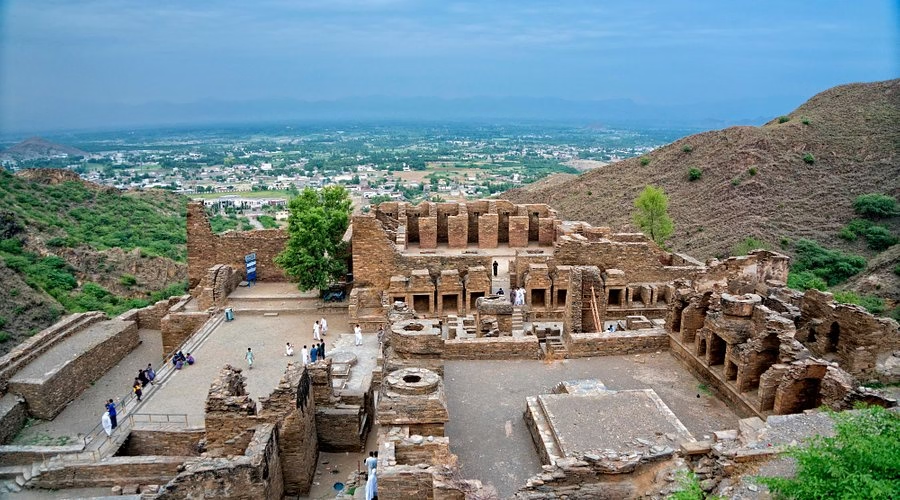
Takht-i-Bahi (meaning ‘Throne of Origins’ or ‘Spring on a High Place’) is a Buddhist monastic complex in Khyber-Pakhtunkhwa province, built in the 1st century CE and abandoned sometime in the 7th century CE. It is the best-preserved Buddhist archaeological site in Pakistan and one of the most intact Buddhist monastery complexes anywhere in Asia.
The reason for its exceptional preservation is its location: unlike most ancient settlements, which were built in valleys and were eventually buried by sediment, built over, or destroyed by flooding, Takht-i-Bahi was constructed on a hilltop. No subsequent settlement was built on it because the hilltop location was impractical for agriculture. As a result, when it was abandoned, it was simply left — and has remained structurally intact for 1,500 years.
Walking through Takht-i-Bahi today, you can see the main stupa court where worshippers circumambulated the central stupa; the votive stupa court filled with dozens of smaller stupas donated by wealthy patrons; the assembly hall where monks gathered; the individual meditation cells where monks lived and practiced; the court of many stupas with its elaborate niched walls; and the residential quarters with storage rooms and a kitchen.
4. Lahore Fort and Shalamar Gardens — Mughal Masterpieces (1556–1657)
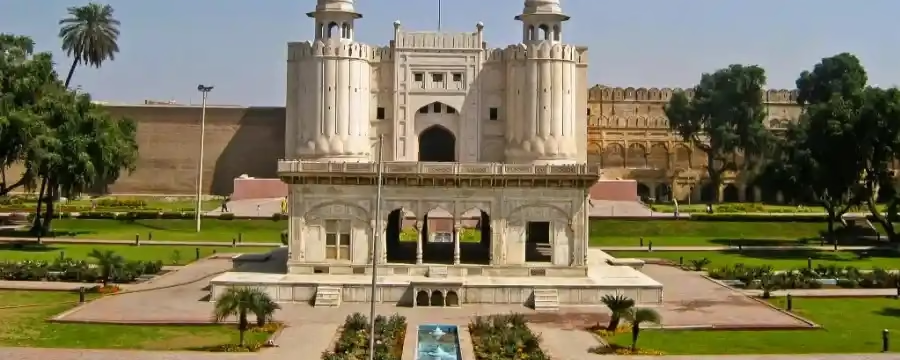
The Lahore Fort (Shahi Qila — Royal Fort) and the Shalamar Gardens together represent the peak of Mughal architectural achievement in Pakistan. Both were designated UNESCO World Heritage Sites in 1981.
The Lahore Fort was built and expanded over approximately 150 years by successive Mughal emperors — from Akbar (who began the current structure) through Jahangir to Shah Jahan and Aurangzeb. Its most celebrated feature is the Shish Mahal — the Palace of Mirrors — in which the entire ceiling and walls are embedded with small convex mirrors designed to multiply candlelight thousands of times and create the effect of starlight within the palace interior. The engineering precision required for this effect, achieved without modern tools, continues to impress architects today.
The Shalamar Gardens (1641 CE) were built by Emperor Shah Jahan — also the builder of the Taj Mahal — as pleasure gardens for the Mughal court. Laid out on three descending terraces connected by water channels and filled with 410 fountains, marble pavilions, and orchards of exotic fruit trees, the gardens represent the Persian-Mughal garden design tradition at its highest development. The middle terrace, still extensively intact, gives the clearest sense of the original design.
5. Rohtas Fort — The Unconquered Fortress (1541 CE)
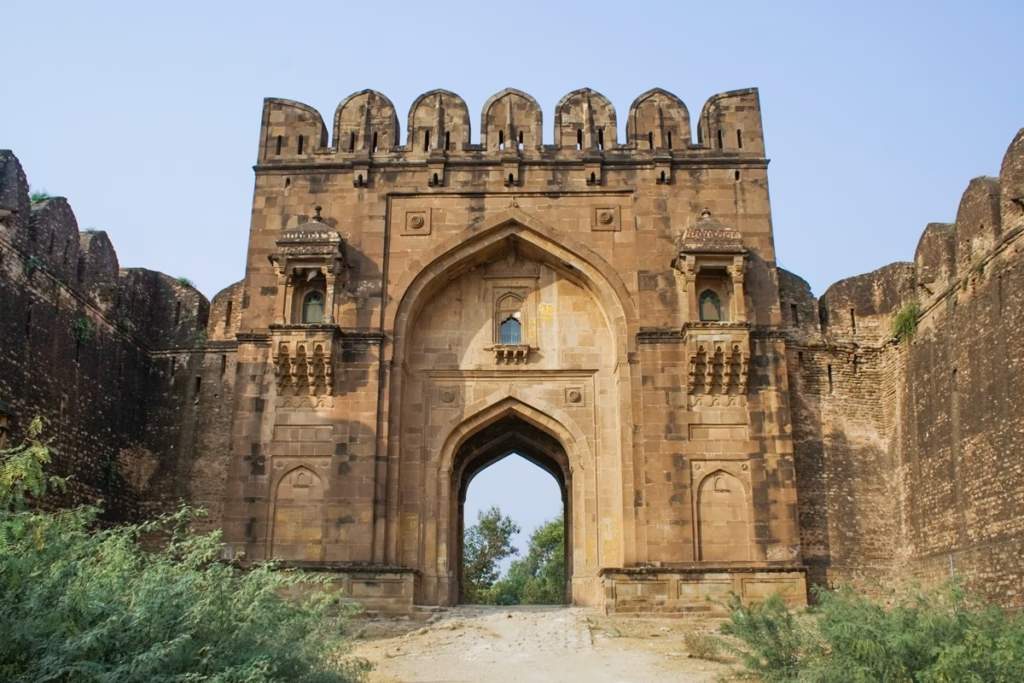
Rohtas Fort, located near Jhelum in Punjab province, was built in 1541 by Sher Shah Suri — the Afghan ruler who temporarily displaced the Mughal Empire and whose administrative genius influenced Indian governance for centuries. The fort was built specifically to suppress the Gakhar tribe of the Potohar Plateau, who had sided with the defeated Mughal emperor Humayun.
By any measure, it is an extraordinary engineering achievement. The walls stretch 4.2 kilometers in circumference, are up to 18 meters high and 10 meters wide in sections, and contain 12 gates — each architecturally distinct. The perimeter wall is punctuated by 68 bastions. Despite its enormous size, the fort was built and largely completed within approximately three years — an extraordinary speed of construction that required a massive, organized workforce.
The military record of Rohtas Fort is remarkable: despite multiple attempts by the Gakhar tribe and subsequently by Mughal forces to retake the fort, it was never conquered by military assault. The walls simply could not be breached with the siege technology of the era. The fort’s name ‘Rohtas’ is believed to derive from an earlier fortification in Bihar, India, captured by Sher Shah on his rise to power.
6. Archaeological Ruins at Mohenjo-daro — Additional Context
(Note: UNESCO lists Mohenjo-daro separately from the other archaeological sites. The full UNESCO designation covers the main mound, the DK area, and several associated excavation zones. The site continues to be actively researched — recent ground-penetrating radar surveys suggest that the known excavated area represents only a portion of the total ancient city, which may extend significantly beyond current exposed sections.)
Visiting Pakistan’s Heritage Sites — Practical Guide
| Site | Location | Nearest City | Best Access | Entry Fee (approx.) |
| Mohenjo-daro | Sindh Province | Larkana | Road or domestic flight to Mohujo | Rs 200–500 |
| Taxila | Punjab (KPK border) | Islamabad | 45-minute drive from Islamabad | Rs 200 |
| Takht-i-Bahi | KPK Province | Mardan | 2-hour drive from Peshawar | Rs 200 |
| Lahore Fort | Lahore, Punjab | Lahore | Lahore old city, accessible by rickshaw | Rs 500–1,000 |
| Shalamar Gardens | Lahore, Punjab | Lahore | Eastern Lahore, taxi from city | Rs 300–500 |
| Rohtas Fort | Punjab | Jhelum | 2-hour drive from Islamabad | Rs 200 |

1 comment
I was examining some of your blog posts on this website and I think this website is really instructive! Keep on posting.