
Where the Crowds End and the Real Karakoram Begins
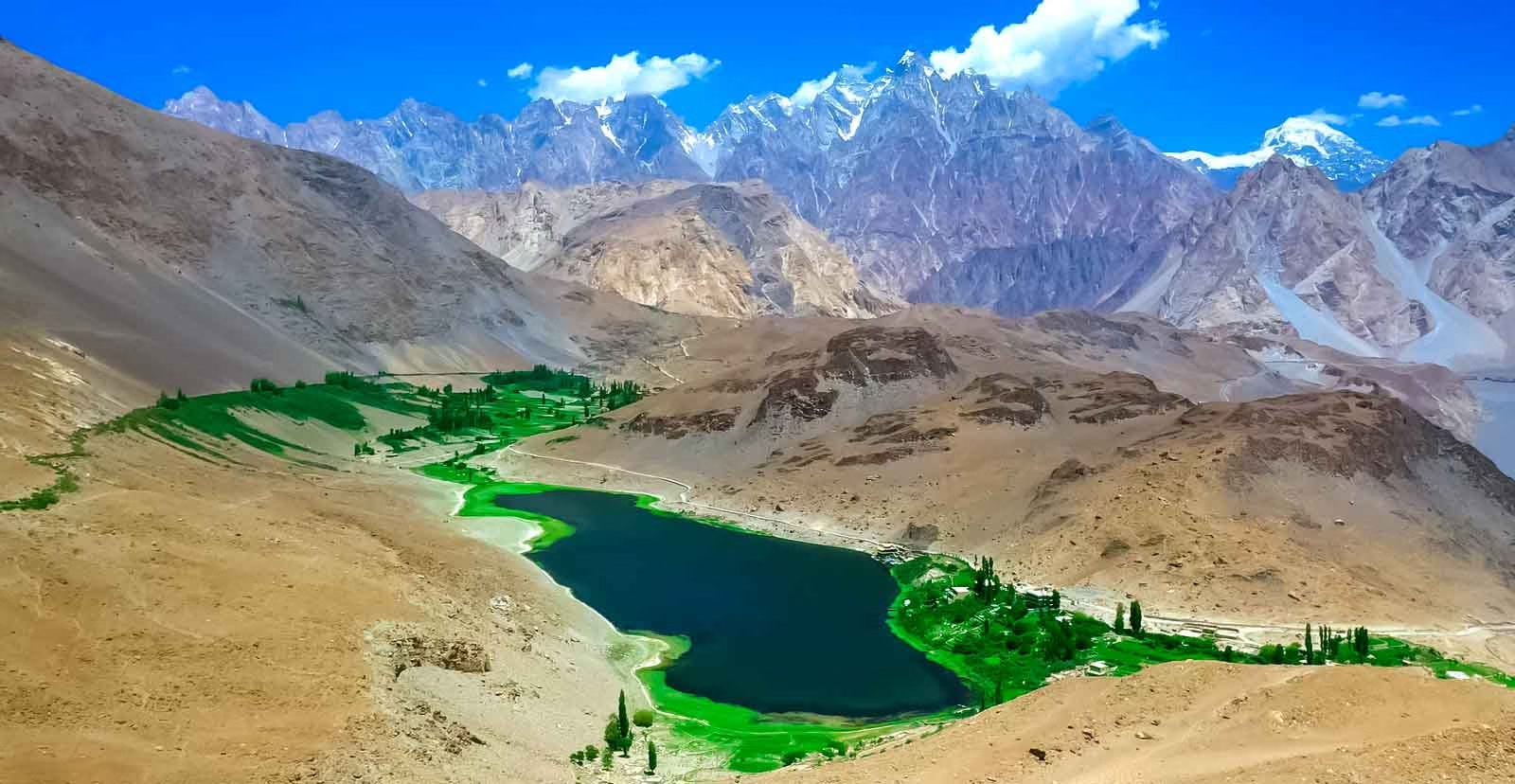
Gojal — the upper section of the Hunza River valley beyond Attabad Lake — is what remains of Hunza when you subtract the tourist infrastructure of Karimabad. The landscape changes dramatically beyond the tunnels that bypass Attabad: the green, terraced orchards of lower Hunza give way to bare, towering rock walls in shades of brown and ochre, braided river channels, and the extraordinary geological formations that define the upper Karakoram. The Wakhi people who live here — practicing Ismaili Islam and speaking their Eastern Iranian language — have deep cultural connections with the Pamirs across the Khunjerab, more similar in some ways to Tajikistan than to Lahore.
Gojal is significantly less visited than Karimabad despite lying on the same KKH road. The additional 1.5 hours of driving from Karimabad to Passu, and the basic accommodation options beyond, filter out casual day-trippers and create a quieter, more remote atmosphere. For travelers who find Karimabad too busy or too developed, Gojal is the answer.
Key Destinations in Gojal Valley
Passu Village and the Famous Cones
Passu village, approximately 95 km beyond Karimabad on the KKH, is the most visited part of Gojal. The Passu Cones — a cluster of razor-sharp rock towers rising 6,000–7,000 meters directly above the valley — are visible from the village and the highway. The cones’ extraordinary profile, particularly in low morning or evening light when shadows sharpen their silhouettes, is one of the most photographed mountain images in Pakistan. Several guesthouses in Passu offer these views from their rooftop terraces.
From Passu, a 2–3 hour walk up the glacial moraine provides significantly closer views of the cones and the Batura Glacier — one of the world’s longest glaciers outside the polar regions, stretching 57 km into the mountain interior.
Hussaini Suspension Bridge — One of the World’s Most Famous ‘Scary Bridges’
The Hussaini bridge, 5 km from Passu, is a narrow footbridge of wooden planks and wire cables spanning the fast-flowing Hunza River with a series of gaps between planks that reveal the water rushing below. It has appeared in numerous travel media lists of ‘world’s most dangerous bridges.’ A solid modern bridge was recently constructed alongside it for practical use, but the old suspension bridge remains standing and is still used by locals — and by travelers who want the experience. Crossing it is memorable: slightly terrifying, visually extraordinary, and genuinely not very long.
Borith Lake — The Wetland Among the Glaciers
Borith Lake, 4 km from Passu at the end of a rough jeep track, is a shallow wetland lake formed at the confluence of the Passu and Ghulkin glaciers. In summer, bar-headed geese, migratory ducks, and other water birds use the lake as a staging point on trans-Himalayan migration routes. Yaks graze on the surrounding grass. The lake reflects the cones and glaciers above in calm conditions. It is one of the most peaceful spots in GB — almost never crowded even in peak season.
Shimshal Valley — Pakistan’s Most Remote Inhabited Valley
Shimshal is a remote valley accessible via a rough 56-km jeep track that branches off the KKH north of Passu. The valley at 3,100 meters houses approximately 1,500 Wakhi-speaking people whose relative isolation has preserved cultural practices found nowhere else. The community has developed its own guesthouse and trekking infrastructure, and the valley offers some of Pakistan’s best high-altitude trekking: routes to the Shimshal Pass (4,800m), Minglikilla Pass, and approach routes to several high peaks.
The jeep journey to Shimshal itself — 56 km of road carved into cliff faces above the Shimshal River — is an adventure. Allow a full day for the drive from Passu to the village.
Sost — The Last Pakistani Town Before China
Sost (also spelled Sust), 20 km north of Passu on the KKH, is the official Pakistani customs and immigration checkpoint for the China-Pakistan border crossing. It is primarily a transit point but has several adequate hotels, a busy bazaar, and the Sunday market that draws traders from throughout the region. If you plan to drive to the Khunjerab Pass, Sost is where you obtain border zone permits.
Practical Information — Gojal Valley
| Detail | Information |
| Distance from Karimabad to Passu | ~95 km (1.5 hours by road on KKH) |
| Distance from Karimabad to Sost | ~150 km (2.5 hours) |
| Accommodation in Passu | Several family guesthouses; basic; no luxury options |
| Accommodation in Sost | Several mid-range hotels; better facilities than Passu |
| ATMs | None in Passu or Gojal — bring sufficient cash from Karimabad |
| Mobile signal | Patchy 3G in Passu and Sost; Shimshal has no reliable signal |
| Best season | May–October for all areas; Shimshal: June–September only |
| What to pack | Warm layers (cold even in summer nights at 2,600m+); sun protection; cash; portable power bank |
