Farhan Faqir
Why Gilgit-Baltistan Has So Many Forts Karakoram Highway
Gilgit-Baltistan was, for most of its history, not one region but many independent kingdoms — each valley controlled by its own ruling dynasty, each dynasty fiercely defending its water rights, trade access, and territorial boundaries. The Silk Road passed through here, carrying silk, jade, spices, and Buddhist pilgrims from China to Central Asia and beyond. Every major valley had its ruling family. Every ruling family built a fort.
The result is a concentration of medieval fortifications — some over 900 years old — that is extraordinary for a region of this size. These forts are not tourist reconstructions or museums by original design; they are genuine power centers, built to last and used for centuries. The architectural styles reflect the cultural crossroads GB occupied: Tibetan construction traditions, Central Asian design, Mughal influences, and pure practical mountain engineering all appear in these structures.
The forts of Gilgit-Baltistan also survived where similar structures elsewhere were destroyed — because the valleys were too remote, too difficult to access, and too strategically marginal for the large empires (Mughal, British, Sikh) that might otherwise have dismantled them. Their survival is largely a function of their isolation.

1. Baltit Fort, Hunza — 700 Years of Silk Road History
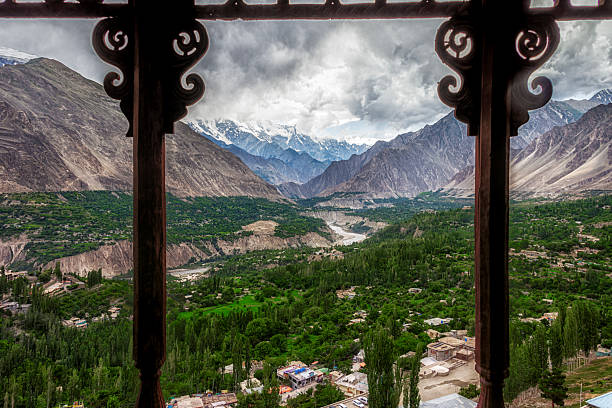
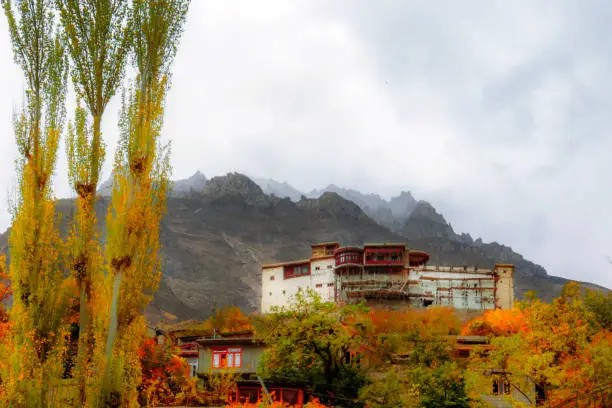
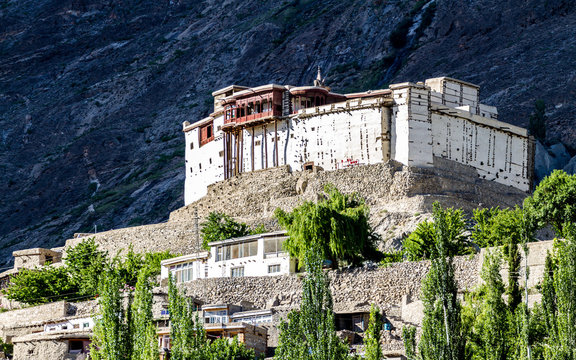
Baltit Fort, also called Balfit, is the most important historical structure in Gilgit-Baltistan and one of the most significant pre-Mughal buildings in all of Pakistan. Located at 2,400m above Karimabad in the Hunza Valley, it served as the residence and administrative seat of the Mirs (hereditary rulers) of Hunza for approximately 700 years, from the 14th century until 1945 when the last Mir relocated to a new residence.
The fort’s architecture is a genuine historical document. Its lower sections, dating to the earliest construction, show Tibetan-style masonry — wide-based walls, wooden beams, and construction techniques brought by Tibetan craftsmen who worked in Hunza for centuries. Upper additions from later centuries show Central Asian and Kashmiri influences. Each renovation layer tells a story about who the Mirs of Hunza were trading with, allied with, or influenced by at that particular moment in history.
The Restoration — A Model for Asia
By the 1980s, centuries of use and neglect had brought Baltit Fort to the edge of collapse. A landmark conservation project, led by the Aga Khan Trust for Culture with Norwegian government funding and the involvement of Pakistan’s Department of Archaeology, began in 1990 and was completed in 1996. The seven-year project employed a team of international conservation architects, Pakistani contractors, and dozens of local craftsmen who had to relearn techniques that had not been used for generations.
The result is considered one of the most successful heritage conservation projects in Asia. Every room, every wooden beam, every stone wall was documented, analyzed, and either restored or carefully replaced with materials matching the originals. The project was so comprehensive and well-documented that it became a reference model for subsequent heritage work throughout South Asia and Central Asia.
What You Will See Inside
The Baltit fort is now a museum open to visitors. Walking through it, you pass through: the royal audience hall where the Mir received visitors and administered justice; the zenana (women’s quarters, located in the most private and protected section); the grain storage rooms that could sustain the fort through a siege; a jail in the basement; the top-floor bedroom of the Mir, from which the entire valley is visible; and the watchtower, which commands a 360-degree view extending to Rakaposhi, Ultar Sar, and across to China.
The fort’s collection includes original furniture, weapons, ceramics, textiles, and documents. Guided tours (strongly recommended) provide context that the signage alone cannot convey.
Visiting information: Entry fee approximately Rs 500 (Pakistani visitors), Rs 1,000 (foreign visitors). Open daily except Fridays, 9 AM to 5 PM. Best visited in the morning before tour groups arrive.
2. Altit Fort, Hunza — Older Than Baltit
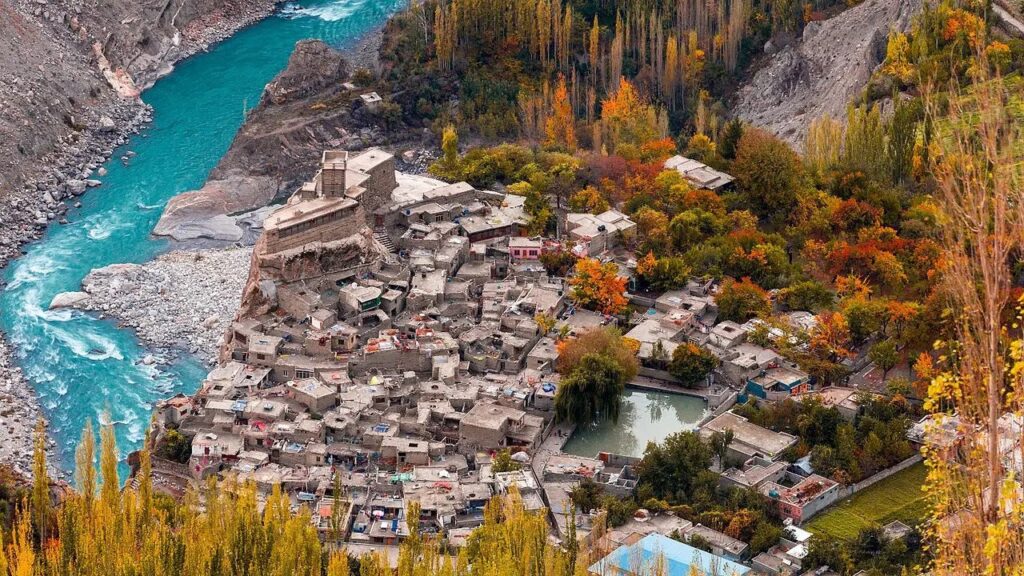
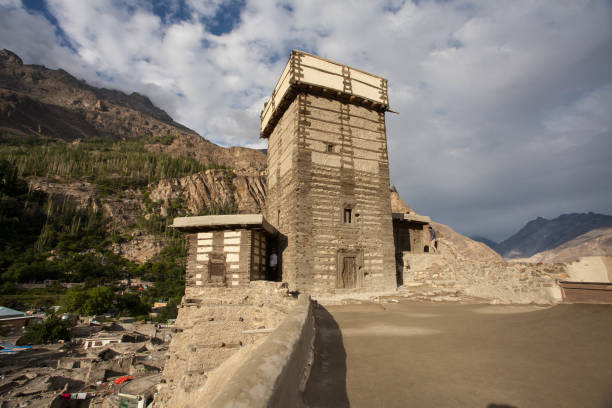
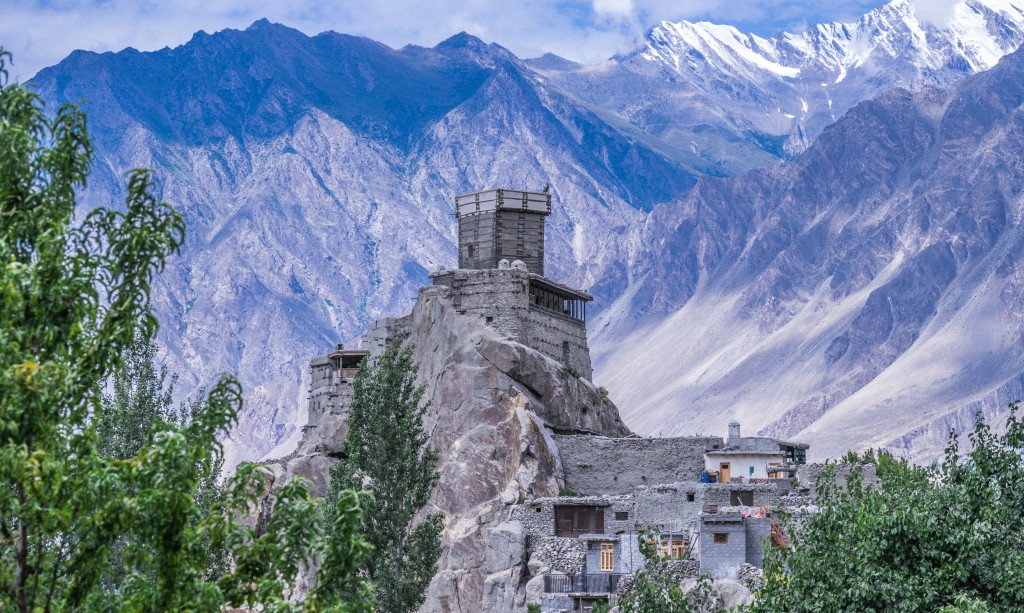
Altit Fort, located 5 km south of Karimabad in the village of Altit, is believed to be the oldest surviving structure in Gilgit-Baltistan — over 900 years old. It predates Baltit and served as the original seat of Hunza’s rulers before they moved to the higher and more defensible Baltit site.
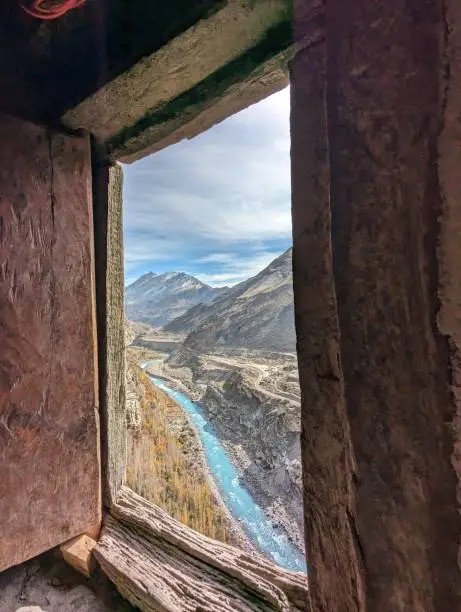
The fort’s position is extraordinary and frankly terrifying: it sits on the edge of a sheer cliff face that drops approximately 300 meters to the Hunza River gorge below. Half the fort appears to hang in the air over this void. The main watchtower — which may be one of the oldest standing structures in Pakistan — extends to the very edge of the cliff, providing observation over the gorge below and the valley ahead.
Also restored by the Aga Khan Trust for Culture, Altit Fort today includes a heritage museum with reproductions of traditional Hunzai domestic life, the watchtower, the main reception hall, and a unique stone carving above one doorway that is believed to represent a protective deity from the pre-Islamic Hunzai religion. The adjacent Altit village itself is one of the most authentically preserved traditional settlements in the region — virtually unchanged in layout and architecture from centuries ago.
Visiting information: Entry fee and hours similar to Baltit. The two forts can comfortably be visited in a single day as they are only 5 km apart.

3. Kharphocho Fort, Skardu — The Unconquered Fortress
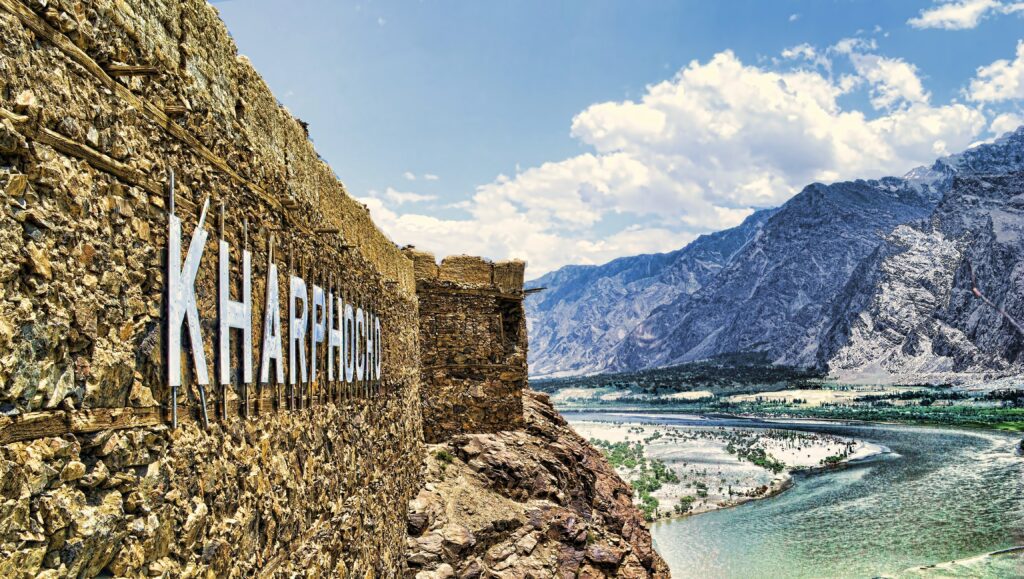
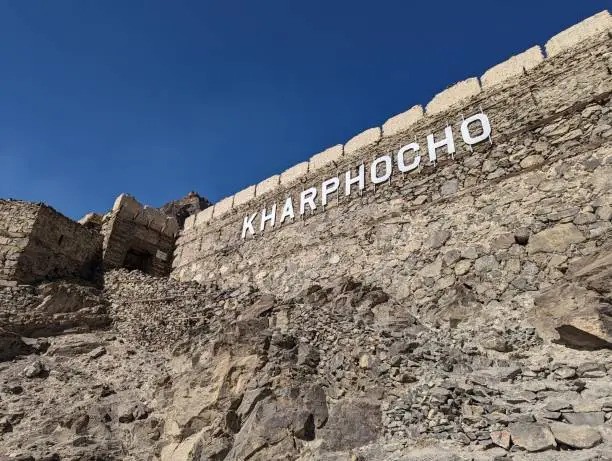
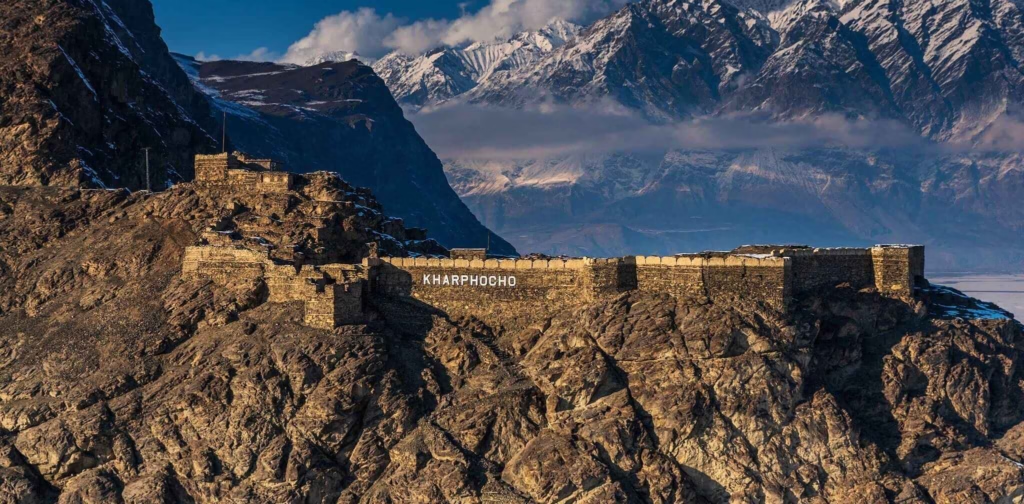
Kharphocho Fort (from Balti: Kharpu meaning fort, Cho meaning great — the Great Fort) occupies a massive, isolated rock outcrop that rises approximately 150 meters above the floor of the Skardu Valley, at the confluence of the Indus and Shigar rivers. Built in the 16th century by Ali Sher Khan Anchan — the greatest king in Baltistan’s history — the fort was the administrative and military capital of a united Baltistan that briefly brought most of the region’s disparate kingdoms under one rule.
The fort’s military record is remarkable: despite multiple Mughal attempts to conquer Baltistan, Kharphocho was never taken by force. Its position made it nearly impregnable with pre-gunpowder military technology — sheer rock on three sides, a single narrow access path on the fourth, and commanding views over every approach route for many kilometers.
The fort contains a mosque believed to date from the 16th century with visible Tibetan architectural influences, the main defensive tower, storage chambers, and residential quarters. Much of the structure is partially ruined. The real reason to visit is the view from the summit: the entire Skardu basin laid out below, the Indus making its wide bend through the sandy plain, and on a clear day the remote silhouette of K2 visible far to the east. The 30-minute climb to the top requires comfortable footwear but no special skills.

4. Shigar Fort — Pakistan’s Most Beautiful Heritage Hotel
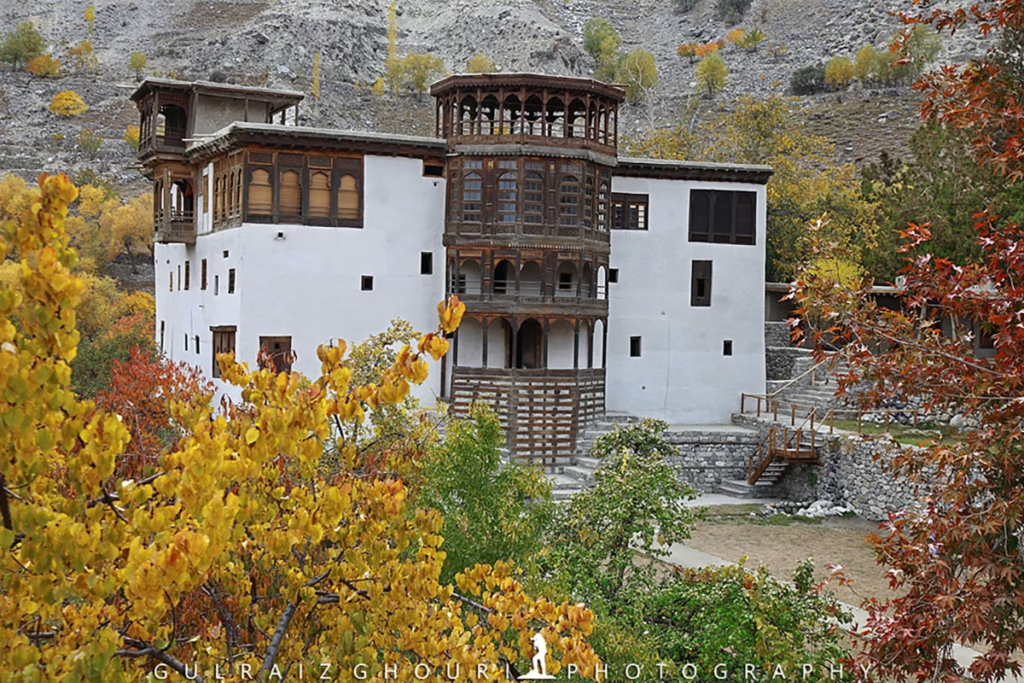
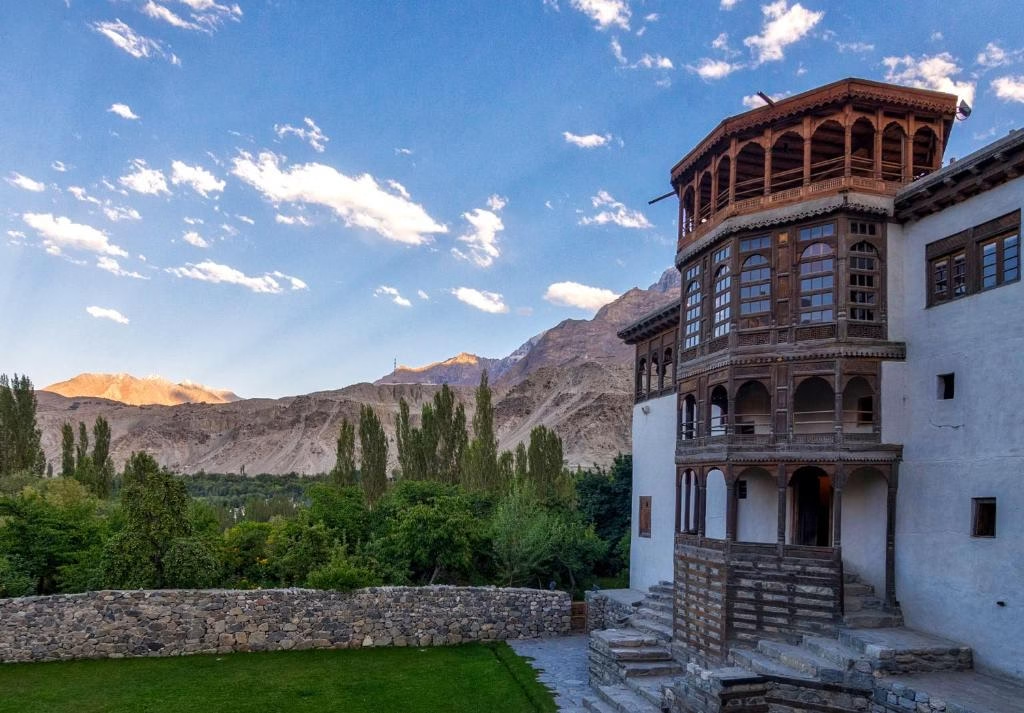
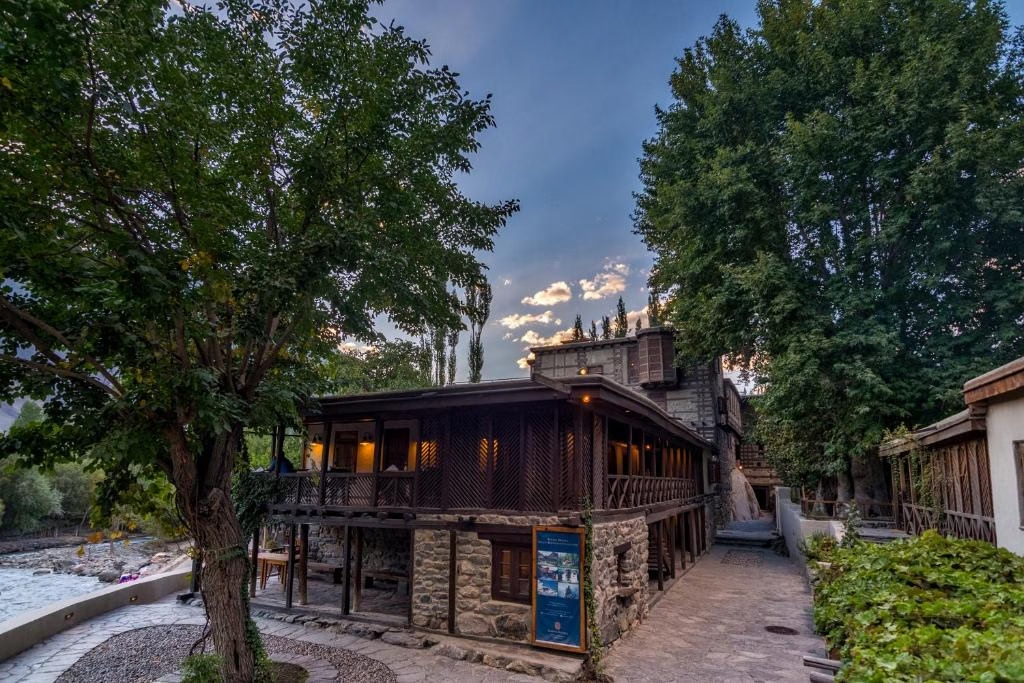
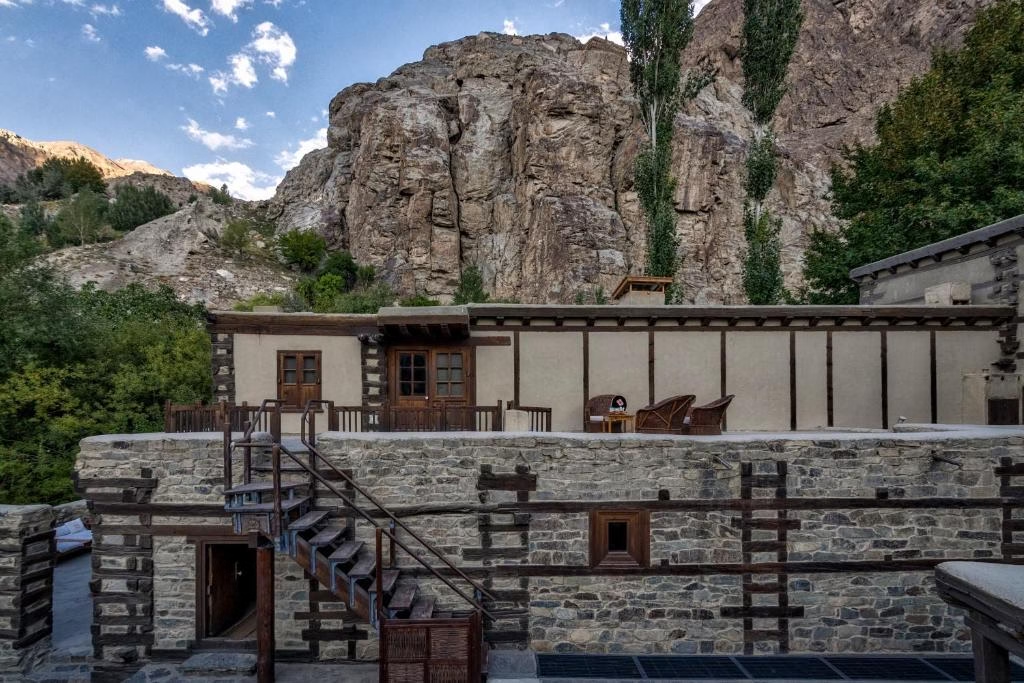
Shigar Fort in Shigar Valley, 30km from Skardu, holds a unique status: it is the finest heritage hotel in Pakistan, restored from a 400-year-old royal residence into a world-class boutique property. The fort was the residence of the Rajas of Shigar, a dynasty that ruled this fertile apricot-growing valley for centuries.
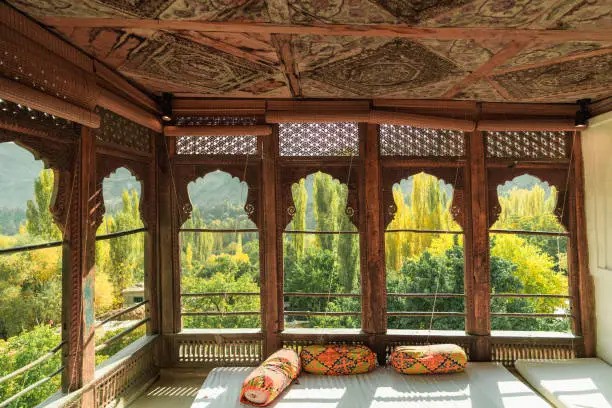
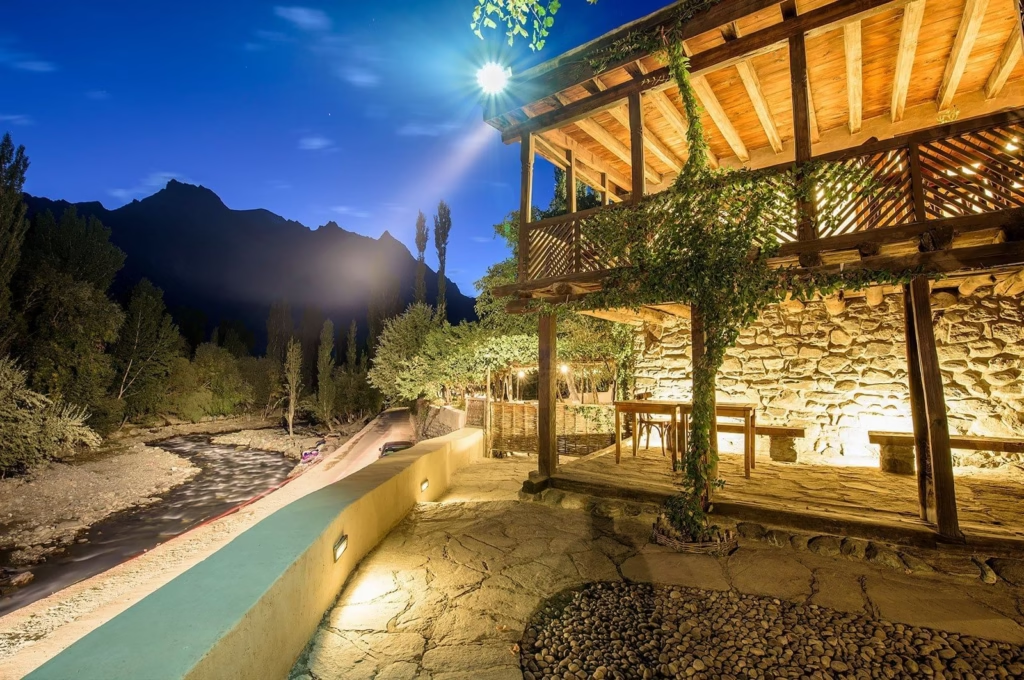
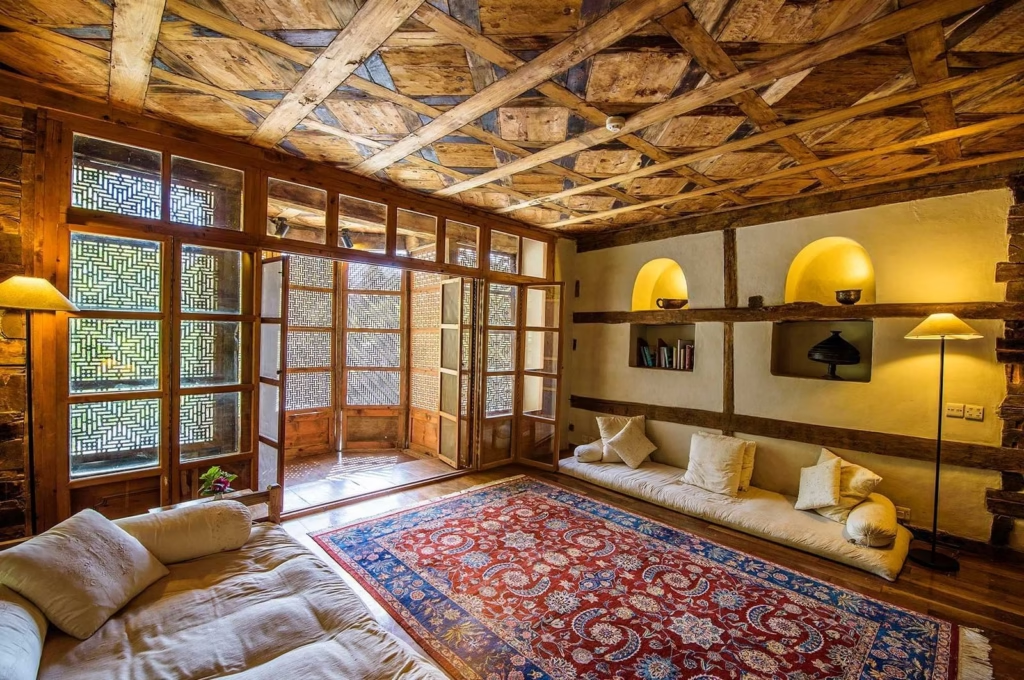
The restoration, a partnership between the Serena Hotels chain and the Aga Khan Trust for Culture, preserved the original structure entirely — the carved walnut doorways, the central watchtower, the traditional garden courtyard, the mosque — and converted the residential quarters into 20 individually designed rooms. Each room uses traditional Balti materials: locally quarried stone, hand-carved walnut wood, hand-woven rugs, and natural plasters. The property sits beside an ancient tree-shaded water channel that runs through the traditional garden.
Staying at Shigar Fort is not merely a hotel stay — it is an experience of 17th-century Balti royal life with 21st-century comfort. The property is surrounded by apricot and mulberry orchards that are spectacular in blossom (April) and harvest (July). Rates: approximately $200–350 per night. Advance booking 2–3 months ahead is essential in peak season (July–September).
5. Baltit Fort vs Altit Fort — Which to Visit?
| Feature | Baltit Fort | Altit Fort |
| Age | ~700 years (14th century) | ~900+ years (11th–12th century) |
| Significance | Main royal residence for 700 years | Original royal seat before Baltit |
| Dramatic position | Above Karimabad with mountain backdrop | Cliff edge above 300m gorge |
| Museum content | More comprehensive | Domestic life focus |
| Crowds | More visited | Less visited — more intimate |
| Combined visit | ✓ | ✓ — 5km apart, easy same-day visit |
6. Gor Khar Fort (Gilgit Fort)
Gilgit city’s own fort — Gor Khar or Gilgit Fort — served as the administrative center of the region during the rule of the Rajas of Gilgit and later during British colonial administration. The fort is partially used by Pakistani military today and is not fully open to visitors, but the exterior and surrounding area can be explored. It lacks the preserved grandeur of Baltit or Kharphocho but is worth a brief visit for those spending time in Gilgit city.
7. Baltit Fort vs Kharphocho Fort — Which is More Impressive?
These are two completely different kinds of impressive. Baltit Fort gives you interior history — 700 years of royal life preserved in rooms you can walk through. Kharphocho Fort gives you exterior drama — a fort on a rock that looks genuinely unconquerable, with views that explain exactly why it was built where it was. If you are visiting Hunza, Baltit is unmissable. If you are visiting Skardu, Kharphocho is unmissable. If you can only choose one in all of Gilgit-Baltistan, choose Baltit Fort — the combination of location, interior content, and historical significance makes it the superior overall experience.
Visiting Tips for GB Forts
- Combine Baltit and Altit in one day — they are 5km apart and both near Karimabad. Allow 2 hours for each.
- Hire a local guide at Baltit Fort — the guides are knowledgeable, the extra cost is minimal (Rs 300–500 tip), and the historical context they provide transforms the visit.
- Best photography at Baltit: One hour after sunrise, when the fort is front-lit and before tour groups arrive.
- Shigar Fort accommodation should be booked 2–3 months in advance in peak season. Dinner reservations can sometimes be made without staying — the restaurant is excellent.
- Kharphocho requires comfortable shoes — the path up is rocky. Allow 30 minutes up and 30 minutes down plus time at the top.