
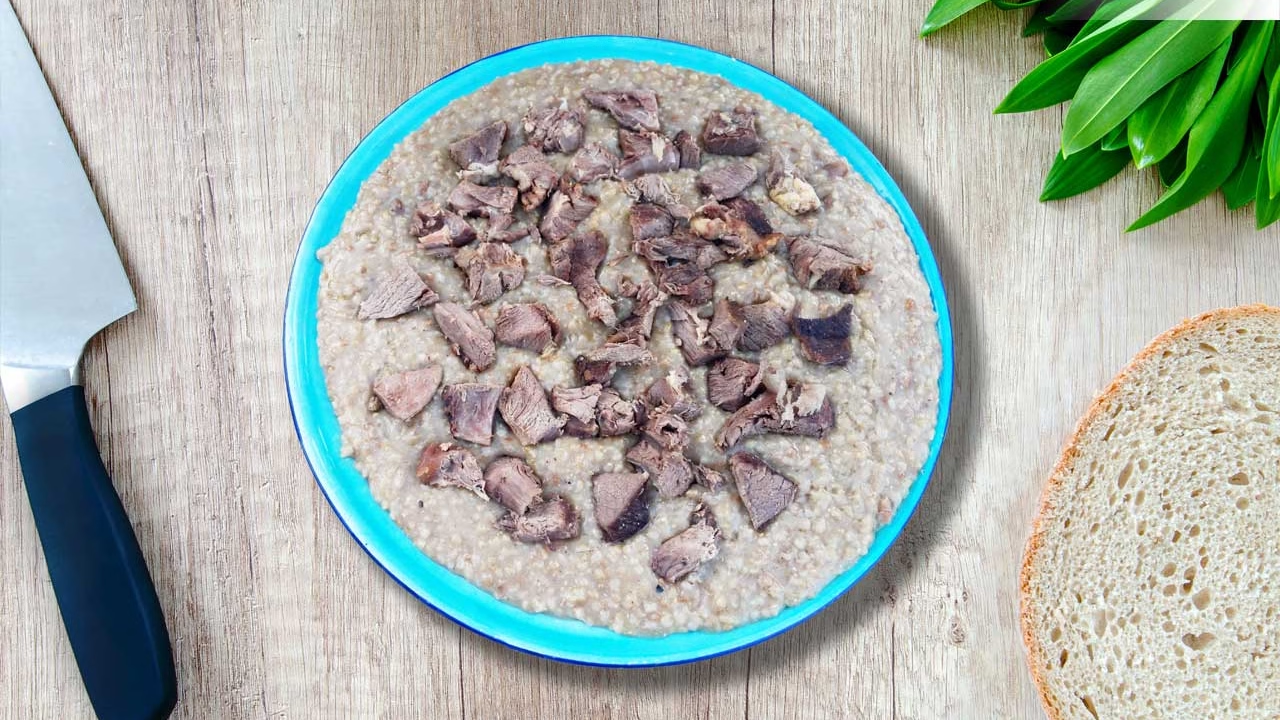
What is Harisa — Origins Across the Islamic World and GB’s Version
Harisa (also spelled Harees or Harisah across different regions) is a slow-cooked dish of whole wheat and meat — typically mutton, beef, or chicken — simmered together for many hours until the grain and meat completely break down into a thick, porridge-like consistency. Seasoned with ghee, fried onions, and warm spices, it is simultaneously a stew, a porridge, and a one-pot meal.
The dish is ancient and widespread across the Islamic world — versions of Harisa appear in Emirati, Omani, Yemeni, Iraqi, Azerbaijani, and Armenian cuisines. In South Asia, it arrived with Persian and Central Asian influences. In Gilgit-Baltistan, it holds a particular cultural significance: it is the traditional food of Eid celebrations, winter community gatherings, and mourning meals following a death in the community. A pot of Harisa simmering for six to eight hours fills an entire neighborhood with its warm, meaty aroma.
GB’s version is simpler in spicing than the haleem-adjacent preparations found in Lahore or Karachi — fewer spices, longer cooking time, and a more homogeneous final texture. The focus is on the quality of the wheat and the quality of the meat, not on masala complexity.


Harisa vs. Haleem — The Key Differences
| Feature | Harisa (GB Traditional) | Haleem (Pakistani classic) |
| Grain base | Whole wheat — dehusked; single grain | Broken wheat + lentils + oats (multi-grain) |
| Meat texture | Completely dissolved into porridge | Some chunks remain; shredded visible texture |
| Spice level | Minimal — salt, cardamom, cinnamon, black pepper | Complex — biryani-style masala blend |
| Cooking time | 6–10 hours on low heat | 3–5 hours |
| Finishing | Ghee + deep-fried onions; simple | Lemon juice, green chili, ginger julienne, fried onions |
| Consistency | Smooth, pull-apart, almost gelatinous | Chunky, rougher, more stew-like |
| Serving context | Eid, winter festivals, mourning traditions | Street food, casual meal, restaurant dish |
How Harisa Is Made — The Full Traditional Method
Ingredients (serves 8–10 people):
- 500g whole wheat grain — soak overnight; rub off outer husk by hand or use pre-dehusked wheat
- 500g bone-in mutton shoulder or leg — bones add gelatin that gives Harisa its characteristic body
- 2 liters water (plus more as needed during cooking)
- 4 green cardamom pods, 1 stick cinnamon, 2 bay leaves
- 1 teaspoon salt (adjust at end)
- For finishing: 4 tablespoons ghee, 2 large onions thinly sliced, 1 teaspoon cumin seeds
Method — Traditional 8-Hour Slow Cook:
Step 1 — Add soaked wheat, mutton pieces with bones, water, cardamom, cinnamon, and bay leaves to a large heavy pot. Bring to a boil, skim off foam, reduce to the lowest possible heat. Cover with a heavy lid.
Step 2 — Cook 6–8 hours, stirring every 30–40 minutes with a long wooden spoon to prevent sticking. Add water (a cup at a time) whenever the mixture thickens too much. The wheat should completely soften and begin dissolving.
Step 3 — Remove large bones. Beat the mixture vigorously with a wooden spoon — or use a hand blender in short pulses — until it reaches a smooth, thick, uniform consistency with the meat fully incorporated. The texture should be similar to very thick oatmeal that holds a shape briefly when mounded. Adjust salt.
Step 4 (Finishing) — In a separate pan, fry sliced onions in ghee over medium heat for 20–25 minutes, stirring occasionally, until deep caramel-brown and crispy. Add cumin seeds in the last 2 minutes of frying. Pour the entire ghee-onion mixture over the plated Harisa.
Step 5 — Serve immediately in shallow bowls. Eat with fresh flatbread — the bread is used to scoop the Harisa. No fork or spoon needed.
Modern Cooking Methods — Slow Cooker and Instant Pot
Traditional wood-fire Harisa can be closely replicated with modern equipment. In a slow cooker (Crockpot): combine all ingredients on HIGH setting for 8–10 hours or LOW for 14–16 hours. Beat/blend at the end. In an Instant Pot: pressure cook on HIGH for 90 minutes, allow natural pressure release (at least 30 minutes), then beat to texture. The Instant Pot version is faster but loses some of the slow-roasted depth of flavor that 8 hours of wood-fire cooking produces. The slow cooker version is the closest approximation of traditional flavor.
Where to Find Harisa in Gilgit-Baltistan
Harisa is not commonly available in tourist restaurants — it is primarily a home and community food. The most reliable way to experience it as a traveler is to time your visit around Eid al-Adha (Bakra Eid), when Harisa is prepared communally in neighborhoods throughout GB. Guesthouse hosts who know you well may invite you to share Eid Harisa with their family — one of the most culturally authentic food experiences possible in Pakistan.
In Skardu city, a few local dhabbas (roadside eateries) prepare Harisa in winter months — typically November through February — as a seasonal warm dish. Ask locals in the bazaar where to find it; it is rarely on printed menus.
Related Posts:
FAQ: Harisa
Q: Is Harisa the same as Haleem?
No — they are related concepts (slow-cooked wheat and meat) but significantly different dishes. Haleem uses multiple grains and lentils, more complex spicing, and a shorter cooking time. Harisa is single-grain (wheat), minimally spiced, cooked twice as long, and has a much smoother, more homogeneous texture. GB Harisa is closer to its Middle Eastern counterpart (Harees) than to Lahori Haleem.
Q: Is Harisa only for special occasions?
In GB, yes — Harisa is primarily a festival and ceremony food rather than daily cooking. The long cooking time (6–10 hours) and the large quantities traditionally prepared make it impractical as an everyday dish. It is specifically associated with Eid celebrations, community mourning gatherings (where it provides large quantities of food for visitors), and winter festivals.
