
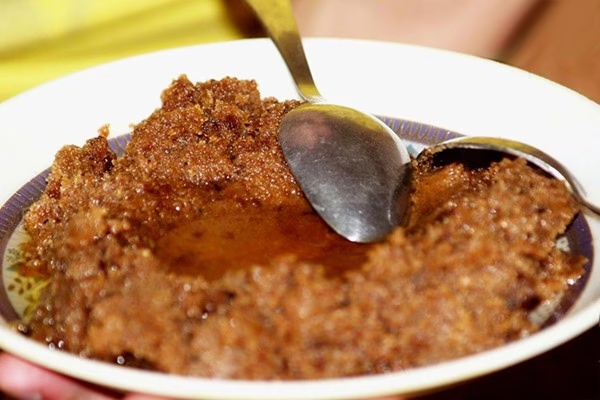
What is Diram Fitti? — History, Name, and Cultural Meaning
Diram Fitti (the name translates approximately from Burushaski as ‘sprouted bread’ — ‘diram’ referring to sprouted grain, ‘fitti’ to a flat pressed bread) is the foundational bread of Hunza Valley. Made from a mixture of sprouted wheat, millet, buckwheat, and sometimes barley flour, cooked on a flat stone griddle over an open wood fire, it is dense, slightly nutty, and extraordinarily nutritious compared to modern refined-flour bread.
The bread’s cultural significance extends far beyond daily nutrition. Diram Fitti is the celebratory bread of Hunza — prepared for weddings, births, religious occasions, and the arrival of honored guests. Its preparation is a communal act, typically performed by women in extended family groups. The process of grinding grain by hand on a stone mill, shaping the dough, and baking at a shared hearth has sustained both the bread and the social bonds of Hunza communities for centuries.
For the international traveler, Diram Fitti represents an encounter with a food tradition that predates modern nutritional science by millennia — and which modern nutritional science has since validated as genuinely exceptional.


Traditional vs. Modern — What Makes Diram Fitti Different
| Element | Traditional Diram Fitti | Standard Commercial Bread |
| Grain base | Sprouted wheat + millet + buckwheat (multi-grain) | Refined wheat flour only |
| Sprouting process | Wheat soaked and sprouted 24–48 hours before grinding | No sprouting — direct milling |
| Benefit of sprouting | Breaks down phytic acid; increases mineral bioavailability; reduces glycemic response | No benefit — phytic acid intact |
| Cooking method | Dry stone griddle over wood fire | Industrial oven, commercial oil/fats |
| Fat added | Dri butter (female yak butter) — rich in CLA fatty acids | Refined vegetable oils or none |
| Glycemic Index | Low to moderate — complex multi-grain structure | High — rapid blood sugar spike |
| Protein content | Higher — buckwheat is a complete protein | Lower — wheat alone is incomplete |
The Science of Sprouting — Why It Matters for Nutrition
Sprouting — the process of soaking grain and allowing it to begin germinating before milling — dramatically changes the nutritional profile of bread. When grain sprouts, the enzyme phytase breaks down phytic acid (the ‘anti-nutrient’ in whole grains that binds minerals like iron, zinc, and calcium and prevents their absorption). Sprouted grain bread therefore delivers far more usable minerals per serving than conventional whole grain bread.
Additionally, sprouting partially breaks down complex carbohydrates and increases levels of certain vitamins, including B vitamins and vitamin C. The resulting bread has a lower glycemic index — meaning it releases energy more slowly and steadily, without causing sharp blood sugar spikes. This is exactly the metabolic profile that modern endocrinologists recommend for long-term health.
The Hunza people’s traditional diet — Diram Fitti, dried apricots, walnuts, fresh vegetables in season, occasional meat, and minimal processed food — is today studied by nutritional researchers as a real-world example of dietary patterns associated with low rates of cardiovascular disease, diabetes, and obesity. The bread is central to that pattern.
Where to Find Authentic Diram Fitti in Gilgit-Baltistan
Authentic Diram Fitti — made with sprouted grain and cooked on a stone griddle — is found primarily in local homes and small family guesthouses in Hunza, particularly in Karimabad, Altit, Ganish village, and the villages of upper Hunza. Most tourist-oriented restaurants in Karimabad serve some version of it, but the version prepared in traditional stone-hearth kitchens by local families is superior in both flavor and authenticity.
The most effective strategy: ask your guesthouse host whether the family makes Diram Fitti for breakfast. In traditional guesthouses, this is almost always available. Asking to observe the process — or participate in it — is a request that is warmly welcomed. The entire process takes about 45–60 minutes and provides an unparalleled window into daily Hunza life.
How to Make Diram Fitti at Home — Traditional Recipe
Ingredients (makes 6–8 flatbreads):
- 1 cup wheat grain (for sprouting) — or substitute 1 cup sprouted wheat flour
- 1 cup buckwheat flour (not wheat flour — true buckwheat from health food stores)
- 1 cup millet flour
- 1 teaspoon salt
- Approximately 1 cup warm water
- 2 tablespoons unsalted butter or ghee (for finishing)
Method:
If sprouting at home: soak wheat grain overnight, drain, leave in a covered bowl 24–48 hours until small white sprouts appear (1–2mm). Grind sprouted grain in a blender with minimal water to form a wet paste. Combine with buckwheat and millet flours, salt, and enough water to form a firm but pliable dough. Divide into balls the size of a large lemon. Roll flat to approximately 5–6mm thickness. Cook on a dry cast iron pan, medium-high heat, 3–4 minutes per side until golden-brown with darker patches. Brush lightly with butter and serve immediately. Best accompanied by dried apricot jam, walnut chutney, or local white cheese.

FAQ: Diram Fitti
Q: Is Diram Fitti gluten-free?
Traditional Diram Fitti contains wheat (even in sprouted form), so it is not gluten-free. However, it can be made entirely from buckwheat and millet flours — both naturally gluten-free — to create a gluten-free version. Ask specifically when ordering in restaurants.
Q: What is the difference between Diram Fitti and regular chapati?
Standard Pakistani chapati is made from refined wheat flour (atta), unleavened, and cooked dry on a tawa. Diram Fitti uses sprouted multi-grain flour including buckwheat and millet, giving it a much denser, nuttier texture, darker color, and significantly higher nutritional value. It is a more complex bread in every sense.
Q: Why is Hunza bread connected to longevity?
The Hunza people developed an international reputation for exceptional longevity in the 20th century. While some early reports exaggerated their ages, nutritional studies confirm that the traditional Hunza diet — centered on sprouted grain bread, dried apricots, walnuts, and limited meat — closely matches modern evidence-based dietary patterns associated with cardiovascular health and healthy aging. Diram Fitti’s high fiber, complex carbohydrate, and low glycemic index profile are central to that pattern.

5 comments
Greetings! Very helpful advice on this article! It is the little changes that make the biggest changes. Thanks a lot for sharing!
An fascinating discussion is worth comment. I feel that you should write more on this topic, it might not be a taboo subject but typically individuals are not sufficient to talk on such topics. To the next. Cheers
I truly appreciate this post. I’ve been looking everywhere for this! Thank goodness I found it on Bing. You have made my day! Thank you again
Hi there! This post couldn’t be written any better! Reading through this post reminds me of my previous room mate! He always kept talking about this. I will forward this article to him. Pretty sure he will have a good read. Thank you for sharing!
I am perpetually thought about this, thankyou for posting.